
Guide
The best vitamin C supplements compared (2026)
Last updated: 2 August 2026

Written by
Health Tested Editorial Team
Vitamin C is one of the most important vitamins for the human body. This nutrient is involved in countless bodily functions. It's best known for its effect on the immune system, but it would be unfair to dismiss vitamin C as mere immune support. Vitamin C can do so much more.
At times of high physical and mental strain in particular, high-dose vitamin C can be a powerful line of defence and provide noticeable support.
In our extensive 2025 comparison of vitamin C supplements, we show you how to get the most out of this powerful vitamin and why many products can't work as well as they should.

There are countless vitamin C supplements on the market, but not all of them are effective.
Vitamin C supplements: what matters?
First things first: not all vitamin C is the same. Among the many vitamin C supplements now on the market, the differences can be enormous.
The choice is huge, ranging from powders and tablets to capsules and liposomal vitamin C.
So what makes a good supplement? The key criteria include the amount of active ingredient, the dosage form, the form of vitamin C, the absence of additives, purity, bioavailability and certain combinations of active ingredients. That makes it hard to keep track of everything and find the right product for you.
To help you find your way through the maze of vitamin C supplements, we've taken a close look at these criteria and at the vitamin C products currently available.
Our comparison shows where the crucial differences lie and which mistakes you should avoid at all costs when choosing a product.
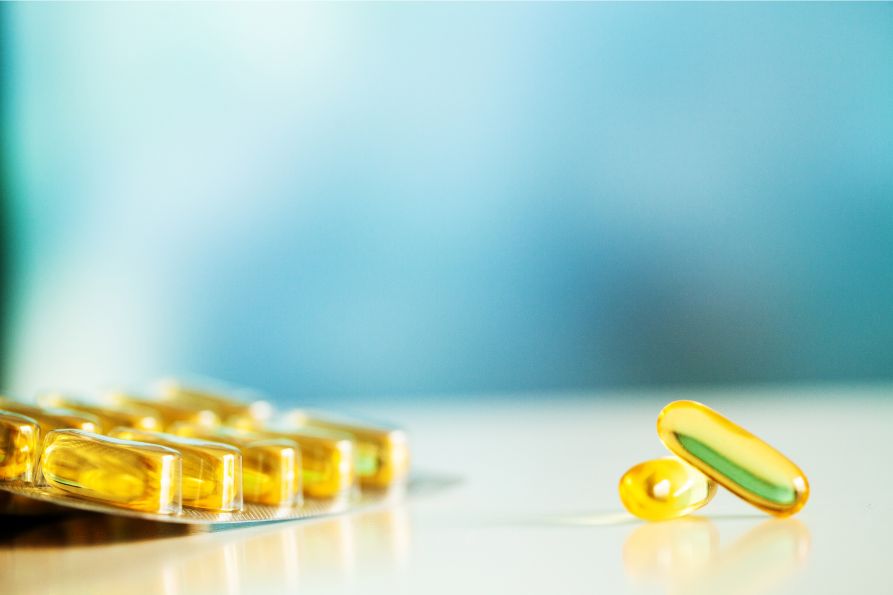
Vitamin C is the most important water-soluble, non-enzymatic antioxidant in both plasma and tissues. It's crucial for neutralising free radicals and so protects cells and tissues from oxidative stress and the damage that comes with it.
Why vitamin C matters so much
Ascorbic acid isn't called 'the queen of vitamins' for nothing. Vitamin C is an extremely versatile vitamin that's involved in several important processes in the body: a queen with many duties. Here are the most important ones in brief:
How does vitamin C work?
Strengthening the immune system: probably its best-known role. Vitamin C strengthens the immune system because it plays a major part in the production and function of white blood cells and antibodies.
Powerful antioxidant: vitamin C can neutralise free radicals that would otherwise cause damage in the blood, brain, cells and tissues.
Better skin health: as a powerful antioxidant, vitamin C protects the skin from damage caused by UV radiation and pollution.
It also supports the formation of collagen, a protein that's very important for the health of the skin, bones, teeth, blood vessels and other tissues.
More energy and less tiredness: vitamin C is particularly important for getting energy from food and can therefore noticeably reduce tiredness and fatigue.
Benefits of taking vitamin C
- a stronger immune system
- antioxidant effect
- support for healthy skin
- relief from colds and infections
- support for wound healing
- better absorption of zinc, iron and calcium
- support for the cardiovascular system
- less tiredness
- less inflammation
Benefits for mental health
Taking vitamin C may also relieve mental and emotional symptoms:
- relief from stress and anxiety
- better mood and general wellbeing
- antidepressant properties
- better ability to cope with stress
- support for mental clarity
- better sleep quality
- more energy and vitality
How much vitamin C do you need?
Your body can't make this essential vitamin itself, so it has to come from your diet. But how much vitamin C does your body need each day? Opinions differ.
The German Nutrition Society (DGE) officially recommends a daily vitamin C intake of 95 mg for women and 110 mg for men.
However, many experts consider this figure too low, as several factors suggest that the actual requirement could be many times higher.
Four factors that point to a higher vitamin C requirement
1. Imprecise calculation of requirements: the DGE bases its calculation on a relatively low average body weight (women: 60 kg, men: 70.7 kg). People who weigh more therefore need more vitamin C.
2. Extra strain on the body: stress, pollution, an unbalanced diet, smoking, alcohol, physical activity and certain illnesses can all significantly increase your daily vitamin C requirement.
Stress is a particularly heavy drain on your vitamin levels: under stress, your body produces more adrenaline and needs large amounts of vitamin C to do so.
Smokers also need around 40% more vitamin C than non-smokers, because smoking destroys cells and releases free radicals.
3. Medication: taking certain medicines, such as antibiotics, the contraceptive pill, diuretics or medicines containing acetylsalicylic acid (ASA), including aspirin, further increases your need for vitamin C.
High blood sugar also inhibits absorption of the vitamin, which is why people with diabetes in particular need much more.
4. Big vitamin losses in food: what we eat contains far less vitamin C than it did 15–30 years ago (60–80% less on average).
This is mainly down to long transport routes and storage, harvest timing and pollution, but large amounts of vitamins are also lost during preparation. Vegetables and herbs lose a full 50% of their vitamin C when they're cooked.

There are now countless vitamin C products on the market, which can make it hard to keep track. The differences between the products on offer can sometimes be extreme.
What to avoid when buying vitamin C
When you choose a vitamin C supplement, there are a few things to check. Here's what to steer clear of:
- a low dose
- vitamin C in a poorly bioavailable form
- capsule shells made of gelatine, plus binders and anti-caking agents
- artificial colourings
- any allergens you react to, such as soya, gluten and lactose
- supplements at suspiciously low prices
The different types of vitamin C supplement
The most common dosage forms of vitamin C are tablets, capsules and the liposomal form.
Capsules
Pros
Easy to take: simply swallow
Practical when travelling and out and about
Easy to dose (each capsule contains the same amount of active ingredient)
No unpleasant taste or smell
Cons
Stomach acid can affect absorption of the active ingredient
Digestion can partly break down the active ingredient
Bioavailability of the active ingredient can vary
The capsule shell may contain gelatine
Often contain additives
Unsuitable if you have difficulty swallowing
A high dose may mean taking several capsules
Drops
Pros
Easy to dose
Rapid absorption of the active ingredient (via the mucous membranes)
Good for people with swallowing difficulties or stomach problems
Versatile: can be mixed into drinks or food
Cons
The drops may taste unpleasant
Exact dosing can be difficult, as the number of drops varies
The liquid can leak or spill
Shorter shelf life than capsules
Liposomal form
Pros
Higher bioavailability of the active ingredient
Better absorption by bypassing stomach acid
A lower dose is needed for the same effect
Can mask the taste of the active ingredient
No additives
Cons
May cost more because manufacturing is more complex
Availability and choice may be limited
Making liposomes can be difficult and requires specialised technology
Why most vitamin C supplements fail to work
1. Many supplements are underdosed
Many vitamin C supplements contain too little ascorbic acid to have the desired effect. Conventional vitamin C supplements usually contain between 50 mg and 1,000 mg of vitamin C.
The highest-strength supplements provide around 1,000 mg of ascorbic acid, which by international standards is still considered relatively low. In many countries, a daily oral dose of 3,000 mg is currently recommended.
2. Heavy loss of active ingredient in the digestive tract
Many supplements lose a considerable amount of active ingredient on the way through the digestive tract. Stomach acid, for example, attacks the active ingredient, so less of it reaches the cells.
At present, only the liposomal and intravenous forms can get round this problem. A liposome is a kind of tiny vesicle whose outer layer is made of fats, which makes it water-repellent. This means the active ingredient is protected from stomach acid and can be carried to the cells intact, where it's absorbed.
3. The body cannot absorb the active ingredients
With conventional vitamin C supplements, absorption can be limited at high doses, especially when you take the whole daily dose in one go.
That's because your body has only a limited number of transporters for absorbing vitamin C.
To get round this, it's a good idea to spread your vitamin C over 5–6 doses a day.
Alternatively, there are high-strength forms such as liposomal vitamin C, which is encapsulated in liposomes so that it can be carried straight into the target cells.
4. Vitamin C is more useful in high doses
To get the health benefits of vitamin C mentioned above, you often need much higher doses.
Several studies recommend doses of 1,000–2,000 mg or more a day.
The German Society for Orthomolecular Medicine (DGOM) has long researched nutrient deficiencies and also recommends very high daily doses, far above the German Nutrition Society's reference values.
For people weighing 60 kg, it recommends 3,000 to as much as 6,000 mg a day. For breastfeeding mothers, the recommendation is 2,000 mg of vitamin C.

There are several factors to consider when choosing the right vitamin C product.
Vitamin C overdose and side effects
Vitamin C is water-soluble, which means that if your body has more than it needs, it gets rid of the excess in urine. Harm from an overdose is therefore highly unlikely.
Too much vitamin C at once can sometimes cause stomach and bowel problems such as diarrhoea. The amount at which the gut becomes sensitive varies greatly from person to person.
It's a good idea to increase the dose slowly to avoid an upset stomach.
For better tolerability, you can choose liposomal supplements or intravenous treatment. Unlike capsules and powders, they're considered gentle on the stomach and don't cause irritation.
In general, taking high doses of ascorbic acid (orally or intravenously) is considered safe.
High-dose vitamin C therapy, given by a doctor or naturopath, bears this out. These infusions start at 7.5 g and in severe cases can contain as much as 100 g of ascorbic acid.
Vitamin C in true liposomal form
A particularly innovative type of vitamin C supplement is the liposomal version. Liposomal vitamin C is encapsulated in tiny liposomes, which allow better absorption and better tolerability.
This means your body can make better use of the vitamin C and absorb the active ingredients straight into the bloodstream, with nothing lost along the way.
Encapsulation in liposomes protects the active ingredient from stomach acid and digestive enzymes and can minimise possible digestive problems.
The liposomal coating solves some of the problems that can occur with conventional capsule and powder supplements.The study results show that liposomal vitamin C has significantly higher bioavailability than other vitamin C products. Liposomal vitamin C also reaches the highest plasma ascorbic acid levels and maintains them for longer than other products.

Because the vitamin is absorbed directly, much lower doses are needed. Studies have found that your body can absorb liposomal vitamin C four times more effectively.
Which combination of active ingredients makes the most sense?
Vitamin C supplements are often sold as combination supplements with other active ingredients. The most common and best-established combination is vitamin C and zinc.
That's because these nutrients work synergistically. This means that, taken together, they complement and enhance each other, with a stronger overall effect than either would have on its own.
A key factor in this combination is that vitamin C improves zinc absorption in the gut, so your body absorbs and uses both nutrients more efficiently. This enhances the immune-strengthening effects of both.
As with vitamin D3 and K2, it makes sense to choose a vitamin C supplement with added zinc.
Top 3: the best vitamin C and zinc supplements on the market
Finding the right vitamin C and zinc supplement isn't easy.
That's why we assess the products against the following six factors:
How is the product formulated?
Are there any study or test results?
How high is the dose of the vitamins it contains?
Does it contain any allergens?
How good is the value for money?
Are there any special features in the formulation or production?
The most important factor: how is the vitamin C supplement formulated?
The most important factors when choosing a vitamin C supplement include the amount of active ingredient, the dosage form, the absence of additives, purity, bioavailability and certain combinations of active ingredients.
Dosage: a capsule or powder supplement should contain at least 1,000 mg of vitamin C. For liposomal supplements, a dose of 150–200 mg of vitamin C is recommended. The exact amount can vary depending on your individual needs and health goals.
Dosage form: one of the most important factors, because the different forms can vary enormously in absorption, bioavailability and tolerability.
Quality of the ingredients: poor-quality ingredients can seriously reduce how well a supplement works.
It's worth looking for supplements that come from high-quality, natural sources and are free from unnecessary additives such as artificial preservatives, colourings or fillers.
Bioavailability: arguably the deciding factor. It's essential to choose a product that's very well absorbed into the cells.
Combinations of active ingredients: some combinations of active ingredients can significantly improve the absorption and benefits of each individual ingredient. These synergies lead to better results overall.
Popular combinations with vitamin C include zinc, selenium, iron and vitamin E.
product review
TESTED
our quality criteria
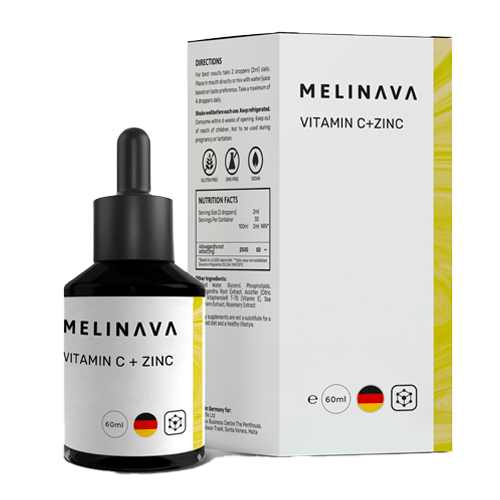
MELINAVA Vitamin C + Zinc
by MELINAVA
Pros
- Liposome technology
- High bioavailability thanks to liposomes (4× higher)
- Contains 200 mg vitamin C + 10 mg zinc
- Vitamin C in the best available form
- Vegan
- Made in Europe
- Free from soya, gluten and lactose
- No added preservatives
- No added allergens
- GMO-free
Cons
- Only available online
- Often sold out
Verdict
Melinava Vitamin C + Zinc provides 200 mg of sodium L-ascorbate (vitamin C) per daily dose, which makes it a high-strength supplement*.
Sodium L-ascorbate in liposomal form is an innovative type of vitamin C that combines the gentle tolerability of sodium ascorbate with the high bioavailability of liposomal formulations.
The additional 10 mg of zinc ascorbate gives you an ideal intake of active ingredients and improves the effect of the vitamin C.
*Because the active ingredient is encapsulated in liposomes, much lower doses are needed than with conventional supplements.
Thanks to modern liposome technology, the bioavailability of Melinava is up to 4× higher. The liposomal coating improves tolerability and carries the active ingredient directly into the bloodstream.
Melinava's liposomal supplements have even been featured on leading news websites recently.
User satisfaction and the many positive customer reviews of Melinava Vitamin C + Zinc speak for themselves.
Melinava has already been used with very good results for symptoms such as increased susceptibility to infections, lack of energy and various skin problems, as well as depressed mood and poor concentration.
There are no known side effects so far. Many customers report very good tolerability and a rapid rise in their vitamin C levels.
Melinava takes first place in our test (as of January 2026).
The manufacturer takes tolerability very seriously, which is why the product is completely free from unwanted additives.
You can find more information on the manufacturer's website*.
A one-month course of Melinava costs 509 kr
(discounts are available when you buy two or three packs, as of January 2026).
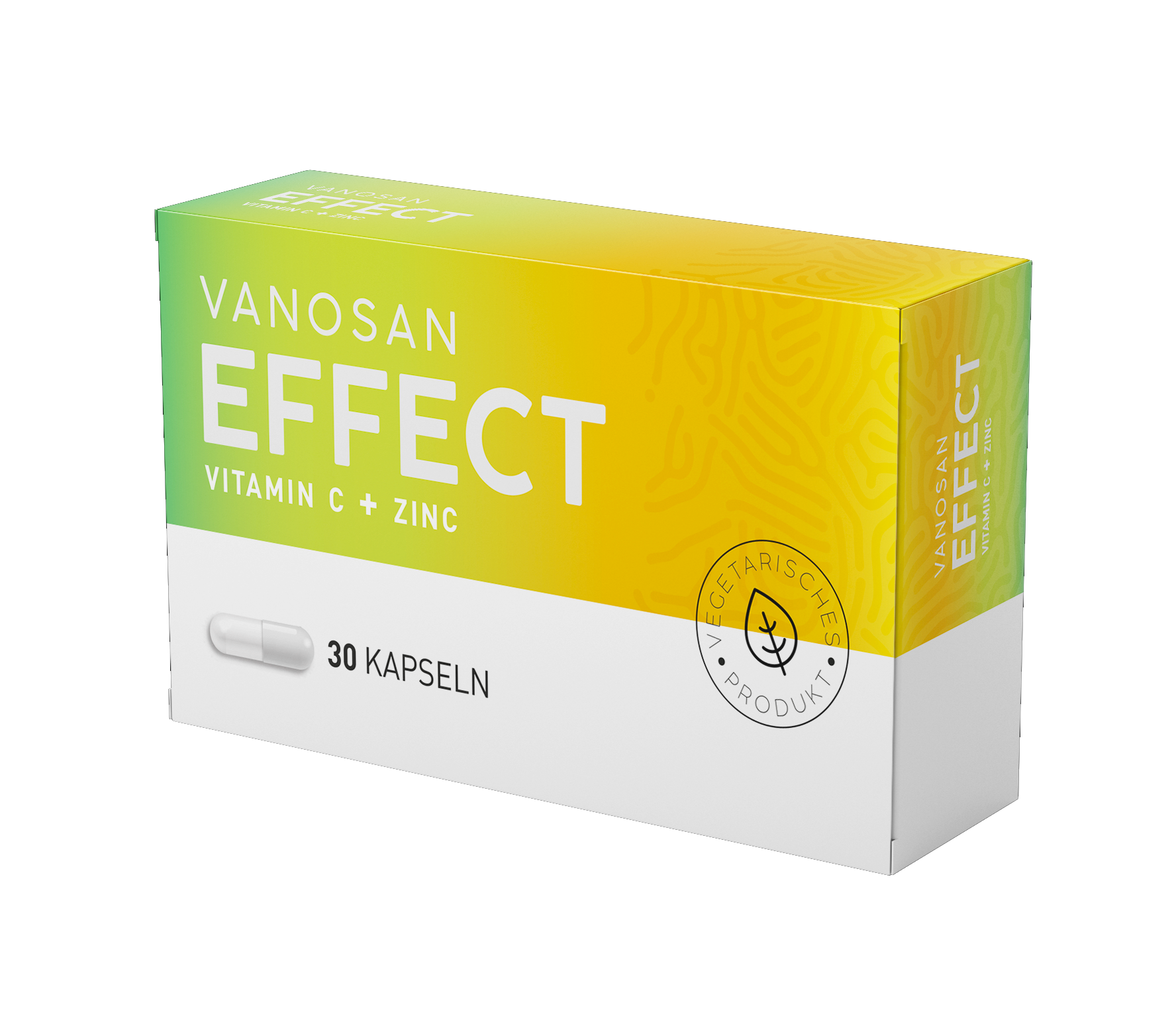
Vanosan Vitamin C + Zinc
by VANOSAN
Pros
- Laboratory-tested
- Good value for money
- Made in Germany
- Vegan
- No added preservatives
- No added allergens
Cons
- Only available online
- 3 capsules a day
Verdict
Vitamin C from Vanosan provides a good dose, with 1,000 mg of sodium L-ascorbate (vitamin C) and 20 mg of zinc ascorbate per daily dose.
Users are mostly positive about Vanosan Vitamin C + Zinc. It is well tolerated and relieves symptoms such as tiredness and fatigue.
It is made in Europe and is usually dispatched within 1–3 working days.
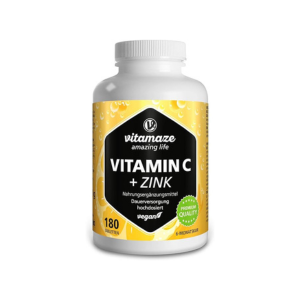
vitamaxe Vitamin C + Zinc
by VITAMAXE
Pros
- High-strength
- Laboratory-tested
- Good value for money
- Vegan
- Made in Germany
- Gastro-resistant capsule
- No added preservatives
Cons
- Lower bioavailability
- Contains fillers and anti-caking agents
Verdict
Vitamin C + Zinc from vitamaxe provides a good dose, with 1,000 mg of sodium L-ascorbate (vitamin C) and 20 mg of zinc ascorbate per daily dose. However, the dosage form limits absorption, as the vitamin C is not very bioavailable.
The tablets are comparatively small, which makes them easier to take.
Users are mostly positive about vitamaxe Vitamin C + Zinc. It is well tolerated and relieves symptoms such as lack of energy and fatigue.
However, users with chronic symptoms often find the effect unsatisfactory. Some customers criticise the quality and the size of the tub.
It is made in Germany and is usually dispatched within 1–3 working days.

Your skin can benefit from this powerful vitamin in many ways. It may contribute to fighting acne and reducing wrinkles.
Vitamin C: the key to healthy, radiant skin
Vitamin C's importance for skin health comes down to several key properties. As an essential antioxidant, it protects the skin from damage by free radicals, which are caused by environmental factors such as UV radiation and air pollution. This protective role matters because oxidative damage can contribute to premature skin ageing.
Vitamin C also plays a central role in collagen synthesis. Collagen is the skin's main protein and is responsible for its firmness and elasticity. As you get older, collagen production declines, which leads to wrinkles and sagging skin. Vitamin C not only promotes collagen formation but also stabilises collagen fibres, resulting in better skin structure.
Vitamin C influences skin pigmentation too. It can help treat hyperpigmentation, such as age spots, by regulating melanin production. Vitamin C has an anti-inflammatory effect, which makes it particularly useful for people with skin conditions such as acne. It also supports the skin's barrier function, which is important for keeping your skin well hydrated and healthy.
A natural way to fight tiredness and exhaustion
Vitamin C is known for its ability to reduce tiredness and exhaustion. This is down to its role in your body's energy metabolism. Vitamin C is essential for the synthesis of carnitine, a substance needed to transport fatty acids into the mitochondria, the powerhouses of the cells, where fat is burned and energy is produced.
A vitamin C deficiency can lead to lower energy production, which shows up as tiredness and exhaustion. Vitamin C also helps improve iron absorption, which matters because iron deficiency is one of the most common causes of persistent tiredness. Taking vitamin C may therefore help raise your energy levels and improve your general wellbeing.

Vitamin C: a nutrient for a clear mind
Vitamin C also plays an important role in improving mental function. It's a powerful antioxidant that helps protect brain cells from oxidative stress. Oxidative stress is associated with a decline in cognitive abilities, including memory loss and a reduced ability to process new information. Vitamin C is also important for the synthesis of neurotransmitters, including dopamine and noradrenaline, which are essential for regulating mood and for cognitive functions such as attention and concentration. Studies have shown that adequate vitamin C levels are associated with better cognitive abilities and a lower risk of neurodegenerative diseases.
* We may earn a commission from some of the companies featured. This is how we keep our comparisons free to read.
Some of these companies are our commercial partners.
Sources
- Łukawski, M., Dałek, P., Borowik, T., Foryś, A., Langner, M., Witkiewicz, W., & Przybyło, M. (2020). New oral liposomal vitamin C formulation: Properties and bioavailability. Journal of liposome research, 30(3), 227-234.
- de Almeida Brasiel, P. G. (2020). The key role of zinc in elderly immunity: A possible approach in the COVID-19 crisis. Clinical nutrition ESPEN, 38, 65-66.
- Carr, A. C., & Maggini, S. (2017). Vitamin C and immune function. Nutrients, 9(11), 1211.
- Cameron, E., & Pauling, L. C. (1979). Cancer and vitamin C: a discussion of the nature, causes, prevention, and treatment of cancer with special reference to the value of vitamin C.
- Attia, M., Essa, E. A., Zaki, R. M., & Elkordy, A. A. (2020). An overview of the antioxidant effects of ascorbic acid and alpha lipoic acid (in liposomal forms) as adjuvant in cancer treatment. Antioxidants, 9(5), 359.
- Deutsche Gesellschaft für Orthomolekular-Medizin e. V. Ascorbin, Vitamin C, Der Bedarf an Vitamin C kann mit der Nahrung nicht gedeckt werden
- Gopi, S., & Balakrishnan, P. (2021). Evaluation and clinical comparison studies on liposomal and non-liposomal ascorbic acid (vitamin C) and their enhanced bioavailability. Journal of liposome research, 31(4), 356-364.
- ACarr AC, Vissers MC. Synthetic or food-derived vitamin C--are they equally bioavailable? Nutrients. 2013 Oct 28;5(11):4284-304. doi: 10.3390/nu5114284. PMID: 24169506; PMCID: PMC3847730.
- Deutsche Gesellschaft für Orthomolekular-Medizin e. V. Ascorbin, Vitamin C, Der Bedarf an Vitamin C kann mit der Nahrung nicht gedeckt werden
- Turley SD, West CE, Horton BJ. The role of ascorbic acid in the regulation of cholesterol metabolism and in the pathogenesis of artherosclerosis. Atherosclerosis. 1976 Jul-Aug;24(1-2):1-18.
- Vollbracht, C., Friedrichsen, H. P., & Gröber, U. (2021). Update 2021: Vitamin C und Zink bei COVID-19. Zeitschrift für Orthomolekulare Medizin, 19(01), 7-9.