
Guide
The best vitamin B complex supplements compared (2026)
Last updated: 3 August 2026

Written by
Health Tested Editorial Team
Vitamin B complex is one of the most popular food supplements and a true 'all-rounder' among nutrients. The eight water-soluble B vitamins are essential to your body and benefit it in a wide range of ways.
Their best-known roles are in energy metabolism, the nervous system and brain function. B vitamins also contribute to beautiful skin, strong hair and healthy nails. But that's not all. B vitamins can do so much more.
They're among the most important vitamins for your body, and doctors often recommend taking them.
But which vitamin B complex is right for you?
Health Tested Editorial Team

There are countless vitamin B complex supplements on the market.
But not all of them are effective.
What is vitamin B complex?
B vitamins are a group of eight water-soluble vitamins, and together they make up the B complex.
Each of them has important properties and is essential for a healthy body and mind.
At times of heavy physical and mental strain in particular, high-dose B vitamins can be a strong ally and offer noticeable support.
The B vitamins include:
Vitamin B1 (thiamine): supports energy production and nerve function.
Vitamin B2 (riboflavin): involved in energy production and metabolism.
Vitamin B3 (niacin): important for DNA repair and hormone production.
Vitamin B5 (pantothenic acid): needed to make coenzyme A, which is involved in metabolism.
Vitamin B6 (pyridoxine): important for amino acid metabolism and the production of neurotransmitters.
Vitamin B7 (biotin): involved in the metabolism of carbohydrates, fats and proteins.
Vitamin B9 (folic acid): important for DNA synthesis and cell division.
Vitamin B12 (cobalamin): essential for the formation of red blood cells and the function of the nervous system.
How your body handles B vitamins
B vitamins are treated as a group, but they're very different, both chemically and in how they work.
One sign of this is that your body can only store a few B vitamins. These include vitamin B12 and vitamin B3.
All B vitamins are water-soluble, not fat-soluble. Because most water-soluble vitamins can't be stored in the body, they need to be taken in regularly to avoid a deficiency.
Vitamin B12 is the exception. A healthy person has stores of vitamin B12 that let the body manage for several months without getting enough. In many people, however, these stores are running low, which can lead to signs of deficiency.

A lack of B vitamins can have serious consequences, especially for the immune system, the nervous system and the cardiovascular system.
The functions of B vitamins in the body
B vitamins are essential for energy metabolism. As coenzymes in countless biological reactions, they act synergistically in every metabolic and energy pathway.
Together, they're particularly important for the nervous system, cell metabolism, the formation of red blood cells, hormone production and turning food into energy.
Without enough B vitamins, your body can't carry out these vital processes efficiently.
Why does your body need B vitamins?
Taking B vitamins regularly can offer many health benefits.
They can help to:
- raise energy levels and reduce tiredness and exhaustion
- improve mental clarity
- support a healthy nervous system
- improve the health of skin, hair and nails
- regulate homocysteine levels, which can reduce the risk of cardiovascular disease
- regulate the stress response
- promote a positive mood and prevent depression
- support brain function and reduce the risk of cognitive impairment
Vitamin B deficiency
Although a varied, fresh diet provides enough B vitamins, shortfalls are more common than you might think.
In fact, one in two people over 40 doesn't get enough B vitamins. This is down to increasingly unbalanced diets, fast food and highly processed foods that are high in trans fats and sugar.
At the same time, some circumstances increase your need for vitamins. During times of physical, mental and emotional strain in particular, your body uses up a lot of vitamin B. People who are regularly under stress are therefore particularly at risk of deficiency.
B vitamins are also water-soluble, so they're quickly flushed out of the body. With the exception of vitamin B12, your body can't store B vitamins, so you need a regular supply through your diet.
If you're not absorbing enough of even one B vitamin, that counts as a vitamin B deficiency.
Causes of vitamin B deficiency
A vitamin B deficiency can have various causes. They include:
- an unbalanced diet
- certain diseases (e.g. Crohn's disease, diabetes or coeliac disease)
- poor absorption linked to age
- taking certain medicines (e.g. the pill)
- a vegan or vegetarian diet
- older age
- life stages that increase your needs, such as growth, pregnancy and breastfeeding
- drinking too much alcohol
- following certain diets
- chronic stress
- smoking (especially for vitamin B6 and B12)
How can a deficiency be corrected?
If you already have a vitamin B deficiency, it's difficult to correct through diet alone. That's why it's a good idea to take the missing vitamin as a supplement.
A vitamin B complex is particularly helpful because the different B vitamins work together and enhance each other's effects.
B vitamins are water-soluble, so they're absorbed quickly by the body. People with a marked deficiency often notice a rapid improvement in their symptoms when they take a vitamin B complex. However, it can take several weeks or months to reach adequate vitamin levels, so it's best to take it consistently.
Signs of vitamin B deficiency
B vitamins are involved in many processes in the body, and the symptoms vary widely depending on which B vitamin is lacking. Possible signs of a vitamin B deficiency include:
- lack of energy
- tiredness and exhaustion
- anxiety
- weakness and confusion
- nerve problems and nerve damage
- anaemia
- headaches
- digestive problems
- skin problems
- hair loss
- muscle weakness
Psychological symptoms can also occur:
- poor concentration and memory
- difficulty paying attention
- low mood
- mood swings
- nervousness and irritability
Benefits of taking a vitamin B complex
The right vitamin B complex can give you:
- less tiredness and exhaustion
- more energy and endurance
- better concentration
- a stronger immune system and a healthier metabolism and nervous system
- better mood and stress management
- support for your heart and circulation
- healthier skin and stronger hair and nails
- better eyesight
B vitamins and stress: how they affect your nervous system
No organ system in the body needs as much energy as the nervous system. The brain, at its centre, constantly needs an enormous amount of energy to keep its many functions going.
In stressful situations, the nervous system needs a good deal more energy, because the brain works hard to respond to the challenges.
Your body's ability to produce and supply energy efficiently is therefore crucial for wellbeing and resistance to stress.
The rule is simple: the better your energy production works, the better your body copes with stress and the faster it recovers.
B vitamins play a key role in this process. Almost all B vitamins (B1, B2, B3, B5, B6, B12) are involved in countless biochemical reactions that are essential for energy metabolism.
There are several things to consider when choosing a vitamin B complex.
What to avoid when buying vitamin B complex
When you choose a vitamin B complex, make sure it contains no additives that could cancel out the very benefits you're taking it for. Only choose products of the highest quality: it's your health that's at stake.
In particular, avoid:
- a low dosage
- gelatine capsule shells, binders and anti-caking agents
- allergens that affect you, such as soya, gluten and lactose
- supplements at suspiciously low prices
- extremely high-dose products (be cautious with these)
What forms of vitamin B complex are there?
Vitamin B complex comes in various forms, each with its own advantages and drawbacks:
- tablets
- capsules
- drops
- liposomal form
Tablets are among the most criticised forms. They often contain numerous additives that can have negative effects. Otherwise, the choice mainly comes down to individual preferences and needs. There can be differences in bioavailability, though, and capsules in liposomal form have proved to be the most effective.
Capsules
Pros
Easy to swallow
Handy when travelling or out and about
Easy to dose (consistent amount of active ingredient)
No unpleasant taste or smell
Cons
Stomach acid can affect absorption of the active ingredient
Digestion can partly break down the active ingredient
Bioavailability of the active ingredient can vary
The capsule shell may contain gelatine
Often contain additives
Unsuitable if you have difficulty swallowing
A high dose may mean taking several capsules
Drops
Pros
Easy to dose
Fast absorption of the active ingredient (via the mucous membranes)
Good for people with swallowing difficulties or stomach problems
Versatile: can be mixed into drinks or food
Cons
The drops may taste unpleasant
Exact dosing can be difficult, as the number of drops per dose can vary
The liquid can leak or spill
Shorter shelf life than capsules
Liposomal form
Pros
Higher bioavailability of the active ingredient
Better absorption by bypassing stomach acid
A lower dose is needed for the same effect
Can mask the taste of the active ingredient
No additives
Cons
May cost more because manufacturing is more complex
Availability and choice may be limited
Making liposomes can be difficult and requires specialised technology
Because they measure just nanometres across and are rich in fats, liposomes protect the B vitamins inside them from being broken down by enzymes, such as those in saliva and stomach acid. They deliver the vitamins directly into the bloodstream, which significantly improves absorption.
Top 3: the best vitamin B complex supplements on the market
Finding the right vitamin B complex isn't easy.
That's why we assess vitamin B supplements against the following six criteria:
How is the vitamin B complex formulated?
Are there any study or test results?
How high is the dosage of the B vitamins it contains? (neither too high nor too low)
Does it contain any allergens?
How good is the value for money?
Is there anything special about the formulation or production?
The most important factor: how is the vitamin B complex formulated?
The key things to look at when choosing a vitamin B complex are the dosage or concentration, the form, the bioavailability and the quality of the ingredients.
Dosage: the exact amount can vary depending on individual needs and health goals. In studies, however, a 5:1 ratio has proved very effective and well tolerated, not least because the body can only absorb a limited amount.
Form: this matters a great deal, because the different forms can vary enormously in absorption, bioavailability and tolerability.
Bioavailability: arguably the key factor. It's essential to choose a product that your cells can absorb really well.
Ingredient quality: poor-quality ingredients can seriously reduce a supplement's effectiveness.
It's a good idea to look for supplements that come from high-quality, natural sources and are free from unnecessary additives such as artificial preservatives, colourings or fillers.
product review
TESTED
our quality criteria
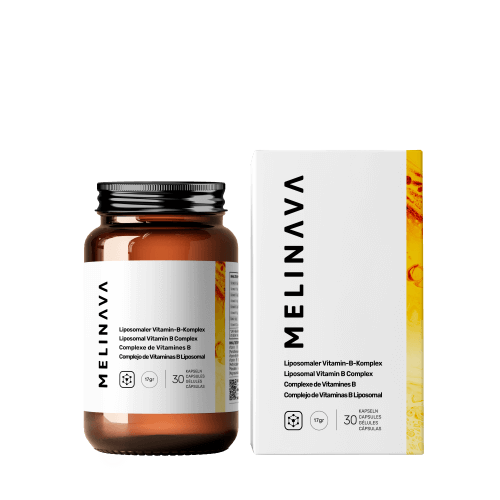
MELINAVA Vitamin B Complex
by MELINAVA
Pros
- Premium vitamin B complex
- Ideal vitamin doses in the optimal ratio
- Maximum bioavailability thanks to liposome technology
- Laboratory-tested
- Very well tolerated
- Suitable for acute vitamin B deficiency
- Vegan
- Made in Europe
- Free from soya, gluten and lactose
- No added preservatives
- No added allergens
- GMO-free
Cons
- Only available online
- Often sold out
Verdict
Melinava Vitamin B Complex contains all eight B vitamins and is high-strength. It ensures an optimal supply of the full spectrum of B vitamins.
The formulation and dosage are balanced to prevent and relieve a wide range of symptoms.
Melinava's vitamin B complex contains no additives that could impair its effect.
User satisfaction and the many positive customer reviews of Melinava Vitamin B Complex reflect the success of this product.
The capsules can also be opened and the contents taken with a liquid.
People have already used Melinava with very good results for symptoms such as lack of energy, low mood, muscle weakness, and also for poor concentration and memory.
Its good tolerability and mostly positive reviews led to a high overall score in our comparison.
You only need to take one capsule of Melinava Liposomal Vitamin B Complex a day.
Each pack contains 30 capsules.
Melinava takes first place in our test (as of January 2026). The manufacturer takes product tolerability very seriously, which is why the product is completely free from unwanted additives.
You can find more information on the manufacturer's website.
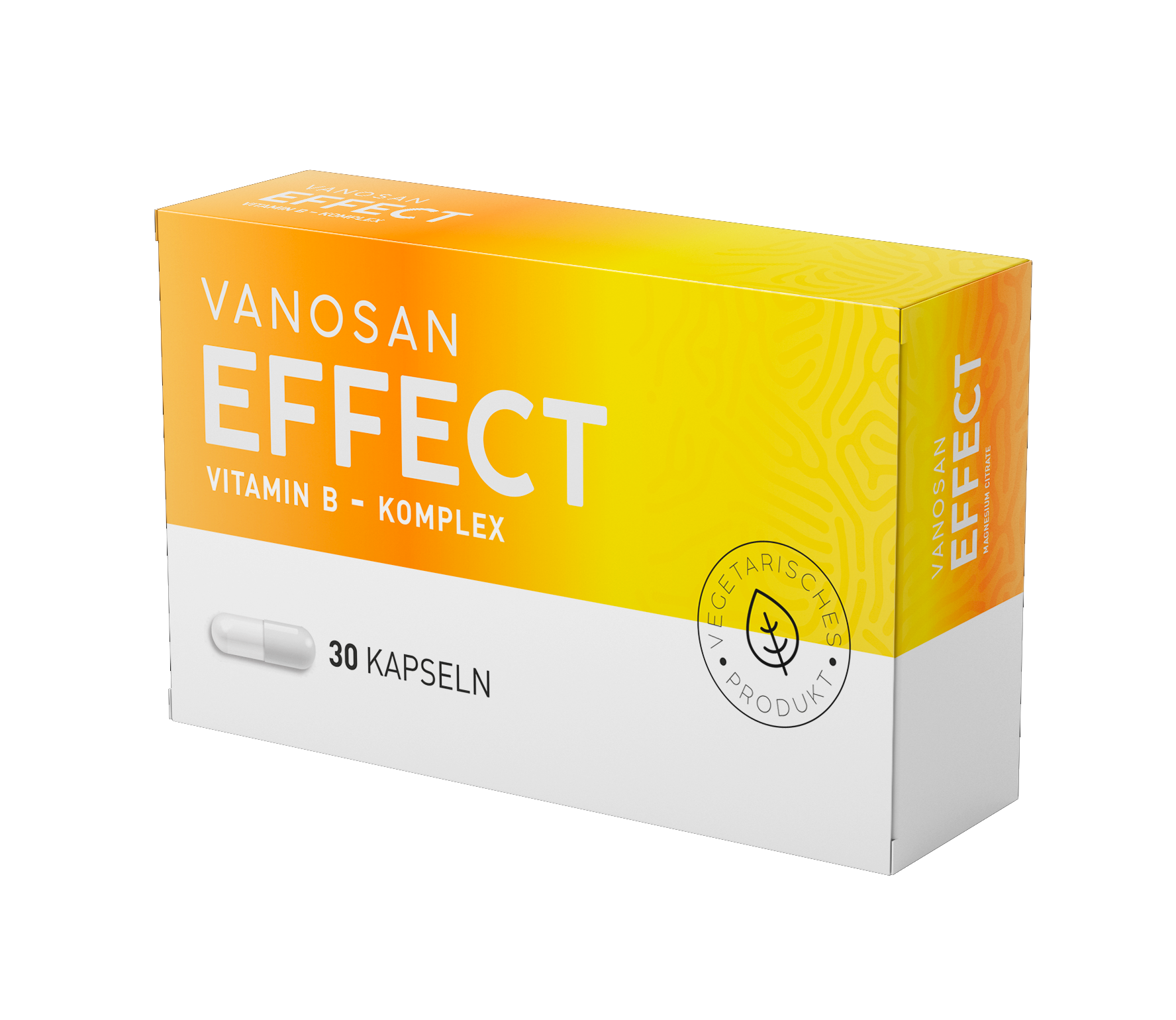
Vanosan Vitamin B Complex
by VANOSAN
Pros
- Laboratory-tested
- B12 as cyanocobalamin
- Vegetarian
- Made in the EU
- No added preservatives
- No added allergens
- GMO-free
- Also available in pharmacies
Cons
- Limited absorption
- Not vegan
Verdict
Vanosan's vitamin B complex contains all eight B vitamins in sensible doses.
Users are mostly positive about Vanosan. It is well tolerated and helps build up the body's B12 stores. For many users, taking it over a longer period reduces symptoms such as poor concentration and memory, overtiredness and exhaustion.
Some customers criticise the additives it contains (especially titanium dioxide).
Vanosan is made in the EU and is available online via Amazon and various online pharmacies. Delivery usually takes 3–4 working days.
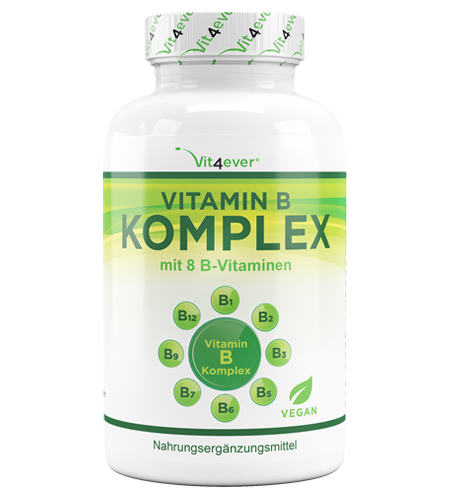
Vitamin B Complex
by ACTINUM
Pros
- Sensibly dosed
- Laboratory-tested
- Vegan
- Good value for money
- Made in Germany
- No added allergens
- GMO-free
Cons
- 2 tablets a day
- Contains fillers and anti-caking agents
Verdict
Actinum's vitamin B complex contains all eight B vitamins and is high-strength.
Compared with other supplements, the recommended daily dose of 2 tablets is moderate.
Users are mostly positive about this vitamin B complex. It is well tolerated and provides relief from tiredness, lack of energy and poor concentration.
Some customers criticise the format. This vitamin B complex is not available as capsules, only as compressed tablets.
Delivery is free with Amazon Prime and usually takes 1–2 working days.

Getting enough vitamin B is important for strengthening the immune system and reducing the risk of infections and inflammation.
B vitamins and the immune system
B vitamins are crucial for the immune system because they promote the production of immune cells and support the immune response.
Vitamins B6, B9 (folic acid) and B12 in particular are important for the formation of white blood cells and for maintaining immune function. Vitamins B1, B2 and B3 also help strengthen the immune system by supporting energy production in immune cells.
A well-functioning immune system is crucial for protection against infections and disease, and B vitamins are indispensable allies in this. A vitamin B deficiency can weaken the immune system and make you more susceptible to infections.

B vitamins are particularly important for the brain
Research shows that vitamin B supports almost every aspect of brain health. While all B vitamins contribute to healthy brain function, vitamins B6, B9 and B12 play a particularly important role in homocysteine metabolism. This process helps reduce the risk of cognitive decline and dementia.
Vitamin B12 is crucial for maintaining healthy DNA structures, which contributes to the prevention of chronic diseases and cancer. It also supports the formation of red blood cells and works closely with folic acid (vitamin B9) to make sure iron functions properly in the body.
Vitamin B6 is essential for both the development and the function of the brain. It contributes to the production of neurotransmitters, which carry signals between nerve cells, and plays a role in regulating mood and sleep.
Folic acid, or vitamin B9, is very important for mental and emotional health. It supports not only the formation of red blood cells but also cell division and repair. The close interplay between folic acid and vitamin B12 is particularly important for preventing anaemia and ensuring an efficient supply of oxygen to the body.
B vitamins are essential for maintaining brain health and preventing disease.
Mental wellbeing can also benefit from B vitamins
There's a close link between B vitamins and emotional wellbeing. Some studies suggest that a deficiency in certain B vitamins, especially B6, B9 (folic acid) and B12, may be linked to an increased risk of anxiety and depression. These vitamins play an important role in making neurotransmitters such as serotonin, dopamine and noradrenaline, which are crucial for regulating mood and coping with stress. An imbalance in these neurotransmitters can lead to mood disorders.

A deficiency can only be clearly identified through medical tests.
* We may earn a commission from some of the companies featured. This is how we keep our comparisons free to read.
Some of these companies are our commercial partners.
Sources
- Lyon P, Strippoli V, Fang B, Cimmino L. B Vitamins and One-Carbon Metabolism: Implications in Human Health and Disease. 2020 Sep 19;12(9):2867. doi: 10.3390/nu12092867. PMID: 32961717; PMCID: PMC7551072.
- Köbe, T., Witte, A. V., Schnelle, A., Grittner, U., Tesky, V. A., Pantel, J., Schuchardt, J. P., Hahn, A., Bohlken, J., Rujescu, D., & Flöel, A. (2016). Vitamin B-12 concentration, memory performance, and hippocampal structure in patients with mild cognitive impairment. The American journal of clinical nutrition, 103(4), 1045–1054. https://doi.org/10.3945/ajcn.115.116970
- Clinical and Research Information on Drug-Induced Liver Injury. Bethesda (MD): National Institute of Diabetes and Digestive and Kidney Diseases; 2012-. Vitamin B. Available from: https://www.ncbi.nlm.nih.gov/books/NBK548710/
- Selhub J, Folate, vitamin B12 and vitamin B6 and one carbon metabolism, The Journal of Nutrition, Health & Aging, 2002;6(1):39-42
- Kaplan P, Tatarkova Z, Sivonova MK, Racay P, Lehotsky J. Homocysteine and Mitochondria in Cardiovascular and Cerebrovascular Systems. Int J Mol Sci. 2020;21(20):7698. Published 2020 Oct 18.
- Vitamin B3 Protects Skin Cells From The Effects Of UV Exposure, New Research Finds, November 2020, Natural Blaze
- Muhamad R, Akrivaki A, Papagiannopoulou G, Zavridis P, Zis P. The Role of Vitamin B6 in Peripheral Neuropathy: A Systematic Review. Nutrients. 2023;15(13):2823. Published 2023 Jun 21.
- Deutsche Gesellschaft für Ernährung (DGE). FAQs zu den einzelnen B-Vitaminen. www.dge.de.
- Azzini E, Raguzzini A, Polito A. A Brief Review on Vitamin B12 Deficiency Looking at Some Case Study Reports in Adults. Int J Mol Sci. 2021 Sep 7;22(18):9694. doi: 10.3390/ijms22189694. PMID: 34575856; PMCID: PMC8471716.