
Guide
Turmeric tested: the best supplements compared (2026)
Last updated: 3 August 2026

Written by
Health Tested Editorial Team
Turmeric is regarded as a true 'wonder plant' and has been valued in traditional Indian and Chinese medicine for centuries.
Today, more than 7,000 scientific studies back up the effects of curcumin, the main component of turmeric. Its best-known effect is strengthening the immune system.
But it would be unfair to dismiss turmeric as nothing more than immune support. Turmeric can do so much more.
It has an antioxidant effect, can lower blood sugar and counteracts inflammation.
At times of heavy physical or mental strain in particular, a high-dose turmeric supplement can give you noticeable support.
In our big 2026 comparison of turmeric supplements, we explain how best to benefit from this powerful root and why many products can't work as well as they should.

There are countless turmeric supplements on the market, but not all of them are effective.
What makes turmeric special
Turmeric is one of the best-known medicinal plants and has many uses in health.
Its botanical name is 'Curcuma longa', and it belongs to the ginger family (Zingiberaceae).
In cooking, turmeric is used either fresh or dried and ground.
But even though turmeric works well in the kitchen, your body absorbs very little of its curcumin: the root contains only a small amount, and curcumin has limited oral bioavailability.
That's why special supplements that contain enough curcumin in a suitably bioavailable form are usually used for therapeutic purposes.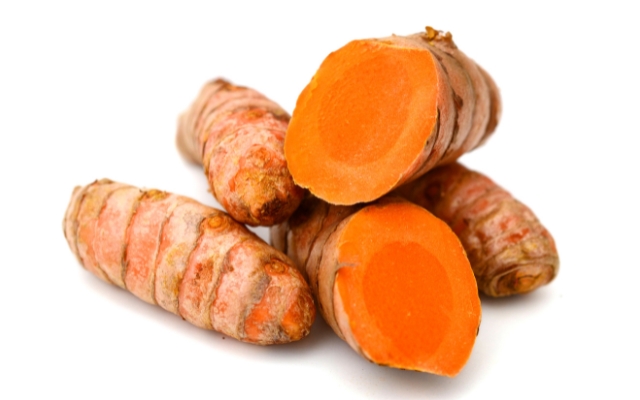
Laboratory analyses have shown that turmeric contains numerous bioactive compounds, which are responsible for its wide-ranging properties.
A favourite plant in Ayurveda and Chinese medicine
The traditional Indian system of Ayurveda and traditional Chinese medicine (TCM) have used turmeric as a medicinal plant for thousands of years.
In TCM, turmeric is seen not only as an anti-inflammatory but also as a medicine that regulates the blood.
It's used to move Xue (blood) and resolve stagnation. This can apply, for example, to absent or painful periods, but it's also used to move what TCM calls 'heart blood' and so improve the blood supply.
In Ayurveda, turmeric is regarded as a medicine and is best known for its positive effects on inflammation and pain.
It's also used more and more often for allergies, bacterial infections and colds, and as a preventive measure.
Pharmacological studies give reason to hope that curcumin will soon find its way into conventional medicine too. The greatest hopes lie in the treatment of inflammatory diseases.
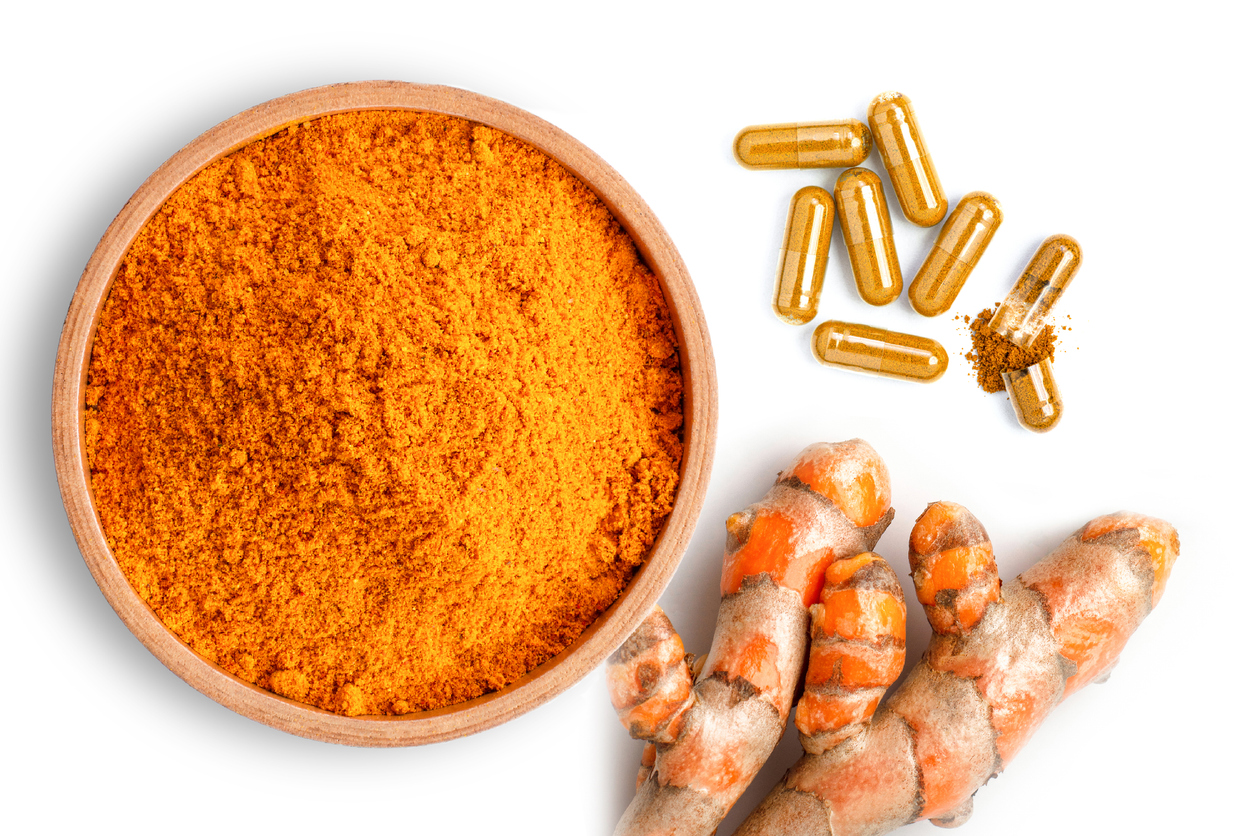
How turmeric is used for health
The therapeutic properties of turmeric are widely recognised: thanks to its active ingredient, curcumin, it has one of the strongest anti-inflammatory effects of any plant.
Turmeric as a natural anti-inflammatory and antioxidant
Curcumin, the active ingredient in turmeric, has been shown to have an anti-inflammatory effect and has already proved its worth many times in the treatment of pain and inflammatory diseases (for example arthritis, osteoarthritis and periodontitis).
Products with high curcumin bioavailability help patients with knee osteoarthritis in particular and can considerably relieve their pain.
Curcumin's effect on inflammatory markers, which signal inflammation in the body, is particularly remarkable.
In one study, patients were given curcumin for four weeks. At the end of the study, all participants showed a significant reduction in their inflammatory markers.
Raised inflammatory markers are also considered a risk factor for cardiovascular disease and other chronic diseases. Curcumin can limit this risk and reduce inflammatory processes in the body.
Benefits of taking turmeric
'Healing for body and mind'
According to studies, this medicinal plant may:
- reduce inflammation
- relieve pain
- act as an antioxidant (scavenge free radicals)
- help with osteoarthritis
- help lower blood sugar
- lower blood pressure
- reduce the risk of stroke and heart attack
- have a positive effect on gut flora
- help with lung and eye diseases
Benefits for mental health
Taking turmeric may also relieve psychological symptoms. It may:
- lift your mood
- help with depression and anxiety
- act on serotonin, dopamine and cortisol
- improve quality of life through better health

There are several things to consider when choosing the right turmeric product.
What to avoid when buying turmeric
If you decide to take turmeric or curcumin as a supplement, make sure you avoid the following:
- low-dose supplements
- too little curcumin
- a low proportion of curcuminoids
- poor bioavailability
- gelatine capsule shells, binders and anti-caking agents
- allergens in the product (soya, gluten, lactose)
- suspiciously low prices
- products with supposedly extremely high doses
Curcumin supplements: all about forms and bioavailability
Conventional curcumin has very low bioavailability, just 1–5%. So the bioavailability of curcumin has to be increased for your body to absorb enough of it.
Manufacturers use or recommend various ways of getting round this, but some of them can cause problems of their own.
Here we go through all the forms and explain why liposomal curcumin is our favourite:
1. Take curcumin with a little fat
- curcumin from turmeric isn't water-soluble
- it should always be taken with a little fat
2. Combine it with piperine
- piperine is an active compound in black pepper that increases curcumin absorption
- it's found in many turmeric supplements
- however, many people can't tolerate high doses of pepper, or piperine
- in some cases it can cause side effects such as stomach and bowel problems
- piperine can also interact with medicines (because it increases the bioavailability not only of curcumin but of other substances too)
- it can affect your hormone balance and reduce nutrient absorption
3. Micellar curcumin
- micelle technology packs the curcumin into tiny bubbles, which makes it liquid and therefore water-soluble
- this lets it pass easily into the watery interior of cells, which greatly increases bioavailability
- however, micellar curcumin usually has to be combined with preservatives, emulsifiers and stabilisers
- this can lead to tolerability problems (for example disrupted gut flora or even inflammation of the gut)
- micellar curcumin is absorbed quickly, but it's also broken down and excreted more quickly (shorter duration of action)
4. Liposomal curcumin
- the active ingredients are encapsulated in microscopic fat particles (liposomes)
- liposome technology considerably improves curcumin absorption
- liposomes increase its stability in the digestive tract (less of the active ingredient is lost)
- liposomes protect the curcumin from being broken down in the digestive system
- they also promote absorption into the bloodstream (by entering the gut cells directly)
- this way of transporting it also shields the curcumin from things that hinder absorption (such as coffee), which ensures high bioavailability
5. Combine curcumin supplements with turmeric
- turmeric contains not only curcumin but many other valuable substances that can enhance each other's effects
- it makes sense (especially when you're ill) to take both: turmeric as a spice in cooking (alternating between cooked and raw) and a curcumin supplement
Capsules
Pros
Easy to take: you simply swallow the capsule
Practical when travelling and on the go
Easy to dose (consistent active ingredient content)
No unpleasant taste or smell
Cons
Stomach acid can affect absorption of the active ingredient
Digestion can partly break down the active ingredient
The bioavailability of the active ingredient can vary
The capsule shell may contain gelatine
Often contains additives
Unsuitable for people with swallowing difficulties
A high dose may require several capsules
Liquid form
Pros
Ideal for people with swallowing difficulties
Fast absorption of the active ingredient (via the mucous membranes)
Can be added to food or drinks drop by drop
Often more readily accepted by children
Cons
The drops can taste unpleasant
Exact dosing can be difficult, as the number of drops varies
The liquid can leak or spill
Often does not keep as long as capsules
Liposomal form
Pros
Highest bioavailability: a much lower dose is needed
Liposomes protect against stomach acid and other factors that hinder absorption
Lower dose needed for the same effect
Fewer side effects, as no piperine or micelle technology is needed
Can mask the taste of the active ingredient
No additives
Cons
May cost more because manufacturing is more complex
Availability and choice may be limited
Producing liposomes can be difficult and requires specialised technology
How well tolerated are turmeric supplements?
Several studies show that curcumin, like many natural products, is relatively safe and well tolerated.
It's considered safe even at doses of up to 8 g a day. Many studies have used daily doses of 1,500 mg of pure curcumin without observing any side effects.
At very high doses, or in sensitive people, stomach and bowel problems can occur.
Curcumin dosage recommendations
The right dose of curcumin depends on the form, the effect you want and the curcumin content.
Turmeric spice and turmeric powder contain only about 3–5% curcumin. However, there are products with a curcumin content of up to 95%, as well as products with significantly increased bioavailability.
For general health support, a dose of 500–1,000 mg of turmeric extract (with 95% curcumin) a day is often recommended. This recommendation only applies to conventional supplements, though.
Formulas with improved bioavailability (for example through liposomal or micellar technology) usually need a much lower dose, because the curcumin is absorbed far more readily.
Because they measure just nanometres across and are rich in fats, liposomes protect the active ingredients inside them from being broken down by enzymes, such as those in saliva and gastric juice. They allow direct release into the bloodstream, which significantly improves absorption of the active ingredients.

A simple model of a liposome, with a layer of fat on the outside and a watery chamber inside. Liposomes are an innovative technology for the targeted, efficient release of active ingredients. That's why they've earned a firm place in medicine and cosmetics, where they have many uses.
Top 3: the best turmeric supplements on the market
Finding the right turmeric isn't easy.
That's why we assess turmeric supplements against the following six factors:
How is the turmeric formulated?
Are there any study or test results?
How high is the curcuminoid content?
Does the product contain any allergens?
How good is the value for money?
Is there anything special about the formulation or production?
product review
TESTED
our quality criteria
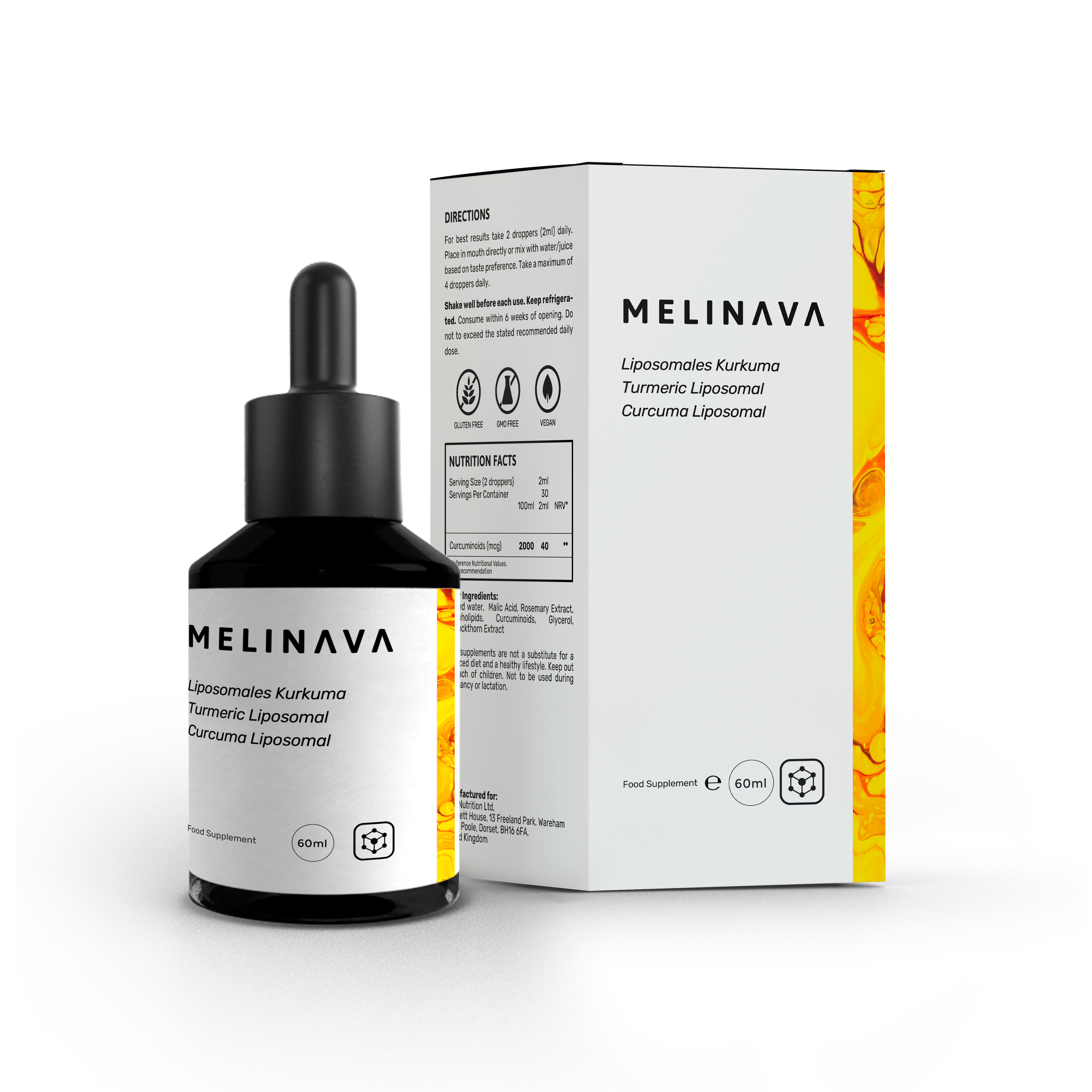
MELINAVA Turmeric
by MELINAVA
Pros
- Ideal dosage: 46 mg curcumin with 95% curcuminoids (liposomal)
- Very high bioavailability from liposome technology
- Liposomal coating protects against stomach acid
- Low risk of side effects and suitable for people with sensitive stomachs
- Vegan
- Made in Europe
- Free from soya, gluten and lactose
- No preservatives
- No added allergens
- Free from impurities
- GMO-free
Cons
- Only available online
- Sometimes sold out
- Higher price because of the advanced technology
Verdict
Melinava Turmeric is our winner and, thanks to liposome technology, can be taken at a much lower dose than other products.
It provides 95% curcuminoids per daily dose, and its innovative liposome technology significantly increases its bioavailability.
The liposome technology also makes it gentler on the stomach, so it does not cause stomach or bowel problems. The formula contains no piperine, which can cause stomach ache.
MELINAVA manufactures to high safety standards and offers a natural, high-quality product without unnecessary additives, which also lowers the risk of side effects.
Melinava is one of the strongest over-the-counter turmeric products on the European market.
Its formulation and dose are carefully balanced to prevent and relieve a wide range of symptoms.
Satisfied users and the many positive customer reviews of Melinava Turmeric reflect the success of this product.
Melinava has already been used with very good results for problems such as osteoarthritis, stomach and bowel problems and inflammation.
It has also brought relief and had an anti-inflammatory effect in acne and other inflammatory skin conditions.
Users who have taken Melinava Turmeric to treat stress and anxiety report feeling calmer and more at ease.
The manufacturer takes tolerability very seriously, which is why the product is completely free from unwanted additives. You can find more information on the manufacturer's website.
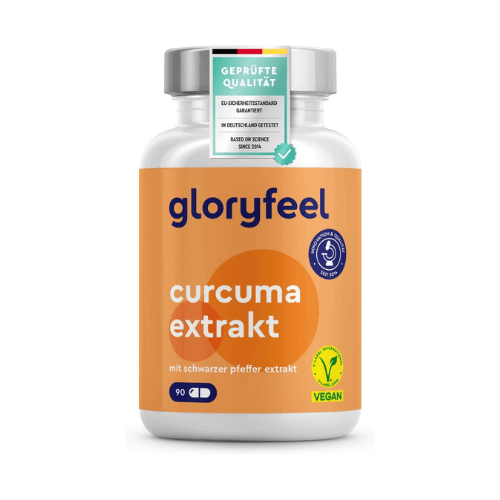
Organic Turmeric Capsules
by GLORYFEEL
Pros
- Very low price
- Laboratory-tested
- Vegan
- Free from soya, gluten and lactose
- No added preservatives
- No added allergens
- GMO-free
- Made in Germany
- Contains 2 mg piperine, which improves bioavailability
Cons
- Piperine is not always well tolerated
- No protection in the digestive tract
- 5% (35 mg) curcuminoids per capsule, low dose
- Only available online
Verdict
The organic turmeric capsules from gloryfeel contain 700 mg turmeric powder with 35 mg curcumin per dose (5% curcuminoids). Piperine (2 mg) is added to increase bioavailability.
The dose is fairly low and therefore not suitable for everyone.
Because of the dosage form, bioavailability is limited. There are no studies showing how much of the curcuminoid content is actually available to the body.
The piperine in the capsules can cause stomach and bowel problems in sensitive people.
Users are generally positive about the organic turmeric capsules. They report that the capsules are well tolerated, improve general wellbeing and help with digestive problems and nervousness.
Some customers dislike the strong turmeric smell of the capsules, and others say they did not tolerate them well. The product should not be taken on an empty stomach.
Delivery usually takes 1–2 working days. Each pack contains 400 capsules.
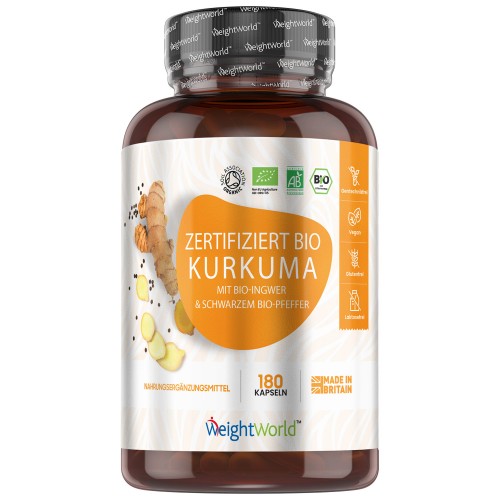
Organic capsules from WeightWorld
by WEIGHTWORLD
Pros
- Low price
- Also contains ginger
- Black pepper increases bioavailability
- Organic
- Vegan
- Free from soya, gluten and lactose
- No added preservatives
- No added allergens
- GMO-free
Cons
- Black pepper is not always well tolerated
- Dose possibly too low
- Made in Slovenia
- No protection from stomach acid
- No information on a gastro-resistant capsule shell
Verdict
Third place goes to the organic capsules from WeightWorld. Their advantage is that each dose of 2 capsules contains not only 1,440 mg turmeric powder but also 60 mg ginger powder.
Ginger is also credited with anti-inflammatory properties and is said to strengthen the immune system. Like black pepper, it is said to increase bioavailability.
The capsules have good customer reviews. However, because they contain turmeric powder, the curcumin dose is somewhat lower and not enough for some people. At a curcumin content of 5%, 2 capsules (1,440 mg turmeric) would contain 72 mg curcumin.
The black pepper can cause stomach problems.
Each pack contains 365 capsules.
The product offers good value for money.
The recommended daily dose of 2 capsules is a moderate dose compared with other turmeric products.
The capsule shell is made without animal ingredients, so it is also suitable for vegetarians and vegans.
A few customers say they did not tolerate the capsules well.

The active compounds in turmeric can strengthen the immune system by lowering inflammatory markers such as CRP and cytokines (the immune system's chemical messengers).
The antioxidant effect of turmeric
Thanks to its antioxidant effect, turmeric can have a particularly strong anti-inflammatory action.
Antioxidants protect your body against 'free radicals'. Your body produces some of these free radicals itself, but they also come from harmful outside influences such as cigarette smoke, environmental toxins and UV radiation.
When there are too many of them, the result is 'oxidative stress'. Oxidative stress and inflammation play a major role in many diseases, such as diabetes, cancer, arthritis, Alzheimer's disease and cardiovascular disease.
Taking curcumin strengthens your body's own antioxidant defences, including the substances that scavenge free radicals. This can also relieve pain. At the same time, it helps prevent inflammation and the diseases mentioned above.
Turmeric for mental health
Turmeric for stress and a better mood
There are also signs that turmeric may raise levels of serotonin and dopamine, the neurotransmitters that regulate your mood. At the same time, turmeric increases stress tolerance by protecting against stress-induced cortisol release, and it's even said to relieve anxiety. A review study concluded that curcumin can have significant effects on several mental disorders and shows anti-anxiety, antidepressant and stress-relieving properties.

Why the anti-inflammatory effect matters in depression
Curcumin's anti-inflammatory properties also play a big part here: chronic inflammation is increasingly recognised as a factor that contributes to depression. By reducing inflammation, curcumin can ease the intensity of some symptoms associated with depression.
Its anti-inflammatory, antioxidant and neuroprotective properties also appear to contribute, indirectly, to easing stress and anxiety. However, studies in humans are limited and varied, and more research is needed.
Some studies also suggest that the improvement in mood is linked to a general improvement in health and functioning, simply because inflammation and pain in the body decrease and the person feels better.
Our verdict: turmeric seems to be an all-rounder for your health
Turmeric can have a positive effect on countless areas of your health, even if more research is certainly still needed. Even so, it should by no means be seen as a panacea or relied on as the only treatment for serious illness.
Yet the root still gets far too little attention, given the potential it holds. Would you like to try turmeric and see whether it helps you? Then choose one of the products in our comparison.
See the turmeric products we tested
* We may earn a commission from some of the companies featured. This is how we keep our comparisons free to read.
Some of these companies are our commercial partners.
Sources
- https://pubmed.ncbi.nlm.nih.gov/26066364/
- https://pubmed.ncbi.nlm.nih.gov/26927041/
- https://www.sciencedirect.com/science/article/abs/pii/S0278691515001878?via%3di Hub
- https://www.dovepress.com/efficacy-and-safety-of-curcuma-domestica-extracts-compared-with-ibupro-peer-reviewed-fulltext-article-CIA
- https://onlinelibrary.wiley.com/doi/10.1002/ptr.5045
- https://www.sciencedirect.com/science/article/abs/pii/S0753332216303997?via%3Dihub
- https://www.clinicalnutritionjournal.com/article/S0261-5614(15)00002-3/abstract
- https://pubmed.ncbi.nlm.nih.gov/26066364/
- https://www.ncbi.nlm.nih.gov/pmc/articles/PMC5517797/
- https://www.zentrum-der-gesundheit.de/bibliothek/ratgeber/erfahrungsberichte/blutkrebs-curcumin
- https://www.sciencedirect.com/science/article/abs/pii/S0278691515001878?via%3Dihub
- https://pubmed.ncbi.nlm.nih.gov/23832433/
- https://link.springer.com/article/10.1007/s00213-008-1300-y
- https://pubmed.ncbi.nlm.nih.gov/38672750/