
Guide
Selenium: the best supplements compared (2026)
Last updated: 5 August 2026

Written by
Health Tested Editorial Team
Exhaustion despite enough sleep, brittle nails, dry skin or feeling thrown off balance more easily than usual: many people will recognise these symptoms, but the cause often remains unclear.
One possible reason is a low selenium intake, which is more common in Europe than you might think.
This trace element is best known for its antioxidant properties and is involved in many vital processes, from cell regeneration to the immune system.
It also supports the thyroid, has an anti-inflammatory effect and even contributes to fertility.¹
No wonder selenium is attracting more and more attention in modern nutritional medicine. We'll show you the benefits of taking it, how to take selenium properly and which selenium supplements impressed us in 2026.

There are countless selenium supplements on the market, but not all of them are effective.
Selenium: a small element with a big role
Selenium is an essential trace element that your body can't make itself², yet it's vital for many processes. Even a tiny amount is enough to set a whole range of protective and regenerative functions in motion.
Selenium is no 'well-kept secret': even in ancient times, doctors used natural sources of it to promote vitality, because even tiny amounts of minerals such as selenium can make a crucial contribution to health.³
Today we know that almost nothing in the human body runs smoothly without selenium. Modern nutritional science considers it a true all-rounder among nutrients, essential for cell protection, fertility, the immune system and the thyroid.
Selenium deficiency: widespread in Europe
Given how important selenium is, it's all the more surprising that deficiency is far from rare. Mild selenium deficiency is widespread in Europe, partly because of the selenium-poor soils our food grows in. According to a study by the European Food Safety Authority (EFSA), around 40% of the population don't reach the recommended daily amount.⁴
Too little selenium can show up as increased susceptibility to infections, tiredness, brittle hair or difficulty conceiving.
Selenium in food: does your diet cover your needs?
Dietary selenium intake in Europe is often inadequate, and the reason is simple: soils in large parts of Europe are extremely low in selenium.⁵ Plants take up selenium only from the soil. If it's missing there, your food won't contain much of it either.
In other words: even a balanced diet can leave you short of selenium, especially if you follow certain diets.
Key facts about selenium from food:
- In Europe, soils are considered low in selenium, particularly in Germany, Austria and Switzerland.
- Animal foods such as meat, fish, eggs and dairy products are the best natural sources of selenium.⁶
- The amount in plant foods varies widely depending on where they come from, and is often very low.
- Vegans and vegetarians have a significantly higher risk of selenium deficiency.
- Organic produce can also contain less selenium, because mineral fertilisers that contain selenium aren't used.
- Even healthy people often don't reach the recommended daily intake from food alone.
- For supplements, a daily dose of 50–100 µg⁷ is often recommended to cover your needs safely without exceeding the upper limit.
The bottom line:
If you eat an entirely plant-based diet or live in a region with selenium-poor soils, you should check your selenium status regularly and, if necessary, top it up with high-quality selenium supplements.
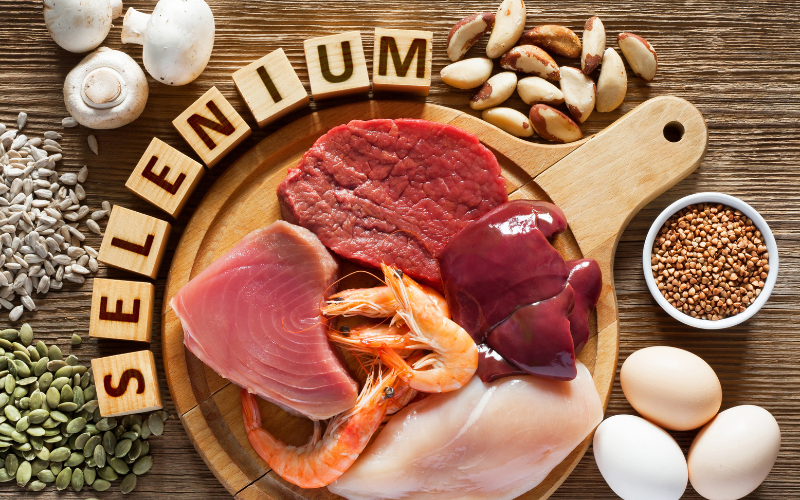
Selenium is found mainly in animal products such as meat, eggs and milk. On top of that, soils in large parts of Europe are low in selenium, which makes it harder to get enough selenium from plant sources.
Antioxidant cell protection, right down to your DNA: studies show an impressive effect
Selenium is one of your body's most powerful antioxidant defences. As a component of certain enzymes, it mops up free radicals that can form as a result of stress, UV radiation, environmental pollution or inflammation. In this way, selenium protects your genetic material (DNA).
Studies show a clear link between daily selenium intake and biological markers of ageing.
An adequate selenium status can slow down cell ageing and even reduce the risk of certain chronic diseases.
In a US study of more than 3,000 adults, researchers analysed the participants' diets and also measured their telomere length, a biological marker of ageing.⁸
What they found: as little as 20 µg of selenium a day was linked to significantly longer telomeres (0.42%). The effect was particularly clear in women (+0.87%) and in people of normal weight.
Longer telomeres point to slower cell ageing. This suggests that good selenium status can have a positive effect on biological ageing.
Selenium and your thyroid
Alongside its role in cell ageing, selenium also plays a central part in thyroid health. It's essential for producing thyroid hormones and protects the thyroid from oxidative stress. An adequate selenium status can help stabilise hormone production and lower the risk of thyroid inflammation, such as Hashimoto's thyroiditis.
Selenium is also essential for men and women who are trying to conceive: it improves the quality and motility of sperm and supports hormonal balance in women.
The key benefits of selenium
This trace element is credited with a number of positive properties:
- support for thyroid function and hormone regulation
- protection of cells from oxidative stress
- a stronger immune system during infections and periods of prolonged stress
- support for fertility in men and women
- maintenance of healthy skin, hair and nails
- support for the body's natural detoxification processes
- reduction of silent inflammation in the body
- a contribution to cardiovascular health
- prevention of cell ageing
Healthy selenium levels are crucial: how to spot the first signs of deficiency
The following symptoms can occur if you're deficient:⁹
- increased susceptibility to infections
- tiredness, lack of drive and poor concentration
- brittle nails
- hair loss
- reduced physical performance
- thyroid problems and hormonal imbalance
- delayed wound healing
- skin problems
- increased risk of inflammation and oxidative cell damage
- reduced fertility in men and women
- muscle weakness and coordination problems
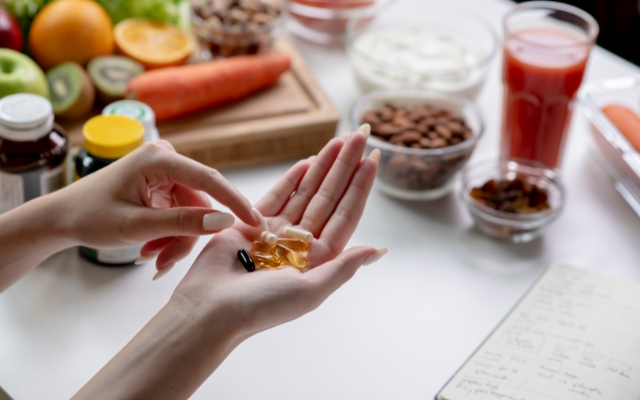
If your diet doesn't provide enough, you should top up your selenium with supplements to avoid signs of deficiency. However, the range of supplements is huge, and not every product lives up to its promises.
What to avoid when buying selenium
If you decide to take selenium, watch out for these warning signs:
- no high-quality selenium compound, such as selenomethionine or sodium selenite
- too low a dose
- poor or low bioavailability
- unwanted additives such as gluten, lactose or artificial colourings
- no stable, light-proof packaging to protect the trace element from breaking down
- no verified quality

There are several factors to consider when choosing the right selenium supplement.
Dosage forms: how can you take selenium?
Selenium comes in different forms to suit your needs and preferences:
- capsules
- tablets
- drops
Capsules
Pros
Easy to swallow
Practical on the go and when travelling
Easy to dose (each capsule contains the same amount)
No unpleasant taste or smell
Can be combined with other active ingredients
Cons
Stomach acid can affect how well the active ingredient is absorbed
Digestion can partly break down the active ingredient
The bioavailability of the active ingredient can vary
The capsule shell may contain gelatine
Often contains additives
Unsuitable for people with swallowing difficulties
If the dose per capsule is low, you may need several
Drops
Pros
Easy to dose
Fast absorption of the active ingredient (via the mucous membranes)
Good for people with swallowing difficulties or stomach problems
Versatile: can be mixed into drinks or food
Cons
The drops can taste unpleasant
Exact dosing can be difficult, as the number of drops varies
The liquid can drip or spill
Short shelf life
Liposomal form
Pros
Higher bioavailability of the active ingredient
Better absorption by bypassing stomach acid
Lower dose needed for the same effect (usually just one capsule)
Can mask the taste of the active ingredient
No additives
Cons
May cost more because the production process is more complex
Availability and choice may be limited
Producing liposomes can be difficult and requires specialised technology
Smaller selection, as not all manufacturers use the process
Liposomal selenium: developed for better absorption
Many conventional selenium supplements have a weak spot: your body can only absorb part of the selenium they contain.
This is exactly where liposomal products come in: the selenium is embedded in tiny fat bubbles called liposomes. This technology makes it easier for the nutrients to get into your body and improves their absorption.
Liposomes pass through cell membranes more easily, so the nutrients can be put to better use. They also protect the active ingredients from digestion, so they remain fully effective.
The result: your body can make the best possible use of the nutrients, which significantly increases their effect. That's why lower doses are needed, which in turn reduces the risk of side effects.Gentle on the stomach and gut
Liposomal selenium isn't just more effective: it's also particularly well tolerated. Liposomes stop the nutrients from coming into direct contact with the sensitive stomach lining, so they irritate the digestive tract less. This lowers the risk of side effects such as an upset stomach.
These properties make liposomal selenium ideal for people with a sensitive stomach or anyone who reacts badly to conventional supplements.

A simple model of a liposome. A liposome is like a tiny bubble with a fatty layer on the outside and a watery chamber inside. This structure makes liposomes particularly effective, because they can deliver and release active ingredients precisely. Thanks to this innovative technology, liposomes have become increasingly important in medicine and cosmetics. They allow active ingredients to be absorbed effectively, protect them from breaking down and have a wide range of uses.
Top 3: the best selenium supplements of 2026
There are countless selenium supplements on the market today. We've assessed them against several criteria to find the best products:
What is each selenium product made of?
Are there studies or scientific papers?
How high is the dosage of each nutrient?
Does the product contain allergens?

How good is the value for money?

Are there any special features in the composition or manufacturing?
product review
TESTED
our quality criteria
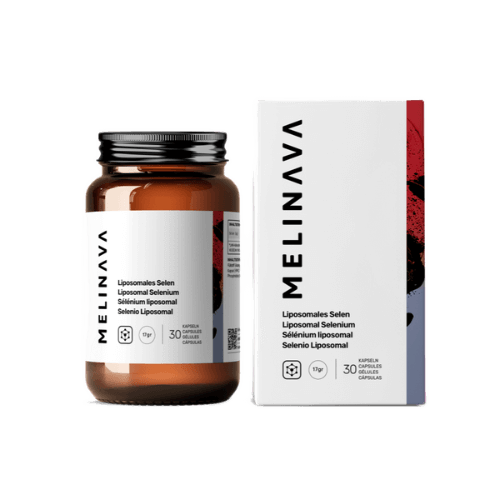
MELINAVA Liposomal Selenium
by MELINAVA
Pros
- Ideal nutrient dosage (liposomal)
- Maximum bioavailability thanks to liposome technology (up to 64 times better absorption by the body)
- High dose of 150 µg of selenium
- Protection against heartburn thanks to the liposomal coating
- Highly effective selenomethionine
- Derived from quality-controlled yeast
- Suitable for people with a sensitive stomach
- Free from soya, gluten and lactose
- Gelatine-free capsule
- No fillers
- No contaminants
- Made in Europe (France)
- Comes in a high-quality glass bottle that you can reuse at home for spices and more
Cons
- Only available online
- Often sold out
- Only available as capsules
Verdict
Melinava Liposomal Selenium achieved the highest overall score and is therefore the winner of our test.
With 150 µg of selenium per daily dose, the capsules are high-strength and ensure an optimal supply of selenium.
Thanks to the liposomal encapsulation, bioavailability is significantly higher. This means lower doses are needed to achieve the same effect.
MELINAVA places particular emphasis on high safety and quality standards in manufacturing, which minimises the risk of side effects.
Users of Melinava Liposomal Selenium report a noticeable improvement in their overall wellbeing and sense of balance. After taking it for only a short time, many feel calmer and more resilient, and say their immune system feels stronger and they have more energy throughout the day.
For some, taking it also has a positive effect on the health of their skin and hair.
With Melinava Liposomal Selenium, you only need to take one capsule a day.
One pack contains 30 capsules.
The manufacturer takes tolerability very seriously, which is why the product is completely free from unwanted additives.
You can find more information on the manufacturer's website.
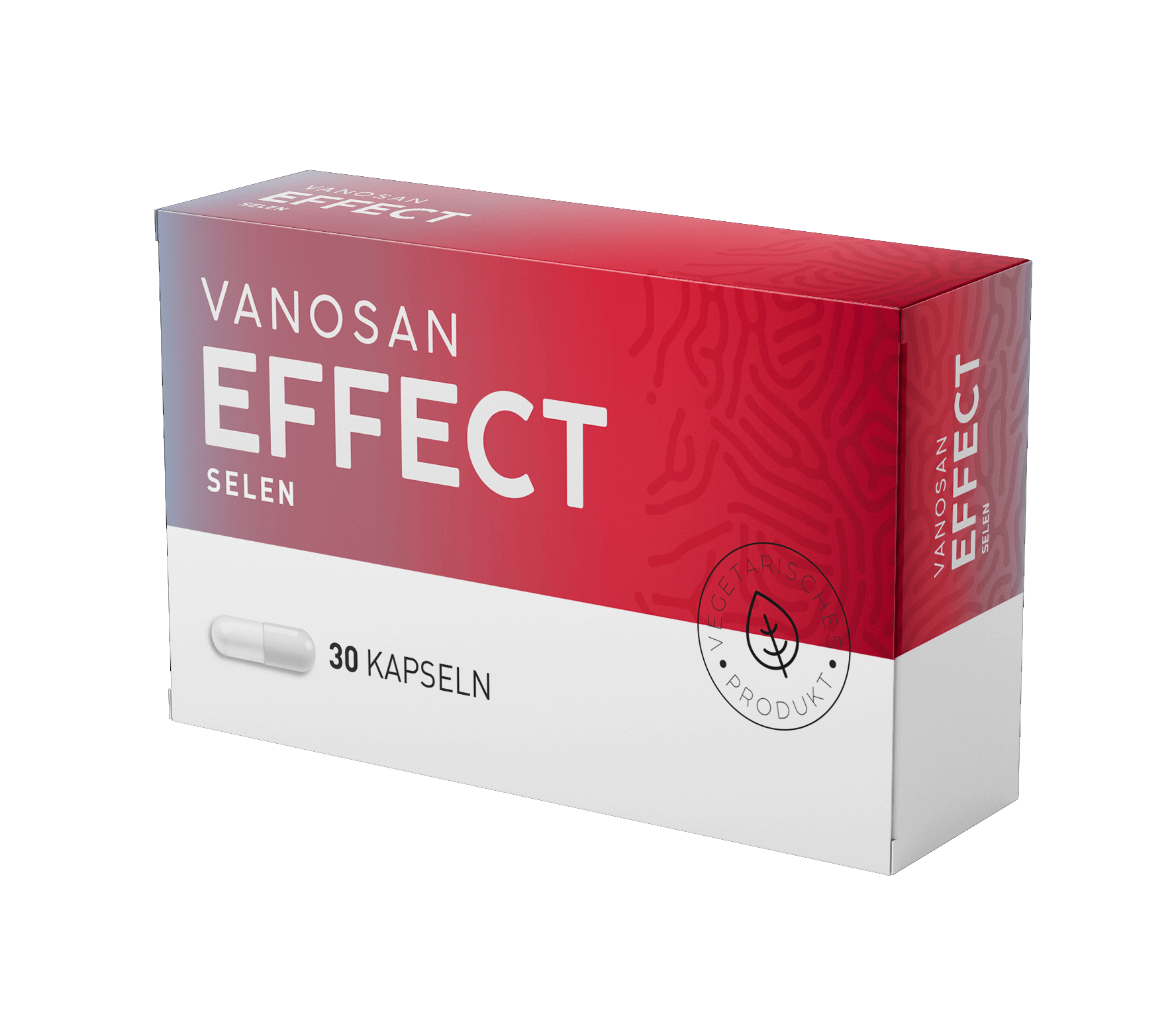
Vanosan Selenium
by VANOSAN
Pros
- Contains 100 µg of selenium per daily dose
- Plant-based ingredients, suitable for vegans
- Free from GMOs, colourings and preservatives
- Only two capsules a day
- Laboratory-tested quality
- Made in Germany
- No unnecessary additives
Cons
- Only available online
- Plastic packaging
- No special form for better bioavailability (such as organically bound selenomethionine)
Verdict
Vanosan Selenium provides a reliable daily dose of 100 µg of selenium. The product stands out for its clean, vegan formula with no unnecessary additives and no GMOs, which particularly appeals to health-conscious users.
One possible drawback is the lack of a special form of selenium that could improve absorption. The product is currently only available online.
Overall, Vanosan Selenium is a solid choice for anyone who wants a pure, well-tolerated selenium supplement and values German-made quality.
The recommended dose is two capsules a day with a meal.
One pack contains 60 capsules.
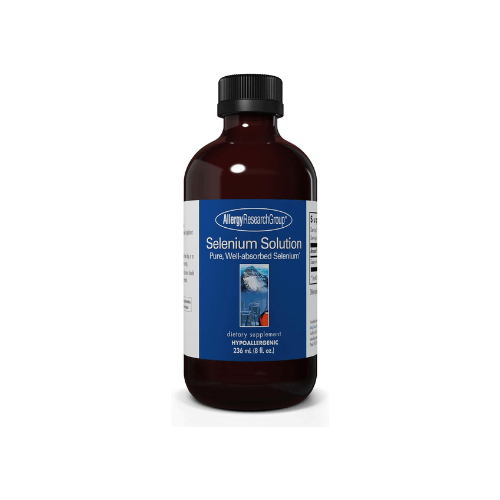
Allergy Research Group Selenium Solution
by ALLERGY RESEARCH GROUP
Pros
- Contains 100 µg of selenium per daily dose
- Liquid form suitable for people with swallowing difficulties
- Free from colourings and preservatives
- Hypoallergenic: suitable for people with intolerances
Cons
- No evidence of optimised bioavailability
- The drop form makes dosing imprecise
- Uses sodium selenite (lower bioavailability)
- No information on manufacturing in certified laboratories or on quality marks
- Relatively high price per dose
- Packaging probably made of plastic
Verdict
With 100 µg per daily dose, 'Selenium Solution' from Allergy Research Group provides a solid foundation, but it falls short of the other top products. The drop form can be practical for people with swallowing difficulties, and the formula is low in allergens and free from colourings and preservatives.
However, it uses sodium selenite, an inorganic form of selenium with lower bioavailability than organic alternatives such as selenomethionine. It also lacks the supporting nutrients or modern technologies for better absorption that higher-rated products offer.
Another drawback is the lack of transparency: there are hardly any reviews, no visible test certificates or quality marks and no information on manufacturing. This undermines confidence in the product.
The recommended dose is half a teaspoon.
One pack contains 236 ml.
Fertility: selenium strengthens the foundations of new life
Selenium plays an important role in fertility in both men and women.
In men, it supports the production of healthy, motile sperm, so getting enough selenium is crucial for male fertility.
In women, selenium contributes to healthy ovarian function and to regulating the menstrual cycle. In both sexes, it also protects reproductive tissue from oxidative stress, which can be caused by environmental toxins, smoking or chronic inflammation.

When it comes to new life, hormones aren't the only thing that matters. Selenium affects fertility in both women and men.
Heart: protection for the cardiovascular system
A well-functioning heart needs strong support. Selenium may help protect heart muscle cells from oxidative stress. It also has an anti-inflammatory effect and may help slow down harmful processes in the blood vessels. According to studies, people with low selenium status have a higher risk of cardiovascular diseases such as heart failure or arteriosclerosis. An adequate selenium intake can also have a positive effect on blood pressure. In this way, selenium makes a quiet but crucial contribution to heart health.
Brain and nervous system: selenium for clear thinking
The brain is one of the most metabolically active organs and is particularly vulnerable to oxidative stress. Selenium protects nerve cells and supports communication between them.
Early studies suggest that getting enough selenium can considerably support cognitive abilities such as memory, concentration and reaction speed, especially in later life.
Thanks to its antioxidant properties, selenium could also have a supportive effect in neurological diseases such as Alzheimer's and Parkinson's.
For a healthy, sharp brain, selenium can make a noticeable difference.

Selenium is essential for nerve cells to communicate with each other. Current studies offer early indications that the nutrient could be helpful in neurological diseases.
Our verdict: a versatile micronutrient with a big impact
From a strong heart to healthy reproduction and a sharp brain, selenium plays a crucial role in many areas of your body. It protects cells, regulates important metabolic processes and helps keep organs and tissues healthy.
Especially at times of high stress or if your diet is unbalanced, getting extra selenium can make a valuable contribution to prevention and wellbeing. Small in quantity, but big in effect.
Selenium really is an all-rounder. If you want to support your body for the long term, selenium is a natural, well-tolerated option.
Take a look at our recommendations and find the right product for your needs.
Tried-and-tested selenium supplements
* We may earn a commission from some of the companies featured. This is how we keep our comparisons free to read.
Some of these companies are our commercial partners.
Sources
1. https://www.burgerstein-foundation.ch/de-DE/wissen/naehrstofflexikon/selen
2. https://www.netdoktor.de/laborwerte/selen/
3. https://doczz.net/doc/8913958/biogeochemistry-and-analysis-of-selenium-and-its-species
4. https://pubmed.ncbi.nlm.nih.gov/28684689/
6. https://www.apotheken.de/gesundheit/gesund-leben/nahrungsergaenzungs-mittel/12679-selen
7. https://www.dge.de/gesunde-ernaehrung/faq/selen/
8. https://pubmed.ncbi.nlm.nih.gov/32057534/
9. https://www.burgerstein-foundation.ch/de-DE/wissen/naehrstofflexikon/selen