
Guide
OPC tested: the best grape seed extract supplements (2026)
Last updated: 30 July 2026

Written by
Health Tested Editorial Team
OPC has become increasingly popular in recent years, and not without reason: OPC is considered one of the most powerful antioxidants known and so offers many health benefits.
Several studies have confirmed the benefits of OPC. It is particularly good for the cardiovascular system, strengthens the immune system and supports eye health. But that's not all: OPC also has remarkable benefits for skin and hair.
With demand for OPC supplements growing, the question is: which OPC product is right for your needs?

There are countless OPC supplements on the market, but not all of them are effective.
The power of grape seeds
OPC is now one of the most popular supplements and is also considered a highly effective plant compound. OPC stands for 'oligomeric proanthocyanidins', which belong to the diverse family of phytochemicals. Their main job is to protect the plant from pests and UV radiation.
These valuable plant compounds are found in high concentrations in grape seeds, but they can also be extracted from the bark of certain pine trees.
Grape seeds are rich in antioxidants, including phenolic acids, anthocyanins, flavonoids, oligomeric proanthocyanidins (OPCs) and proanthocyanidins (PACs). Grape seed extract is also rich in vitamin E, linoleic acid and resveratrol.
Thanks to their very high antioxidant content, grape seeds can help prevent disease and protect against the harmful effects of oxidative stress, tissue damage and inflammation.
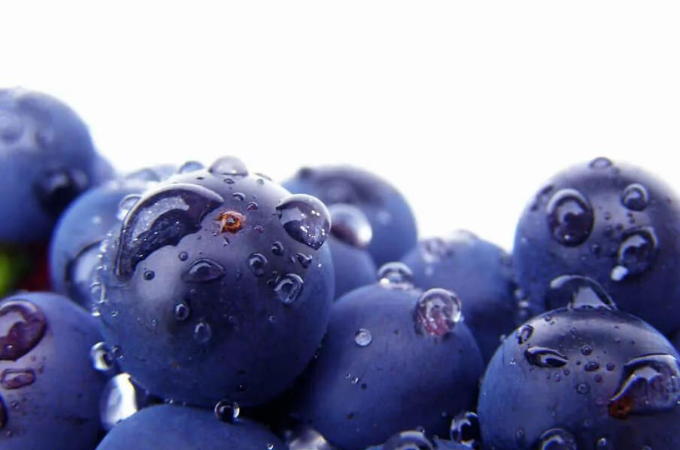
The phytochemicals in grape seed extract act on a range of processes in the body and can have positive effects on numerous conditions.
Natural anti-ageing with OPC
OPC is extremely valuable for skin health and a strong ally in the fight against premature skin ageing. Thanks to its wealth of antioxidants, OPC counters oxidative stress and neutralises free radicals. If they aren't kept in check, these radicals can damage cells and tissue and so greatly speed up skin ageing.
Deep wrinkles often form when free radicals attack the skin and its key structural proteins, collagen and elastin. These are the proteins that give skin its firmness and suppleness. Without adequate protection, they lose their stability, so the skin holds less moisture, loses elasticity and starts to sag.
But when antioxidants such as OPC come into play and trap the free radicals, they can protect skin cells, fibroblasts, structural proteins and blood vessels and so noticeably slow down the ageing process.
Thanks to its anti-inflammatory effect, OPC soothes the skin, relieves irritation and contributes to a radiant, even complexion.
More antioxidant power than vitamin C
OPC is an exceptionally powerful antioxidant. It's around 20 times stronger than vitamin C and even 40 to 50 times stronger than vitamin E.
Things get really interesting when OPC is paired with other antioxidant vitamins. With vitamin C, for example, OPC can increase vitamin C's protective effect tenfold, while vitamin C in turn multiplies the effect of OPC.
Many experts highlight this remarkable interaction. With OPC as a natural enhancer, even less than the recommended vitamin C intake is enough to have an effect.
Benefits of taking OPC
Taking the right product can help you achieve the following:
- protection against free radicals and oxidative stress
- support for cardiovascular health
- support for healthy skin and skin elasticity
- a stronger immune system
- improved cognitive function
- support for eye health
- anti-inflammatory effects
- support for healthy blood vessels and blood pressure regulation
- support for people with allergies and asthma
Benefits for mental health
Taking OPC may also benefit your mental and emotional health:
- stress reduction
- better mood and general wellbeing
- antidepressant properties
- relief from anxiety
- support for cognitive function and memory
- better sleep quality

There are several things to consider when choosing the right OPC product.
What to avoid when buying OPC
When you choose an OPC supplement, there are a few things to check. Here's what you should definitely avoid:
- a low dose
- an isolated compound (OPC should come as grape seed extract)
- gelatine capsule shells, binders and anti-caking agents
- artificial colourings
- allergens you react to, such as soya, gluten and lactose
- supplements at suspiciously low prices
- extremely high-dose products (take care with these)
What forms of OPC supplement are there?
Powder, capsules or liquid? OPC supplements come in several forms, each with its own advantages and drawbacks:
- powder
- capsules
- drops
- liposomal form
There are no significant differences in how OPC capsules and drops work. You can simply go by personal preference. There's just one exception: liposomal OPC.
Capsules
Pros
Easy to take: simply swallow
Handy when travelling or on the go
Easy to dose (consistent active ingredient content)
No unpleasant taste or smell
Cons
Stomach acid can affect absorption of the active ingredient
Digestion can partly break down the active ingredient
Bioavailability of the active ingredient can vary
The capsule shell may contain gelatine
Often contain additives
Unsuitable if you have difficulty swallowing
A high dose may mean taking several capsules
Drops
Pros
Easy to dose
Rapid absorption of the active ingredient (via the mucous membranes)
Good for people with swallowing difficulties or stomach problems
Versatile: can be mixed into drinks or food
Cons
The drops may taste unpleasant
Exact dosing can be difficult, as the number of drops varies
The liquid can leak or spill
Shorter shelf life than capsules
Liposomal form
Pros
Higher bioavailability of the active ingredient
Better absorption by bypassing stomach acid
A lower dose is needed for the same effect
Can mask the taste of the active ingredient
No additives
Cons
May cost more because manufacturing is more complex
Availability and choice may be limited
Making liposomes can be difficult and requires specialised technology
OPC in true liposomal form
One particularly innovative form of OPC supplement is the liposomal version. Liposomal OPC is encapsulated in tiny liposomes, which allow better absorption and improved bioavailability. This means your body can use the OPC more efficiently and absorb the active ingredients directly into the bloodstream, with nothing lost along the way. Encapsulating the active ingredient in liposomes protects it from stomach acid and digestive enzymes and can minimise digestive discomfort.
The liposomal coating lets your body absorb and make full use of the active ingredients, even in large amounts.Note: a liquid product isn't automatically liposomal.
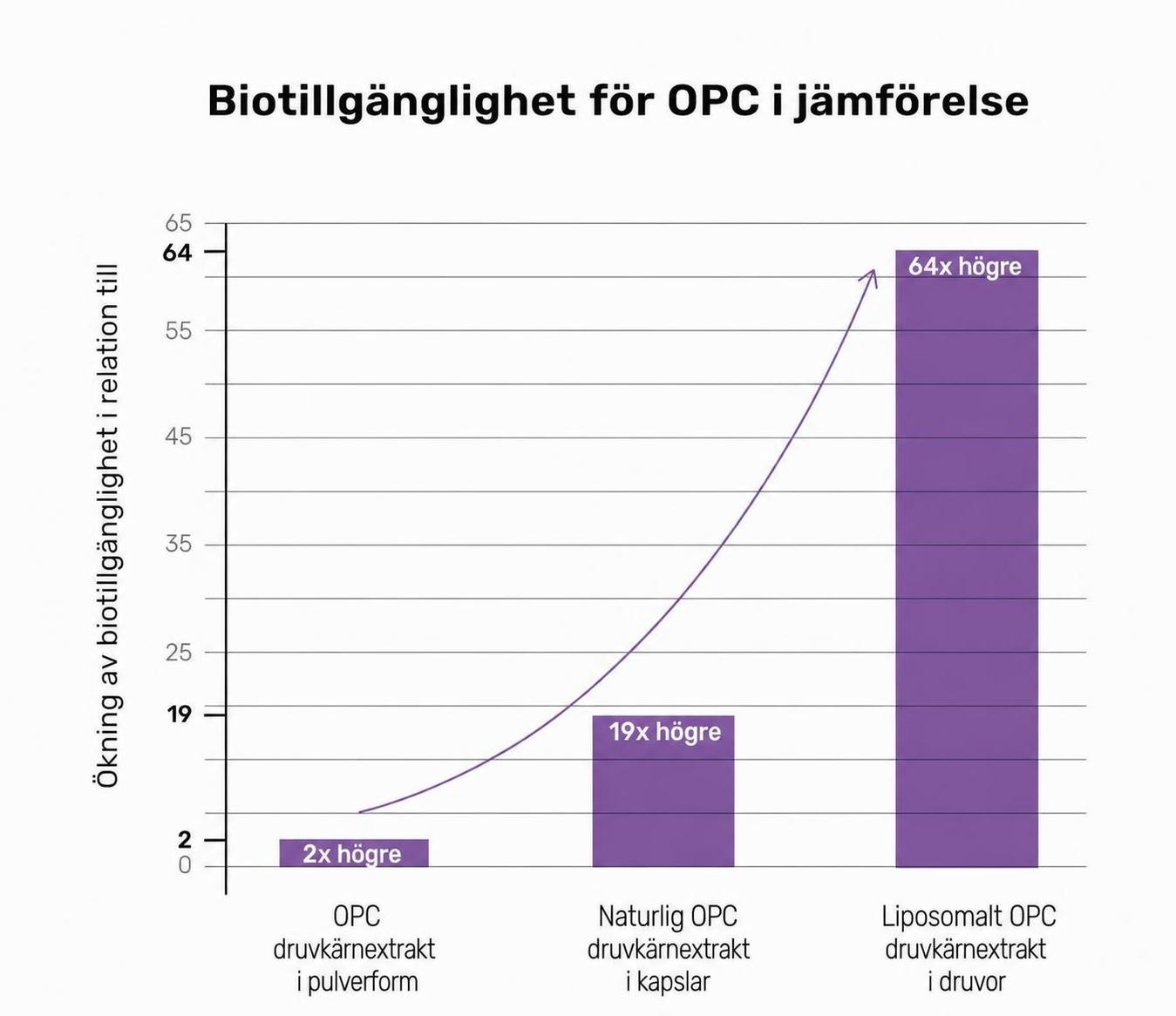
Because they measure just nanometres across and are made of fats, liposomes protect the OPC inside them from being broken down by enzymes, such as those in saliva and gastric juice. They deliver the nutrient directly into the bloodstream, which makes the active ingredient up to 64 times easier to absorb.

Because the active ingredient is so easily absorbed, much lower doses are needed. Studies have found that liposomal OPC can be absorbed around 64 times better by the body.
Top 3: the best OPC supplements on the market
Finding the right OPC supplement isn't easy.
That's why we assess products against the following six factors:
How is the product formulated?
Are there any study or test results?
Is the dose right, neither too high nor too low?
Does the product contain any allergens?
How good is the value for money?
Is there anything special about the formulation or production?
The most important factor: how is the OPC supplement formulated?
When you choose an OPC supplement, there are several key factors to consider if you want it to work to its full potential and deliver the best possible health benefits. First of all, the OPC content is crucial.
The purity of the extract and the absence of additives are just as important. The origin of the OPC is another key factor, and natural sources such as grape seed extract or pine bark are preferable.
The key factors when choosing an OPC supplement are the dose, the formula and the quality of the ingredients. The type of formulation matters too, because different forms of OPC can differ considerably in bioavailability, meaning how well your body absorbs them. Poor-quality ingredients, meanwhile, can make a supplement less effective. It's worth looking for supplements that come from high-quality, natural sources and are free from additives.
product review
TESTED
our quality criteria
MELINAVA OPC
by MELINAVA
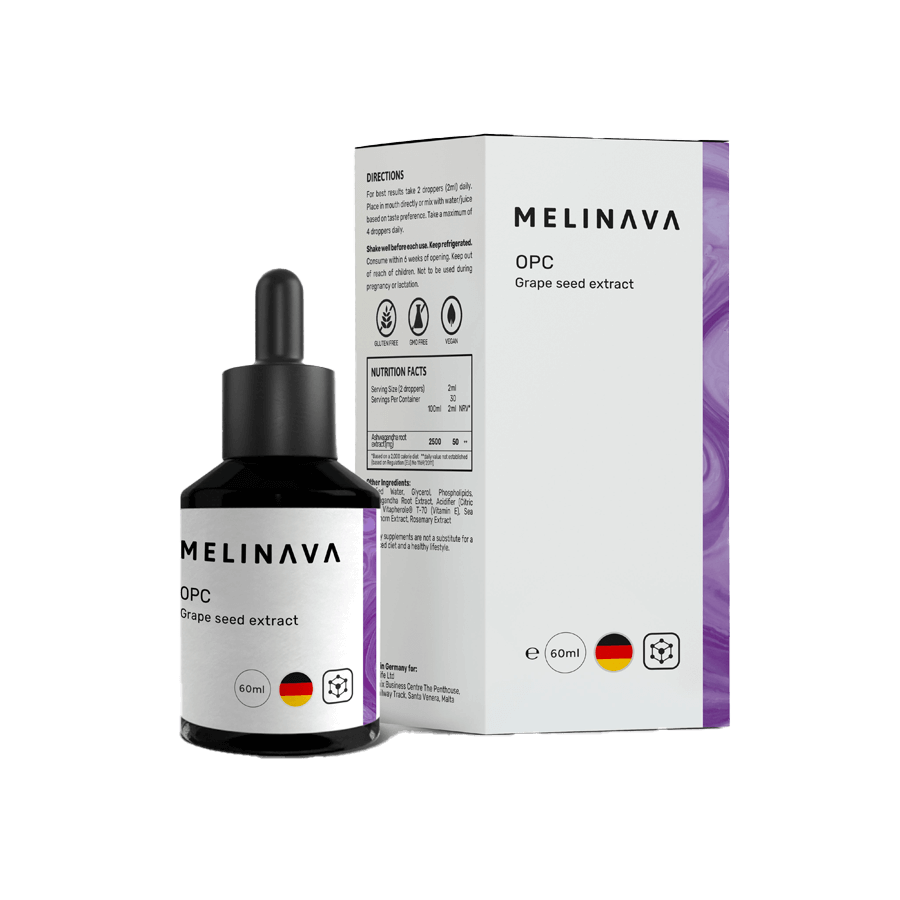
Pros
- Liposome technology
- 40 mg of grape seed extract
- High bioavailability thanks to liposomes (64 times higher)
- Vegan
- Made in Europe
- Free from soya, gluten and lactose
- No added preservatives
- No added allergens
- GMO-free
Cons
- Only available online
- Often sold out
Verdict
Melinava OPC is high-strength, with 40 mg of OPC grape seed extract per day.*
*Because the active ingredient is encapsulated in liposomes, much lower doses are needed than with conventional supplements.
The OPC in Melinava comes from pure grape seed extract, made from 100% GMO-free, sustainably grown grapes.
Thanks to modern liposome technology, the bioavailability of Melinava is up to 64 times higher. The liposomal coating improves tolerability, and the active ingredient goes directly into the bloodstream.
User satisfaction and the many positive customer reviews of Melinava OPC speak for themselves. Many users say it has worked well for them.
Melinava has already been used with very good results for symptoms such as poor concentration, skin irritation and low mood, as well as for a weakened immune system.
There are no known side effects so far. Many customers say they tolerate it very well and report rapid relief from their symptoms.
The manufacturer takes product tolerability very seriously, which is why the product is completely free from unwanted additives.
You can find more information on the manufacturer's website.
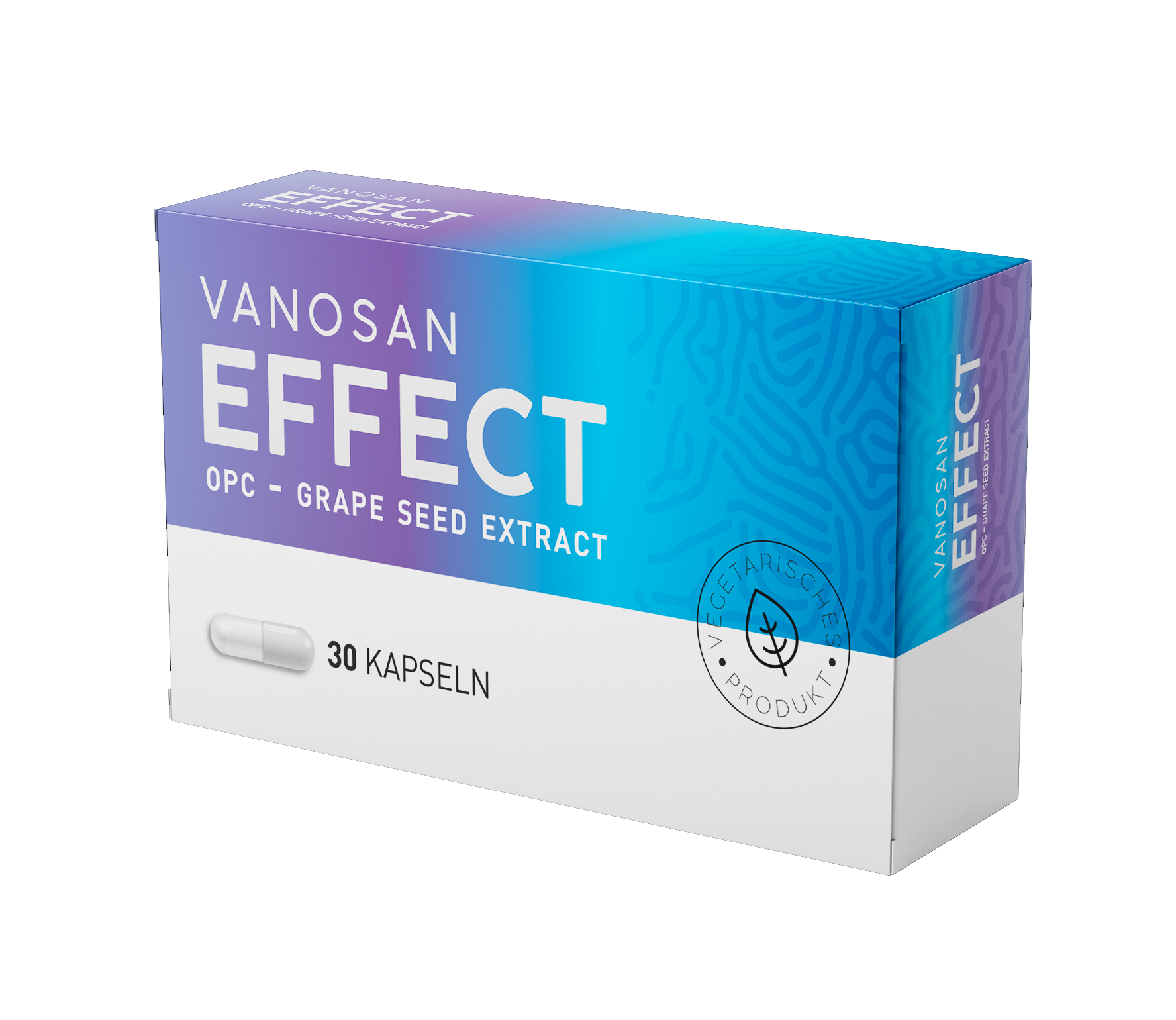
Vanosan OPC
by VANOSAN
Pros
- Laboratory-tested
- Good value for money
- Vegan
- Made in Germany
- No added preservatives
- No added allergens
Cons
- Not highly bioavailable
- 2 capsules a day
- Only available online
Verdict
Vanosan OPC provides a good dose: 1,000 mg of grape seed extract a day. However, effective absorption is limited by the dosage form. There are no studies on how much OPC is actually available to the body.
The manufacturer sources its grapes from France. The product is laboratory-tested on site and made in Germany.
The capsule shell is made without animal-derived ingredients, so it is also suitable for vegetarians and vegans.
The recommended daily dose of 2 capsules is a moderate dose compared with other OPC products.
Users are mostly positive about Vanosan OPC. It is well tolerated and relieves symptoms such as skin irritation and hair loss. Vanosan can also support a weakened immune system. On the whole, users have had good experiences with it.
It is made in Europe, and delivery usually takes 1–3 working days.
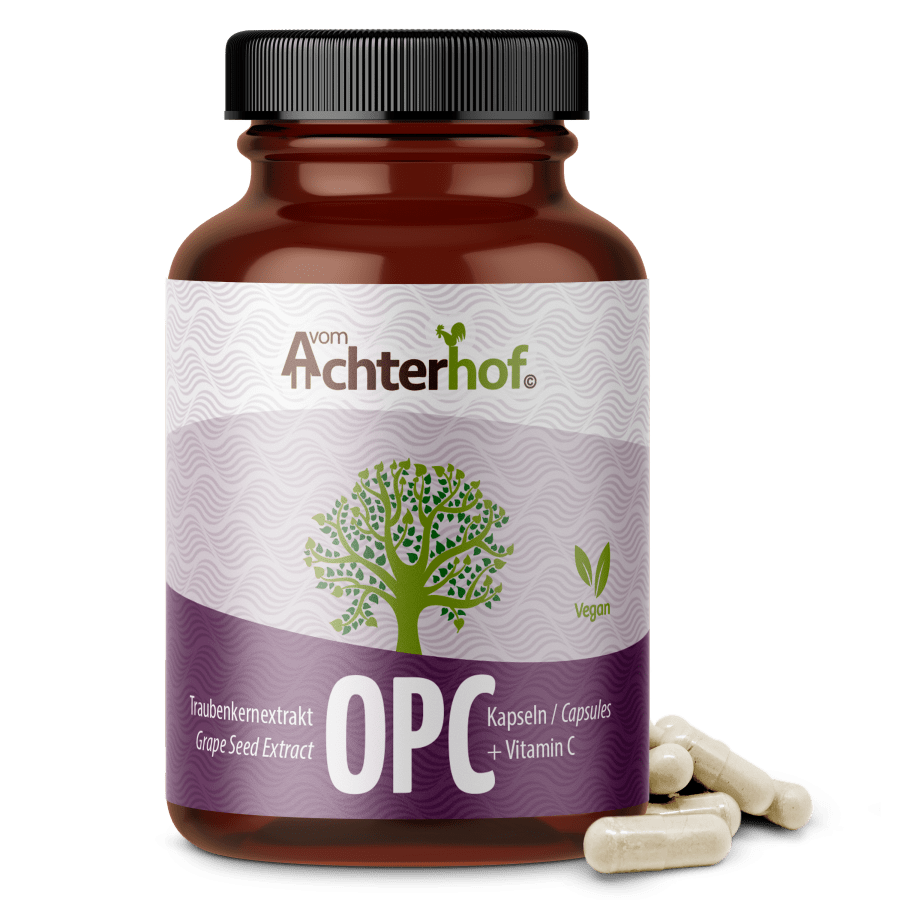
Achterhof OPC Capsules
by ACHTERHOF
Pros
- Standard dose
- With added camu camu (vitamin C)
- Laboratory-tested
- Good value for money
- Vegan
- Made in Germany
- No added preservatives
Cons
- No information on a gastro-resistant capsule shell
- 2 capsules a day
- Contains fillers and anti-caking agents
Verdict
Achterhof OPC Capsules are standard strength, with a daily dose of 800 mg of grape seed extract.
The recommended daily dose of 2 capsules is a moderate dose compared with other OPC products.
The capsule shell is made without animal-derived ingredients, so it is also suitable for vegetarians and vegans.
User reviews of Achterhof are fairly positive. Taking it relieves symptoms such as stress, restlessness and psoriasis. It is well tolerated. However, users with chronic symptoms often find the effect unsatisfactory.
The extract is made from high-quality grapes from Germany and Italy. The product offers very good value for money.
Achterhof OPC Capsules are made in Germany. Delivery costs 57 kr and usually takes 2–3 working days.

The alpha hydroxy acid in OPC strengthens the skin's moisture barrier and makes it more resilient to environmental stressors.
OPC also benefits hair and nails, not just skin
OPC, a valuable component of grape seed extract, has had positive effects on hair structure and growth in many users and, interestingly, in animals too.
Research from Japan found that OPC increased the growth of hair follicle cells many times over compared with other products. OPC also influences the hair growth cycle by increasing the number of hairs in the anagen phase, the growth phase. Experts therefore see OPC as a promising ingredient for hair care and for supporting hair growth. It also strengthens the nails, making them less prone to breaking.
OPC to support eye health
Thanks to its ability to protect against oxidative damage and to support the collagen your eyes depend on, grape seed extract can help counteract declining eyesight.
OPC is also recommended for preventing certain eye conditions, such as macular degeneration and cataracts. It may also help improve night vision.

Natural immune support
Recent research has made it clear that OPC plays an essential role in supporting the immune system. Thanks to its pronounced antioxidant properties, OPC protects your body from the harmful effects of free radicals.
These harmful molecules can form as a result of certain lifestyle habits, such as smoking, an unhealthy diet and stress, or external factors, such as environmental pollution. They pose a threat to your cells and to the immune system as a whole.
OPC helps the body's immune cells work more efficiently and fight pathogens more effectively. OPC also supports the formation of specific types of immune cell, namely T and B lymphocytes, which are essential for strong immune defences.
OPC supports wound healing
OPC has a beneficial effect on connective tissue and skin, which can help wounds heal faster. Grape seed extract, and in particular its main component OPC, can neutralise bacteria and promote the rapid healing of damaged blood vessels and connective tissue.
In a 2014 clinical study, 20 patients who had undergone surgery were treated with a cream containing 2% grape seed extract. They applied the cream to their wounds three times a week. For comparison, a control group received a cream without grape seed extract. Remarkably, the wounds in the grape seed extract group had completely healed after just eight days, while the control group took 14 days.
OPC also protects the heart and blood vessels
Free radicals don't just damage skin, hair and eyesight: they're also involved in the development of many health problems, such as osteoporosis, dental problems, diabetes and digestive disorders. These harmful molecules can also damage the blood vessels and so lead to high blood pressure. Just as in the skin, structural proteins in the vessel walls throughout the body provide strength and elasticity. When levels of these proteins fall, the walls of the blood vessels become stiffer, which impedes blood flow. Your body then tries to raise blood pressure to keep the blood flowing.
This is where OPC and the other antioxidants in grape seed extract come in. They protect the structural proteins, make the vessel walls more flexible, prevent deposits from building up in the vessels and protect them from further oxidative damage caused by free radicals. OPC's blood-thinning properties can also stop platelets from sticking together. The end result is a significantly reduced risk of cardiovascular disease.
Can OPC cause side effects?
No specific side effects of OPC are known. Can OPC be harmful if you take too much? It has been suggested that extreme overdoses of OPC could damage cells. That's why you should always stick to the manufacturer's recommended dose.
Avoid combining OPC with dairy products, as this can impair absorption. If you already take blood-thinning medication, bear in mind that OPC can also have a blood-thinning effect, so talk to your doctor before you start taking it.
* We may earn a commission from some of the companies featured. This is how we keep our comparisons free to read.
Some of these companies are our commercial partners.
Sources
- Bagchi, D., Bagchi, M., Stohs, S. J., Das, D. K., Ray, S. D., Kuszynski, C. A., Joshi, S. S., & Pruess, H. G. (2000). Free radicals and grape seed proanthocyanidin extract: importance in human health and disease prevention. Toxicology, 148(2-3), 187–197. https://doi.org/10.1016/s0300-483x(00)00210-9
- Bagchi, D., Garg, A., Krohn, R. L., Bagchi, M., Tran, M. X., & Stohs, S. J. (1997). Oxygen free radical scavenging abilities of vitamins C and E, and a grape seed proanthocyanidin extract in vitro. Research communications in molecular pathology and pharmacology, 95(2), 179–189.
- Alexander Rucker, Anne Simons, "Gesund länger leben durch OPC", 7. aktualisierte Auflage 2012, Maya Media Verlag
- Chiu, H. F., Shen, Y. C., Huang, T. Y., Venkatakrishnan, K., & Wang, C. K. (2016). Cardioprotective Efficacy of Red Wine Extract of Onion in Healthy Hypercholesterolemic Subjects. Phytotherapy research : PTR, 30(3), 380–385. https://doi.org/10.1002/ptr.5537
- Draijer, R., de Graaf, Y., Slettenaar, M., de Groot, E., & Wright, C. I. (2015). Consumption of a polyphenol-rich grape-wine extract lowers ambulatory blood pressure in mildly hypertensive subjects. Nutrients, 7(5), 3138–3153. https://doi.org/10.3390/nu7053138
- Matić, I., Zizak, Z., Simonović, M., Simonović, B., Godevac, D., Savikin, K., & Juranić, Z. (2010). Cytotoxic effect of wine polyphenolic extracts and resveratrol against human carcinoma cells and normal peripheral blood mononuclear cells. Journal of medicinal food, 13(4), 851–862. https://doi.org/10.1089/jmf.2009.0193
- Zhang, H., Liu, S., Li, L., Liu, S., Liu, S., Mi, J., & Tian, G. (2016). The impact of grape seed extract treatment on blood pressure changes: A meta-analysis of 16 randomized controlled trials. Medicine, 95(33), e4247. https://doi.org/10.1097/MD.0000000000004247
- Yarovaya, L., Waranuch, N., Wisuitiprot, W., & Khunkitti, W. (2021). Effect of grape seed extract on skin fibroblasts exposed to UVA light and its photostability in sunscreen formulation. Journal of cosmetic dermatology, 20(4), 1271–1282. https://doi.org/10.1111/jocd.13711
- Reagor, L., Gusman, J., McCoy, L., Carino, E., & Heggers, J. P. (2002). The effectiveness of processed grapefruit-seed extract as an antibacterial agent: I. An in vitro agar assay. Journal of alternative and complementary medicine (New York, N.Y.), 8(3), 325–332. https://doi.org/10.1089/10755530260128014
- Heggers, J. P., Cottingham, J., Gusman, J., Reagor, L., McCoy, L., Carino, E., ... & Zhao, J. G. (2002). The effectiveness of processed grapefruit-seed extract as an antibacterial agent: II. Mechanism of action and in vitro toxicity. The Journal of Alternative & Complementary Medicine, 8(3), 333-340.
- Jia, Z., Song, Z., Zhao, Y., Wang, X., & Liu, P. (2011). Grape seed proanthocyanidin extract protects human lens epithelial cells from oxidative stress via reducing NF-кB and MAPK protein expression. Molecular vision, 17, 210–217.