
Guide
The best nattokinase supplements compared (2026)
Last updated: 1 August 2026

Written by
Health Tested Editorial Team
Heavy legs in the evening. Hands that stay cold. A blood pressure reading that sits above target. Many people over 40 recognise these signs.
One possible cause: excessive fibrin deposits in the blood vessels, which make the arteries gradually narrow.
It's worth looking at Japan here. The country has one of the highest life expectancies in the world and significantly lower rates of cardiovascular disease.
The reason could be an enzyme that has been part of everyday life there for over 1,000 years: nattokinase.
In studies, this enzyme from fermented soya has been shown to inhibit clotting and protect the blood vessels.¹ ²
However, the differences in quality between products are considerable. Our comparison shows what really matters and which products came out on top in our test.

There are many nattokinase supplements on the market, but not all of them are effective.
A remarkable enzyme from the art of fermentation
The story of nattokinase is the story of a chance discovery that brings together traditional knowledge and modern science.
Natto has been eaten in Japan for over 1,000 years. Cooked soya beans are fermented with the bacterium Bacillus subtilis var. natto. At around 40°C and high humidity, the bacterium multiplies rapidly and produces various enzymes, including nattokinase. The result is brown, slimy beans with a strong smell and a bitter taste. Millions of Japanese people traditionally eat them for breakfast with rice, soy sauce and mustard.³
Nattokinase under the microscope
People in Japan had long suspected that natto was more than just a food. Healers used it for heart and circulation problems without knowing why. It wasn't until 1980 that the Japanese researcher Dr Hiroyuki Sumi found the explanation, when he tested over 170 fermented foods for their ability to dissolve blood clots. Natto was the only one that completely dissolved a blood clot within 18 hours. He named the isolated enzyme nattokinase.⁴
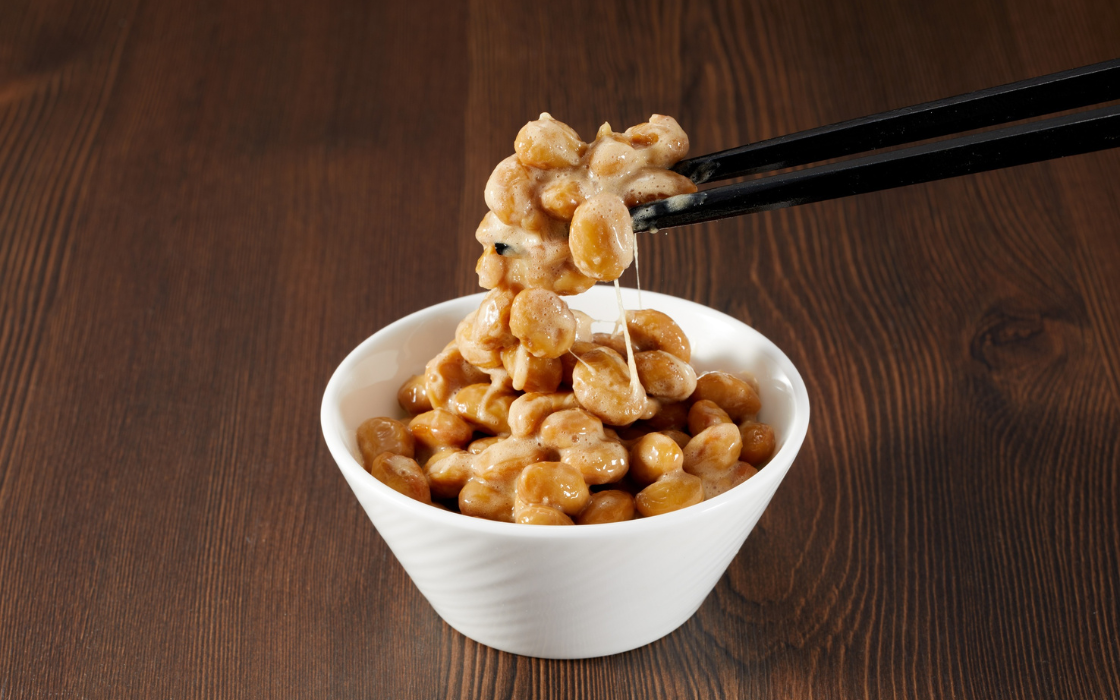
For Western palates, natto is a real challenge. Nattokinase supplements mean you can still get its benefits.
Fibrin: the glue behind blood clots
Blood clots are a vital protective mechanism. They seal injured blood vessels and prevent excessive blood loss.
But if clots form inside the blood vessels, they restrict the blood flow. In the worst case, they block it completely. The consequences are thrombosis, a heart attack or a stroke.
The stable structure of these clots consists mainly of fibrin, a protein that forms a dense mesh of fibres and gives the clot its strength.⁵
When the body loses control of fibrin
Your body has its own system for breaking down excess fibrin. It's called the plasmin system and it works reliably when you're young.
However, this ability declines noticeably with age, too little exercise or chronic inflammation.
Fibrin then builds up in the blood vessels, the blood becomes thicker and circulation gets worse.
Over time, this raises the risk of thrombosis and other vascular problems.
How nattokinase works
Unlike many other natural active ingredients, which usually target just one mechanism, nattokinase acts on the clotting system in several ways.
Nattokinase works on several levels:
- Breaking down fibrin: nattokinase splits fibrin, the main component of blood clots, directly and independently of the body's own system.⁶
- Activating the body's own system: nattokinase stimulates and strengthens the body's natural breakdown mechanism.
- Inhibiting PAI-1: nattokinase blocks substances that slow down fibrin breakdown in the body.
- Improving blood flow: by breaking down fibrin and stopping the blood from clumping, nattokinase thins the blood. This may also lower blood pressure.⁷
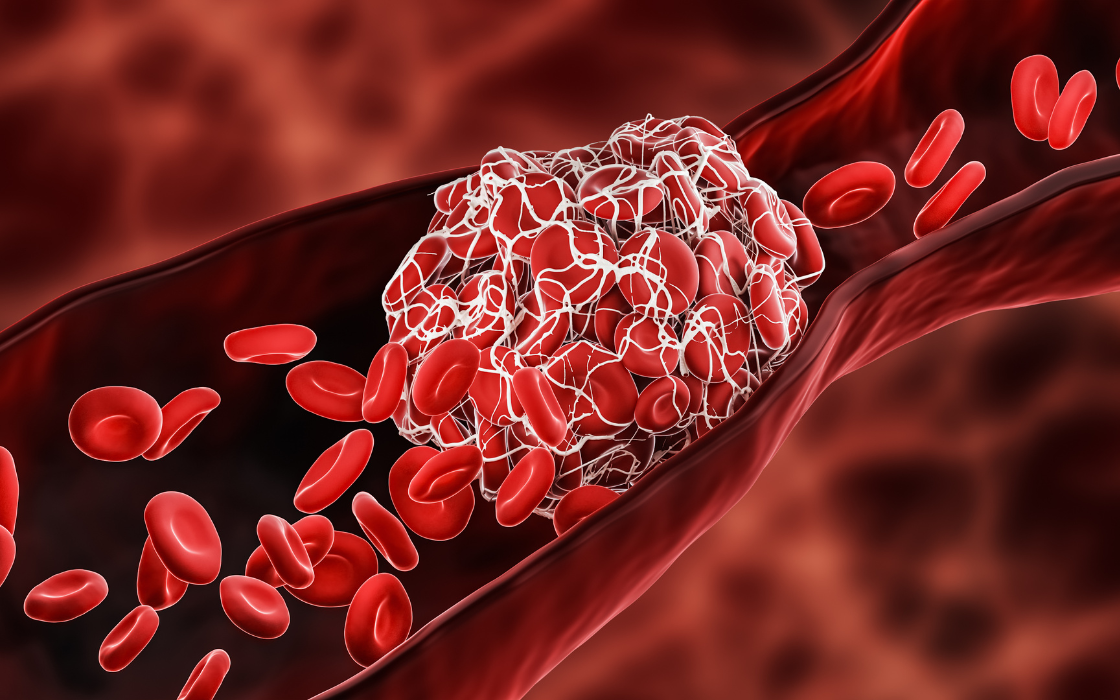
Blood clots in the blood vessels are among the most common causes of heart attack and stroke. What many people don't know is that, with age, the body gradually loses its ability to break them down.
The key measure for nattokinase: fibrinolytic units (FU)
With nattokinase, what counts isn't the amount in milligrams but the enzyme activity. It's given in FU (fibrinolytic units) and describes how much fibrin the enzyme can break down in a set time.
Studies that documented positive effects on blood clotting and blood pressure used doses of between 2,000 and 4,000 FU a day.⁸ If a product only states the amount in milligrams, you have no reliable way of telling how effective it really is.
One caveat: the FU figure isn't standardised. Different manufacturers measure it in different ways, which makes a direct comparison difficult.
When and how much nattokinase should you take each day?
To support general blood vessel health, 100 to 200 mg a day is recommended. If you have a higher cardiovascular risk or use nattokinase specifically for prevention, you can increase the dose to 200–300 mg. Always discuss this with your doctor first, though.
When to take it: ideally in the morning or with a meal, to improve absorption and reduce the risk of an upset stomach.
Couldn't you just eat natto?
In theory, yes. A 50 g portion of natto contains around 1,000 to 2,000 FU of nattokinase. For a therapeutic effect, you'd need to eat 100 to 200 g every day, which, given the taste, is hardly realistic for most Western Europeans.
There's another important point. Natto contains a lot of vitamin K2, which promotes blood clotting and so directly counteracts the blood-thinning effect.
High-quality nattokinase supplements are deliberately made without vitamin K2, so that the fibrinolytic effect can work to the full.
The key benefits of nattokinase
Over the years, your blood changes. It becomes thicker, clots more easily and flows more slowly. This is exactly where nattokinase comes in, but its effects go further still:
- reducing fibrin deposits in the blood vessels
- preventing thrombosis (blood clots)
- regulating blood clotting
- lowering blood pressure
- improving circulation
- supporting microcirculation in the smallest blood vessels
- reducing atherosclerotic plaques⁹
- anti-inflammatory effects
- a natural complement to synthetic blood-thinning medication
- well tolerated, with no strain on the liver or kidneys

There are several factors to consider when choosing the right supplement.
Possible signs of circulation problems
The following symptoms may point to poor circulation:
- cold hands and feet, even in a warm room
- tingling or numbness in the arms and legs
- heavy, tired legs, especially in the evening
- calf pain when walking that goes away at rest
- slow wound healing
- bluish discolouration of the skin
- frequent headaches, difficulty concentrating
- dizziness when standing up
When nattokinase is particularly worth considering
- If your risk of thrombosis is raised
Long periods of sitting, being confined to bed after surgery, varicose veins or a family history increase the risk of dangerous blood clots. Nattokinase may have a preventive effect, even if thrombosis or embolism has already occurred in the past.
- With atherosclerosis
The condition develops when deposits in the artery walls narrow the arteries and restrict blood flow. Studies show that, thanks to its fibrinolytic effect, nattokinase may have a positive effect on blood lipids, plaque formation and thrombosis risk.
- With high blood pressure
Several studies confirm that, by improving blood flow, nattokinase can lower blood pressure moderately. For people with mildly raised blood pressure, nattokinase may provide support.
- To help prevent stroke and heart attack
People at higher risk (diabetes, smoking, being overweight, a family history) may benefit from taking it preventively, thanks to its clot-dissolving properties.
- With atrial fibrillation
This heart rhythm problem increases the risk of stroke because clots form in the heart. Nattokinase could also provide support here.
- As an alternative to aspirin
Many people take aspirin every day to thin their blood. Nattokinase may be an alternative with fewer side effects, especially as aspirin puts a strain on the stomach and kidneys.
Important: if you're already taking blood-thinning medication, only take nattokinase after talking to your doctor. The combination can thin the blood too much. You must also stop taking nattokinase several weeks before any surgery.
Nattokinase and thrombosis prevention
Deep vein thrombosis in the legs often develops on long-haul flights, after surgery or during long periods of immobility.
One study showed that even a single dose of nattokinase had measurable effects on blood clotting. This is a clear sign that the enzyme may directly help the body break down fibrin as its own ability to do so declines.¹⁰
This is particularly relevant for people with limited mobility, people recovering from surgery and those with a family history of clotting disorders.
What to look for when buying nattokinase
When you choose a product, look out for the following:
- dose: 2,000–4,000 FU a day
- free from vitamin K, especially important if you also take blood-thinning medication
- no artificial additives
- GMP-certified manufacturing, ideally from fermented Asian soya beans
- tested by an independent laboratory
- vegan
Top 3: the best nattokinase products of 2026
There are countless nattokinase products on the market today. We've assessed them against a range of criteria to find the best:
How is the supplement formulated?
Are there any study or research results?
How high is the dose of the nutrient?
Does it contain any allergens?
How good is the value for money?
Is there anything special about the formulation or production?
product review
TESTED
our quality criteria
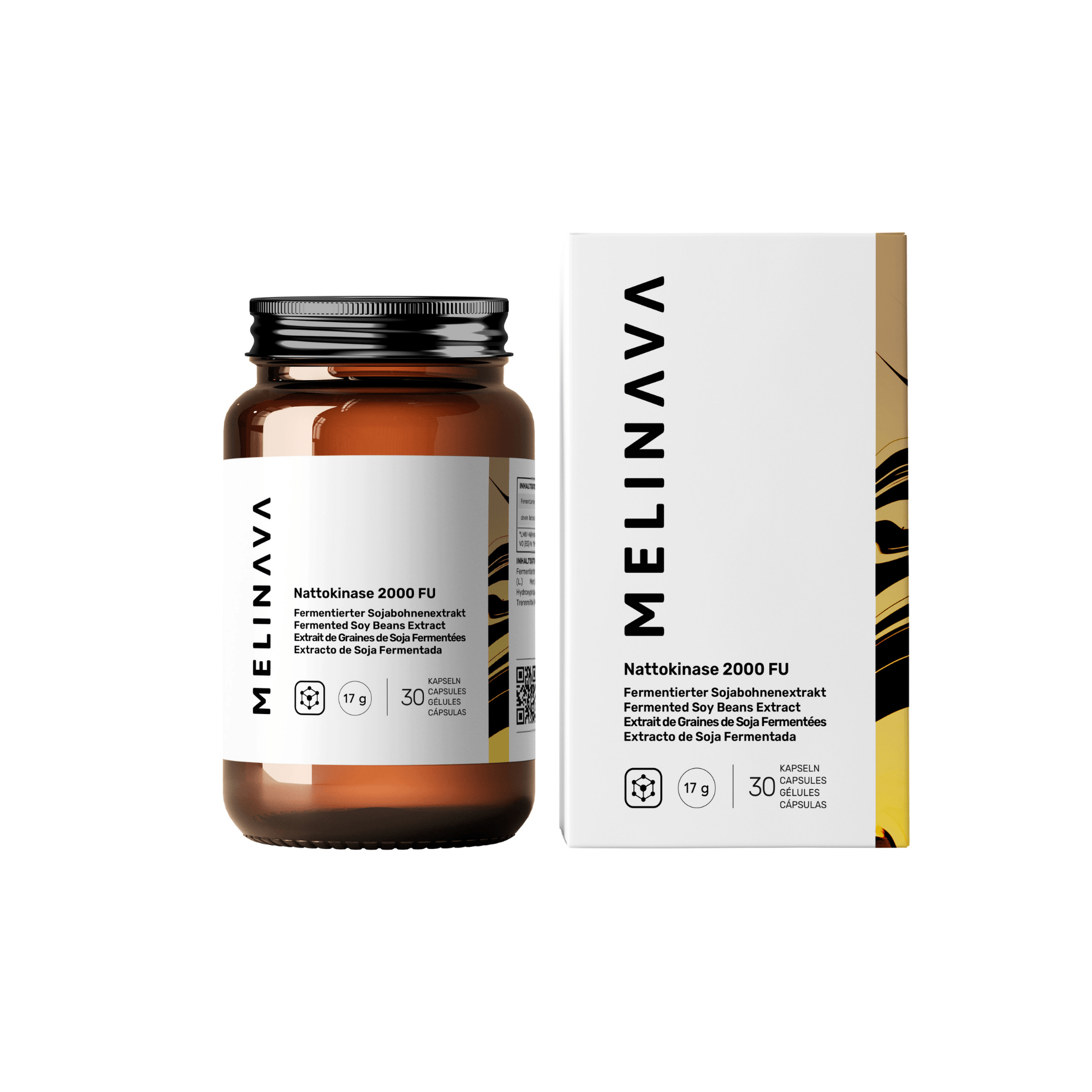
MELINAVA Nattokinase FU 2000
by MELINAVA
Pros
- High-strength: 2,000 FU per capsule
- 100 mg of pure nattokinase with 275 amino acids
- Premium nattokinase extract from controlled fermentation
- Made using the bacterial strain Bacillus subtilis natto
- From GMO-free soya beans
- Only 1 capsule a day
- Free from allergens (gluten-free, lactose-free)
- No artificial additives
- Vegan
- Made in Europe (France)
- 30 capsules (one month's supply)
- Brown glass packaging that protects against light
Cons
- Only available online
- Higher price due to premium quality
Verdict
Melinava Nattokinase 2000 FU focuses on very high quality and a well-thought-out formulation. This is what earns Melinava first place in our comparison.
With 2,000 FU per capsule, its enzyme activity sits in the upper part of the clinically tested effective range, which makes it ideal for people with marked circulation problems or those who want strong preventive support.
The nattokinase extract comes from controlled fermentation of Asian soya beans. The active ingredient is therefore produced naturally, using the bacterial strain Bacillus subtilis natto.
Melinava Nattokinase 2000 FU not only has the optimal dose but is also made using the natural, traditional method practised in Japan.
Customers report better circulation (warmer hands and feet), less heaviness in the legs, better concentration and, in some cases, lower blood pressure. The effect usually becomes noticeable after 4–8 weeks of continuous use. Tolerability is rated as very good across the board, even with longer-term use.
Particularly worth highlighting: the capsules are completely tasteless, with none of the bitterness typical of natto, which many people find hard to get used to.
The product is reliably free from vitamin K, as confirmed by laboratory analyses. This is crucial for anyone who takes, or has had to take, blood-thinning medication.
Just one capsule of Melinava Nattokinase 2000 FU a day is enough, taken on an empty stomach or between meals, ideally in the evening.
The manufacturer takes tolerability very seriously, which is why the product is completely free from unwanted additives. You can find more information on the manufacturer's website.
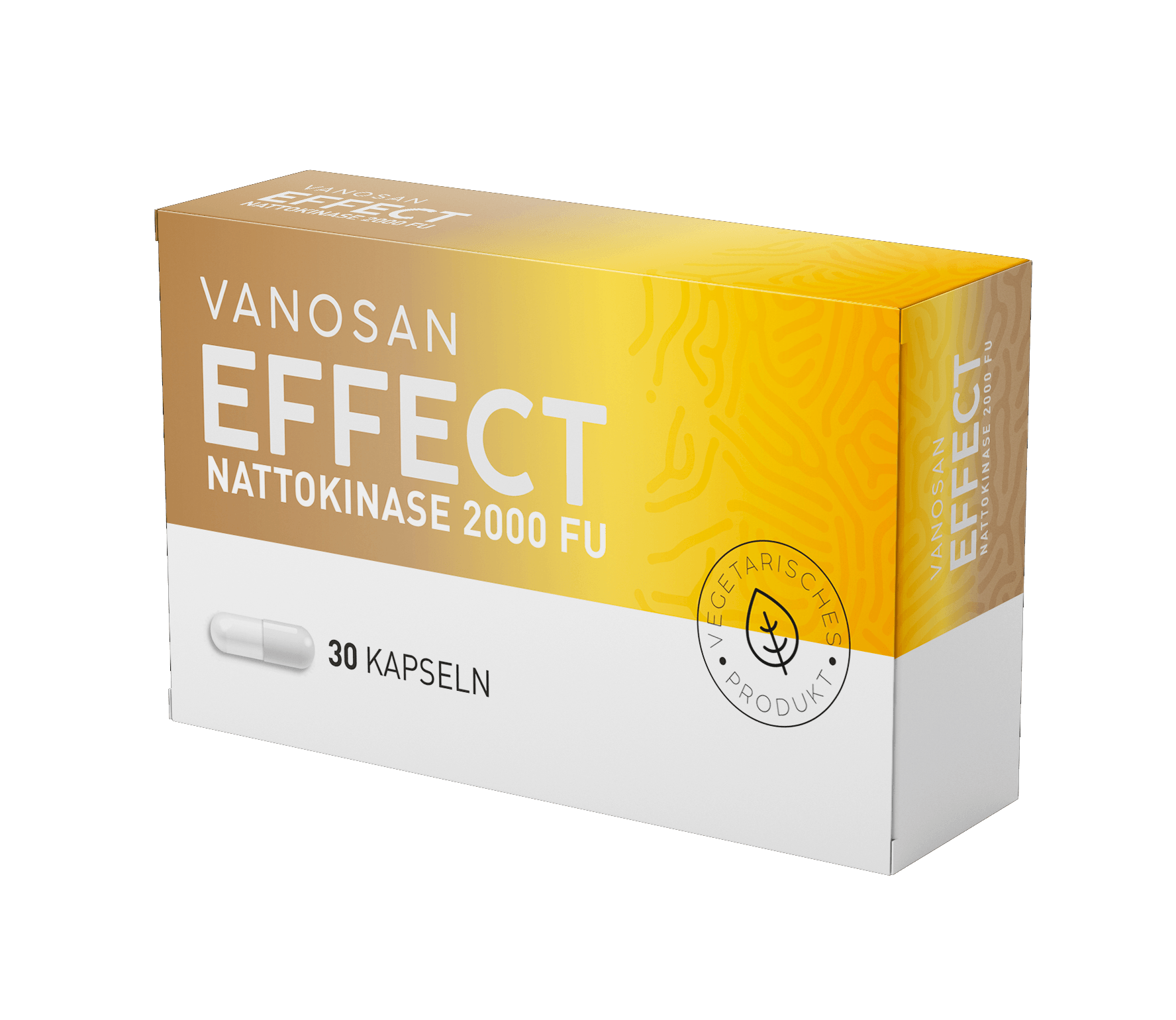
Vanosan Nattokinase
by VANOSAN
Pros
- 1,000 FU per capsule
- Gluten-free
- Made in Germany
- 90 capsules
- Vegan
- Free from allergens (gluten, lactose)
- From fermented Japanese soya beans
- Good value for money
Cons
- Only available online
- Relatively large capsules
Verdict
Vanosan Nattokinase takes second place with a daily dose of 1,000 FU. The dosage is at the upper end, but unlike Melinava you need to take two capsules a day.
For prevention or mild circulation problems, the dose is entirely sufficient, but the higher number of capsules makes it harder for people who have difficulty swallowing.
One highlight is the use of natural nattokinase extract from fermented Japanese soya beans.
However, the manufacturer gives no information about which bacterial strain was used to produce it.
For price-conscious users who want pure nattokinase without additives, Vanosan is a good choice.
One pack contains 90 capsules, which is enough for over a month.
Miosan Nattokinase 100 mg
by MIOSAN
Pros
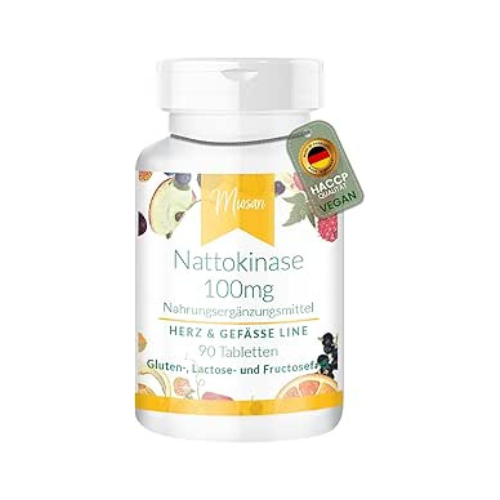
- 100 mg of nattokinase extract per capsule
- 2,000 FU activity
- 90 capsules
- Made in Germany
- Laboratory-tested
- Vegan
Cons
- FU value not clearly stated
- No information on where the soya beans come from
- Vitamin K status unclear (not explicitly declared)
Verdict
Miosan offers a solid nattokinase product at one of the lowest prices on the market.
With a daily dose of 100 mg of nattokinase extract per tablet and a pack that lasts three months, it is particularly practical to use. The laboratory test results are positive and the basic quality is sound.
If full transparency matters to you, however, you will find it falls short in places: the enzyme activity of 2,000 FU is not clearly stated and only becomes clear on closer inspection.
Information on the origin of the soya beans and the bacterial strain used is missing, as are results on vitamin K residues. As a first step into nattokinase supplements, Miosan is still an affordable option.
As well as the easy dosing and the large pack size, customers particularly like the small tablets, which are easier to take, especially for people who have difficulty swallowing.
Take one Miosan tablet a day.
One pack contains 90 tablets.

Good circulation is the foundation for energy, concentration and well-being. When blood vessels become blocked, your whole body suffers.
Blood vessels: when arteries become blocked
The arteries are the body's lifelines. With age and an unhealthy lifestyle, fats, calcium and fibrin build up in the vessel walls. This process is called atherosclerosis and progresses silently over decades.
The once elastic arteries become stiff and narrow, blood flow slows and the organs receive less blood. At some point a deposit ruptures and a clot forms. What follows is often a heart attack or a stroke.
Fibrin plays a particularly important role in this process. It's not only part of blood clots but also builds up in atherosclerotic plaques and stabilises them. The more fibrin accumulates, the more dangerous the plaque becomes.
This is exactly where nattokinase comes in. It breaks down existing clots, actively prevents new deposits and improves the elasticity of the vessel walls.Taking it regularly may help keep your blood vessels supple and open in the long term.
Blood pressure: nattokinase as support
Around half of all people over 60 have high blood pressure. It often goes unnoticed for years, until it makes itself known as a heart attack or a stroke. Conventional medicines lower blood pressure reliably, but often cause side effects such as dizziness, tiredness or difficulty concentrating.
Nattokinase offers a natural approach here. In several studies, the enzyme has shown a moderate but significant blood-pressure-lowering effect.
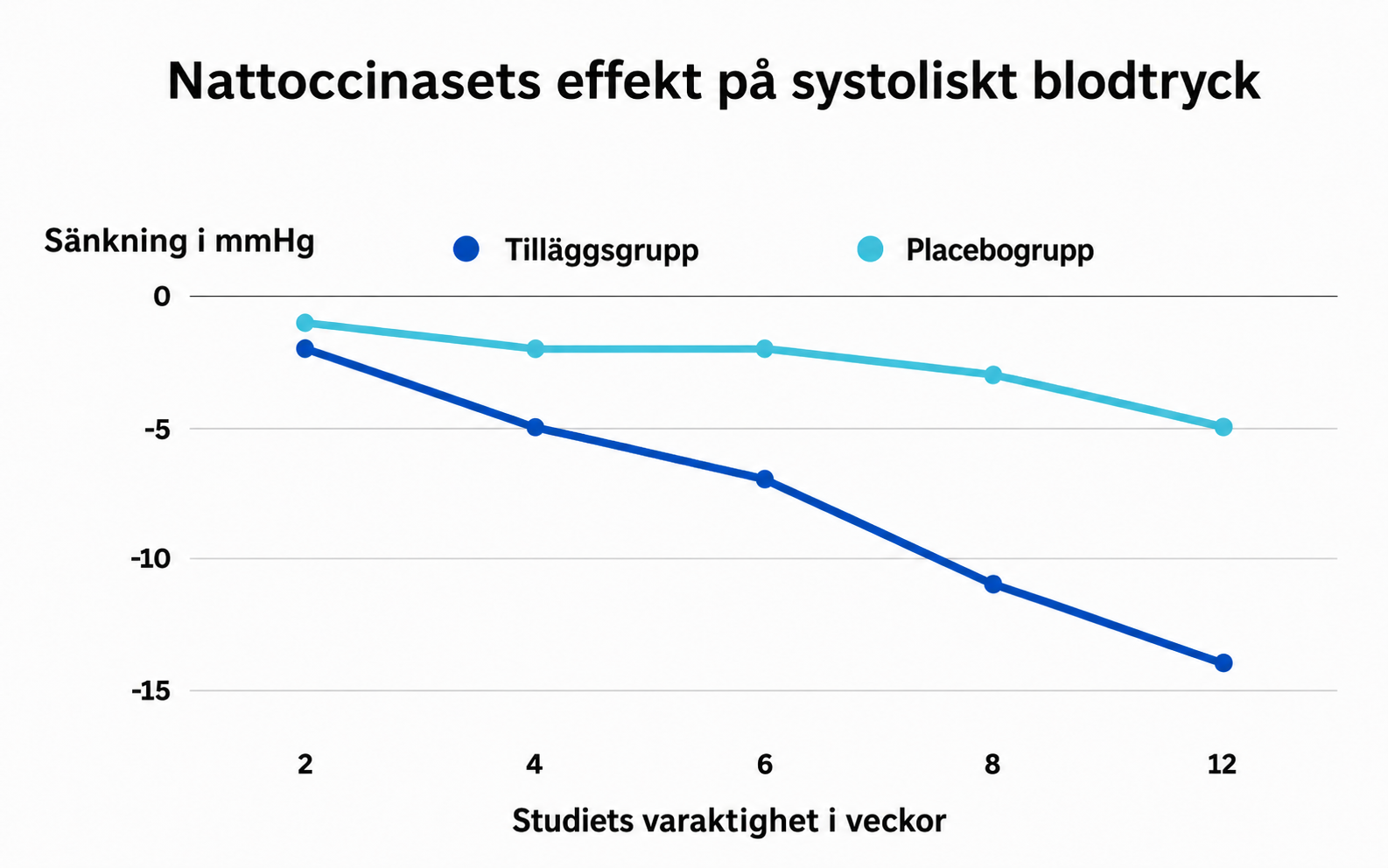
A Korean study in patients with high blood pressure found that after 8 weeks of taking 2,000 FU a day, systolic blood pressure fell by an average of 10 mmHg and diastolic blood pressure by 7 mmHg.¹¹
The effect is weaker than that of conventional blood pressure medicines. For people with mildly raised blood pressure, though, it can make the difference between needing medication and not needing it. Always talk to your doctor before changing any medication you already take.¹¹

High blood pressure often goes unnoticed for years. Yet with the right approach, you can often do more about it than many people think.
Nattokinase and longevity
Japan has one of the highest life expectancies in the world and, at the same time, significantly lower rates of cardiovascular disease than most Western countries.
Researchers believe that regular natto consumption, a daily habit in certain regions of Japan, could contribute to this. Population studies show that Japanese people who eat a lot of natto have considerably lower death rates from heart disease and stroke than those who rarely or never eat it.¹²
Nattokinase supplements let you benefit from this thousand-year-old food tradition without having to eat fermented soya beans every day.
Our verdict
Nattokinase is one of the best-researched natural active ingredients for blood vessel health. And the evidence is clear: it works. It acts directly on fibrin, on the body's own breakdown system and on how the blood flows, all at the same time.
This becomes particularly important from the age of 45. That's exactly when the body's own protection against clots and deposits starts to decline, silently and without any noticeable warning signs.
Nattokinase is no substitute for necessary medication. But for anyone who wants to support their blood vessels early and naturally, it's one of the most worthwhile supplements there is.
What matters is choosing the right product, because not every nattokinase supplement is equally effective. Quality comes down to three things: enzyme activity in FU, verified freedom from vitamin K2 and clean manufacturing. You'll find out which product best meets these requirements in our comparison above.
The nattokinase products we tested
* We may earn a commission from some of the companies featured. This is how we keep our comparisons free to read.
Some of these companies are our commercial partners.
Sources
1. Sumi, H., Hamada, H., Tsushima, H. et al. A novel fibrinolytic enzyme (nattokinase) in the vegetable cheese Natto; a typical and popular soybean food in the Japanese diet. Experientia 43, 1110–1111 (1987).
2. https://pubmed.ncbi.nlm.nih.gov/8593442/
3. Peng Y et al. Nattokinase: A Promising Alternative in Prevention and Treatment of Cardiovascular Diseases. Biomarker Insights. 2017.
4. Sumi H et al. Enhancement of the fibrinolytic activity in plasma by oral administration of nattokinase. Acta Haematol. 1990.
5. https://academic.oup.com/cardiovascres/article/119/1/94/6994408?
6. Weng, Y., Yao, J., Sparks, S., & Wang, K. Y. (2017). Nattokinase: An Oral Antithrombotic Agent for the Prevention of Cardiovascular Disease. International journal of molecular sciences, 18(3), 523.
7. https://pubmed.ncbi.nlm.nih.gov/18971533/
8. https://pubmed.ncbi.nlm.nih.gov/27785095/
9. https://pubmed.ncbi.nlm.nih.gov/36072877/
10. Kurosawa, Y., Nirengi, S., Homma, T., Esaki, K., Ohta, M., Clark, J. F., & Hamaoka, T. (2015). A single-dose of oral nattokinase potentiates thrombolysis and anti-coagulation profiles. Scientific reports, 5, 11601.
11. https://pubmed.ncbi.nlm.nih.gov/18971533/
12. Nagata C et al. Natto and risk of cardiovascular disease mortality in Japanese women. J Nutr. 2017.