
Guide
L-theanine tested: the best products compared (2026)
Last updated: 5 August 2026

Written by
Health Tested Editorial Team
Poor sleep. Thoughts going round in circles. Concentration that comes and goes. The feeling that you can never really switch off. According to the Robert Koch Institute (RKI), Germany's public health institute, one in four adults in Germany regularly struggles with this.
Many people then reach for caffeine or sleeping pills and soon realise that this isn't a real solution. That's why more and more people are looking for natural alternatives. One of them has shown remarkable results in clinical studies: L-theanine.
L-theanine is an amino acid from the tea plant. It promotes relaxation without drowsiness, improves sleep quality and sharpens concentration.
In this article, you'll find out what L-theanine actually does in your body, what to bear in mind when taking it and which products came out best in our 2026 comparison.

There are countless L-theanine supplements on the market, but not all of them are effective.
L-theanine: an amino acid with a remarkable effect
For thousands of years, tea has been valued not just as a drink but as a form of meditation. Buddhist monks drink it to stay both alert and calm during long hours of meditation.
The secret behind this seemingly contradictory effect is L-theanine, a naturally occurring amino acid found almost exclusively in the leaves of the green tea plant (Camellia sinensis).
The amount of L-theanine in tea varies widely depending on the variety, where it's grown and how it's processed. Green tea contains more than black tea, and shade-grown teas such as gyokuro or matcha contain even more: sometimes up to 40 mg per cup. That sounds like a lot at first, but it's often not enough for therapeutic purposes.
To get the effect shown in studies, you'd have to drink 5–10 cups of green tea a day.
This is where L-theanine as a supplement comes into its own: you get the optimal amount for focused, relaxed alertness.
It also supports sleep quality and inner calm in a way that synthetic products can't. Unlike sleeping pills or sedatives, it isn't addictive and can easily be taken long-term.¹
How L-theanine works in the brain
L-theanine acts directly on the central nervous system, influencing several neurotransmitters at once:
- More GABA: L-theanine increases levels of GABA, the most important calming chemical messenger. More GABA means less overstimulation of nerve cells, so the brain finds it easier to settle down.
- Alpha wave activity: the effect on brainwaves is particularly fascinating. About 40 minutes after taking L-theanine, alpha wave activity rises measurably. Alpha waves are typical of a relaxed but alert state, which is exactly what you experience during meditation. You're present, but not tense.
- Serotonin and dopamine: L-theanine may support the production of serotonin and dopamine, two neurotransmitters that are crucial for a stable mood, motivation and inner balance. This explains its mood-lifting effect.
- Glutamate modulation: L-theanine is structurally similar to the excitatory neurotransmitter glutamate, which triggers anxiety and restlessness when there's too much of it. L-theanine can lower glutamate levels, which has a calming effect.
This combination explains why L-theanine relaxes you without sedating you. No other natural substance offers this property in quite the same way.²

You can't force a good mood, but you can create the right conditions for one. L-theanine influences the release of serotonin and dopamine and so contributes to a more balanced mood.
Fast-acting and gentle
Unlike many food supplements, which take weeks to work, L-theanine starts working just 30–60 minutes after you take it. You feel calmer and more collected, but not sedated. Because it acts so quickly, it's ideal for acute stress or before situations that make you nervous.
The effect lasts about 4–6 hours and then wears off gently, with no withdrawal effects and no slump. You can take L-theanine in the morning for relaxed concentration or in the evening for better sleep, or both.
L-theanine and sleep: fall asleep naturally, wake up refreshed
According to the RKI, one in four adults in Germany regularly struggles with sleep problems. The most common cause isn't exhaustion but a mind that simply won't stop in the evening: brooding, thoughts going round and round, the day's busyness that you just can't shake off.
Sleeping pills don't really help with this. They sedate you, but they don't improve the actual quality of your sleep.
L-theanine works differently. It increases GABA and lowers cortisol. This creates a natural transition into sleep, without disrupting deep or REM sleep.
In a clinical study using 400 mg a day, participants fell asleep faster, slept more efficiently and felt less tired in the morning, with measurable differences compared with placebo.³
What is the optimal dosage of L-theanine?
The effective dosage depends on what you're taking it for:
- Stress reduction and general relaxation: 100–200 mg a day⁴
- Cognitive performance: 100–200 mg of L-theanine (can be combined with caffeine)
- Better sleep: 200–400 mg in the evening, about 30–60 minutes before bed⁵
- Reducing anxiety or supporting people with ADHD: 200–400 mg a day⁶
L-theanine is considered very safe. In studies, doses of up to 1,200 mg a day were tolerated without side effects.

Staying alert and still finding calm: that's exactly the relaxed state many people are looking for and few find naturally.
Why many L-theanine products fall short
L-theanine is meant to work in the brain, and that's exactly the problem with many conventional products. Between the bloodstream and the brain lies one of the strictest barriers in the body: the blood-brain barrier. It protects the brain from foreign substances, but it also stops many active ingredients getting through.
Ordinary L-theanine supplements first have to survive stomach acid, are then only partly absorbed in the gut and lose a further share on their first pass through the liver. Whatever finally reaches the blood then still has to cross the blood-brain barrier.
In the end, only a fraction of the amount you take reaches the brain.Science has developed a solution that protects L-theanine at every one of these stages: liposomes. The active ingredient is packed into tiny fat bubbles that are similar in structure to human cell membranes. Your body doesn't recognise them as foreign but absorbs them directly. They pass through the stomach intact, bypass breakdown in the liver and can cross the blood-brain barrier much more effectively than free theanine molecules.
The result: more of the active ingredient arrives where it's needed, and at a much lower dose than with conventional formulations.
What L-theanine can do
Many people notice clear changes after a few days of taking it regularly:
- switching off more easily in the evening and falling asleep faster
- deeper, more restful sleep
- more calm and composure in everyday life
- a clearer head and better concentration
- a more balanced mood
- fewer physical symptoms of stress, such as muscle tension
- no dependence and no tolerance build-up
Signs that L-theanine could help you
The following symptoms may suggest that you could benefit from L-theanine:
- difficulty falling asleep despite feeling tired
- thoughts going round in circles in the evening
- waking up often during the night
- restlessness and nervousness during the day
- difficulty concentrating because of tension
- physical symptoms of stress (tension, headaches)
- anxiety in social situations
- irritability and feeling easily overwhelmed
When L-theanine can be especially helpful
- Falling asleep and staying asleep
Sleep changes as you get older. L-theanine supports the natural transition into sleep and helps you sleep more deeply, without the drawbacks of sleeping pills.
- Stress-related high blood pressure
Stress pushes blood pressure up. Studies show that L-theanine can dampen the cardiovascular system's response to stress. This is particularly relevant if you're already struggling with high readings.
- Stress and inner tension
Worry, brooding, the feeling of constantly being under pressure. L-theanine has been shown to dampen the cortisol response to stress and to stabilise the heart rate.
- Mild anxiety disorders
Social situations, deadline pressure, a vague restlessness with no specific cause. L-theanine has a calming effect without sedating you and without the risks of benzodiazepines.
- Cognitive support
Your concentration flags and your head feels foggy. L-theanine increases alpha wave activity in the brain, which sharpens focus and alertness.
- After difficult life events
Grief, loss and illness take a psychological toll. At times like these, L-theanine can help you regain your emotional balance.
L-theanine has practically no interactions and can be combined with most medicines. If you have very low blood pressure or take sedatives, it's a good idea to have a quick word with your doctor first.

There are several factors to consider when choosing the right product.
Dosage forms and how to take L-theanine
L-theanine is mainly available as:
- capsules
- tablets
- powder
Liposomal forms achieve better absorption, which matters especially when it comes to crossing the blood-brain barrier.
Worth knowing: the best time to take it depends on your goal. For relaxed alertness during the day, take L-theanine in the morning or as needed. For better sleep, take it about 30–60 minutes before bed.
Capsules
Pros
Easy to swallow
Convenient on the go and when travelling
Easy to dose (consistent amount of active ingredient)
No unpleasant taste or smell
Can be combined with other active ingredients
Cons
Stomach acid can affect absorption of the active ingredient
Digestion can partly break down the active ingredient
Bioavailability of the active ingredient can vary
The capsule shell may contain gelatine
Often contain additives
Unsuitable for people who have difficulty swallowing
Low-strength products may require several capsules
Powder
Pros
Easy to dose
Fast absorption of the active ingredient (via the mucous membranes)
Versatile: can be mixed into drinks or food
Cons
The powder may taste unpleasant
Exact dosing can be difficult
Stomach acid can affect absorption of the active ingredient
Shorter shelf life than capsules
Liposomal form
Pros
Higher bioavailability of the active ingredient
Better absorption by bypassing stomach acid
Lower dose needed for the same effect (usually just 1 capsule)
Can mask the taste of the active ingredient
No additives
Cons
May cost more because of the more complex manufacturing process
Availability may be limited
Making liposomes can be difficult and requires specialist technology
Smaller choice, as not all manufacturers use the process
L-theanine in a truly liposomal form
L-theanine has to actively cross the blood-brain barrier to work. Liposomal encapsulation is the most effective method so far of making that happen. The active ingredient is enclosed in tiny fat bubbles modelled on human cell membranes. As a result, much more L-theanine reaches the brain than with conventional capsules or tablets.
And you can feel the difference. Liposomal L-theanine works faster, more reliably and at a lower dose.
The chart below shows how much is lost in the body with conventional products. The difference between the liposomal and the conventional form is considerable.

Simple model of a liposome. A liposome is like a tiny bubble, with a layer of fat on the outside and a watery core on the inside.
What to look for in a high-quality L-theanine product
When you choose, check the following:
- dosage: 100–400 mg per capsule, depending on what you're taking it for
- bioavailability: liposomal formulations offer optimal absorption
- free from additives: the purer, the better
- no unnecessary combinations: L-theanine works on its own, and combination supplements are often overpriced
- made in Europe: ensures higher quality standards
- transparent labelling: clear information on where the ingredients come from
- vegan capsules: suitable for a plant-based diet
Top 3: the best L-theanine products of 2026
There are countless L-theanine products on the market today. We've assessed them against a range of criteria to find the best:
What is the supplement made of?

Are there study or test results?

How high is the dosage of the active ingredient?

Does the product contain allergens?

How good is the value for money?

Are there any special features in the composition or manufacturing?
product review
TESTED
our quality criteria
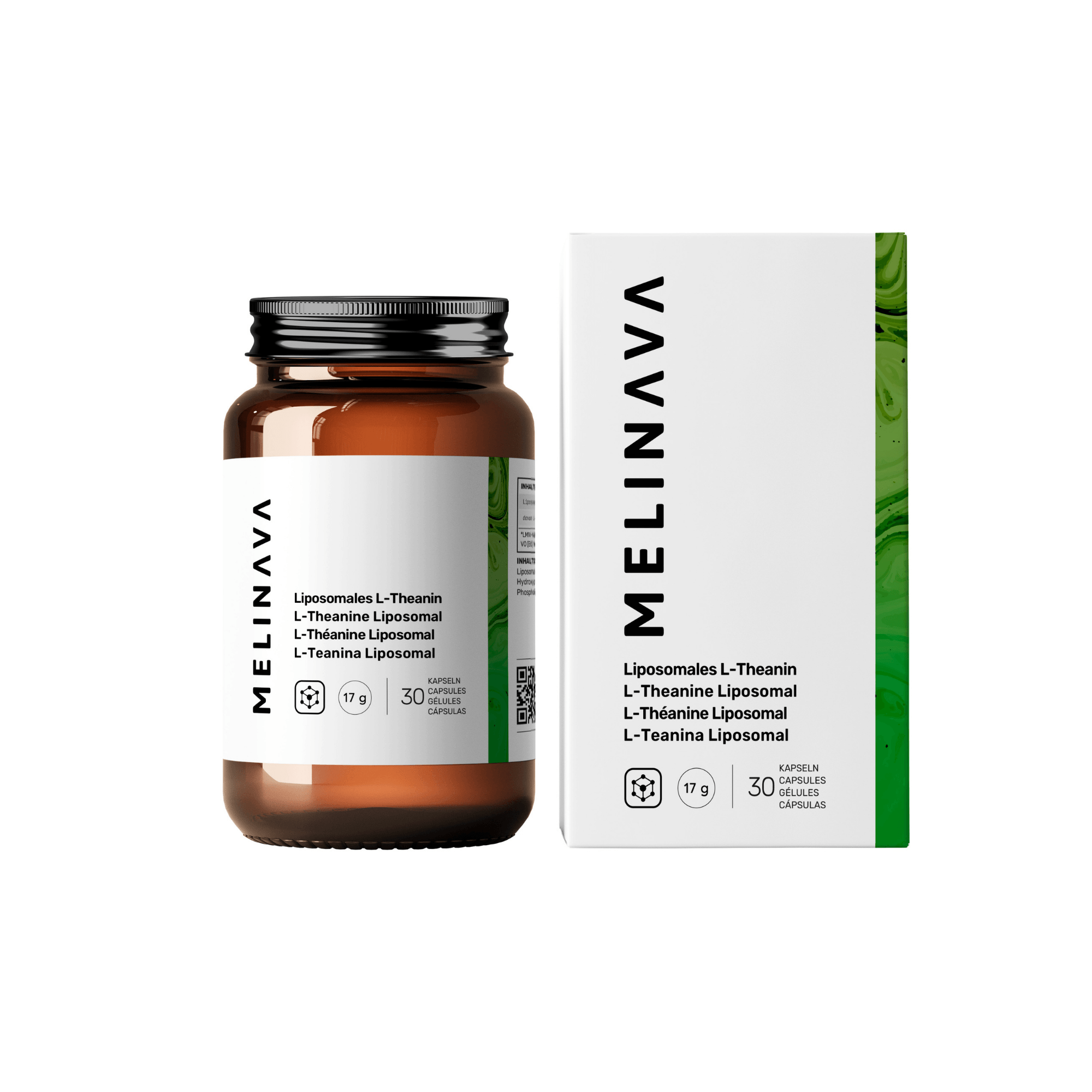
MELINAVA Liposomal L-Theanine
by MELINAVA
Pros
- 450 mg L-theanine per capsule
- Liposomal formulation for optimised absorption
- Caffeine-free
- Made from pesticide-free green tea extract
- Free from allergens (gluten-free, lactose-free, soya-free)
- No artificial additives
- Vegan
- Made in Europe (France)
- 30 capsules (1-month supply)
- 1 capsule a day
- Brown glass packaging that protects against light
- Laboratory-tested
Cons
- Only available online
- Higher price because of the liposome technology
Verdict
Melinava Liposomal L-Theanine takes first place in our test. The capsules are high-strength, with 450 mg of L-theanine per daily dose, which makes them suitable for every purpose. The active ingredient comes from green tea grown without pesticides, which is reflected in its very high purity.
Liposomal encapsulation is especially important for L-theanine. The liposomes protect the active ingredient from stomach acid and allow much more effective absorption. More of the active ingredient reaches the brain, where it is actually needed.
Customers report falling asleep more peacefully, greater mental clarity during the day and less stress in demanding situations. Relaxation without tiredness and a deep sense of inner calm are mentioned particularly often.
Some people combine Melinava with a cup of coffee in the morning to enhance its concentration-supporting effect.
The formula is completely vegan, with no gelatine capsules, soya, gluten or lactose. It is made in France to GMP standards.
Taking it is simple: one capsule a day, in the morning for focus and calm or in the evening for better sleep.
The manufacturer takes tolerability very seriously, which is why the product is completely free from unwanted additives.
You can find more information on the manufacturer's website *.
A month's supply of Melinava costs 349 kr (discounts are available when you buy 2 or 3 packs, as of April 2026).
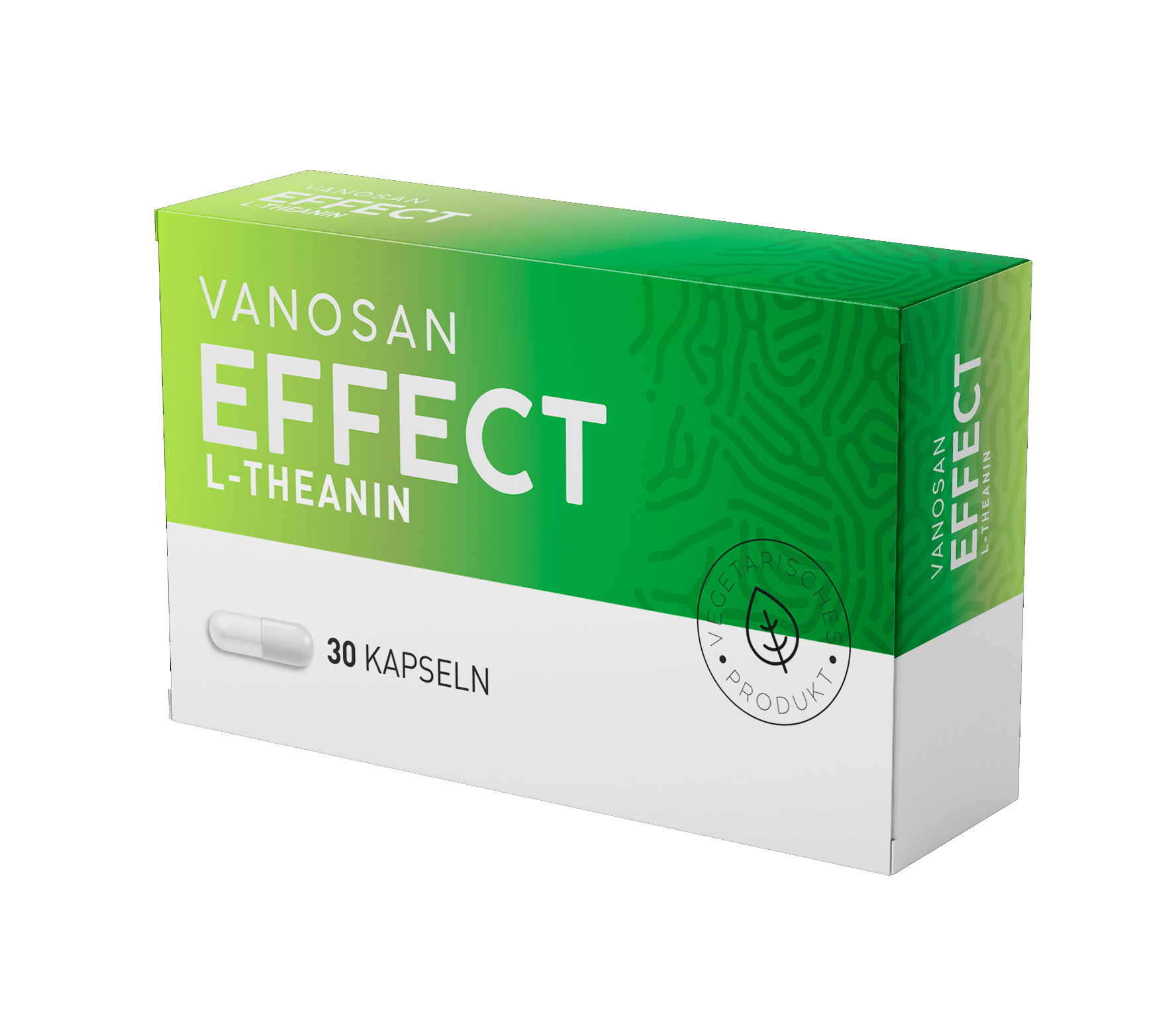
Vanosan L-Theanine
by VANOSAN
Pros
- 300 mg L-theanine per capsule
- 120 capsules (4-month supply)
- Very good value for money
- Laboratory-tested
- Made in Germany
- Free from colourings and preservatives
- Soya-free and gluten-free
- Vegan
- 1 capsule a day
Cons
- Only available online
- No liposomal formulation
- Slightly larger capsules
Verdict
Vanosan L-Theanine stands out above all for its reliable quality and excellent tolerability.
The dosage of 300 mg per capsule is within the effective range for reducing stress and supporting sleep. Manufacture in Germany in line with hygiene standards and laboratory testing attest to its quality.
However, Vanosan does without liposome technology, which results in lower bioavailability. Some of the L-theanine is broken down by stomach acid before it reaches the bloodstream. Ultimately, the large molecules struggle to cross the blood-brain barrier and are excreted.
Customer reviews are mostly positive. The effect on mild to moderate sleep problems and on stressful days is described as noticeable.
Customers particularly praise how well it is tolerated, even by sensitive stomachs, and the reliable delivery time of 2–3 working days.
To help with more severe symptoms, you can take 2 capsules a day instead of 1.
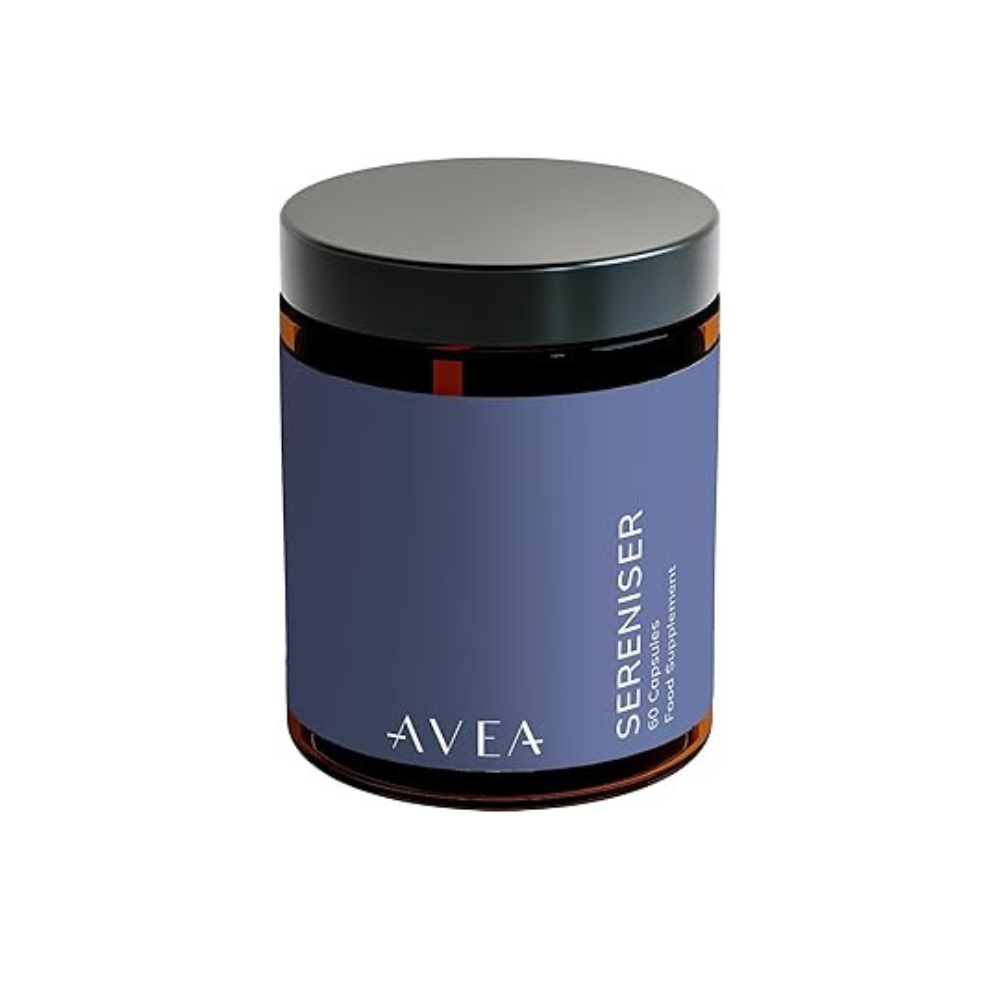
AVEA Sereniser
by AVEA
Pros
- Sleep supplement with L-theanine, magnesium and vitamin B6
- Extracted from green tea
- Contains other synergistic ingredients
- Certified organic
- Vegan
- 30 capsules (1-month supply)
- Transparent information on origin
- Sustainable glass packaging
Cons
- Expensive
- Only 100 mg L-theanine per daily dose
- 2 capsules a day
Verdict
AVEA Sereniser impresses with a well-thought-out combination of L-theanine, magnesium and vitamin B6. It is a coherent formula for anyone looking to work on their evening routine.
The L-theanine is extracted from green tea, and the product is certified organic and vegan, and comes in sustainable glass packaging. It is open about the origin and composition of its ingredients, something many users appreciate.
However, the dosage of 100 mg of L-theanine per daily dose is well below the effective range of 200–400 mg that Melinava and Vanosan reach.
On top of that, there is no liposomal formulation. Without it, some of the L-theanine is broken down by stomach acid, and the large molecules struggle to cross the blood-brain barrier.
As a result, customers report a fairly mild effect that is enough for light relaxation. For more pronounced sleep problems or during stressful periods, however, it falls short.
As a gentle introduction to L-theanine supplements with natural extra ingredients, AVEA Sereniser is still a solid choice.
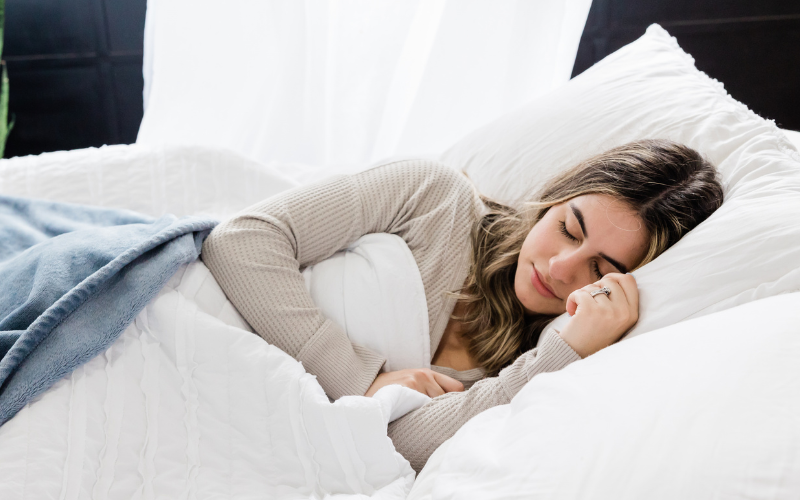
L-theanine gently prepares body and mind for sleep without leaving you groggy the next morning. After all, restful sleep is the foundation of energy and vitality.
Sleeping through the night again at last
Poor sleep is no small matter. If you regularly sleep badly, you'll struggle during the day with tiredness, poor concentration and irritability. Over time, your immune system suffers too.
L-theanine doesn't force sleep. It creates the right conditions for it. Racing thoughts slow down, tension eases and the brain settles. The sleep that follows is natural and includes all the important stages of sleep.
In a clinical study using 400 mg a day, participants' sleep quality improved measurably. They fell asleep faster and spent longer in deep sleep.³
Concentration and mental clarity
Modern life means sensory overload, constant multitasking and always being contactable. Concentration often declines with age. Your mind wanders while you're reading, you forget what you were about to do, you feel mentally 'foggy'. Stress and lack of sleep make the problem worse.
The cause is often a state of chronic overactivation in the brain. Alpha waves, which are linked to calm, focused attention, become scarce. This is exactly where L-theanine comes in. By selectively increasing alpha waves in the EEG, L-theanine puts the brain into a state similar to meditation: relaxed, but alert and receptive.⁸
Combined with caffeine, this effect is stronger: concentration, processing speed and mood improve measurably, while caffeine's typical side effects are significantly reduced.⁹

Staying focused without feeling tense: that's L-theanine's particular strength. It sharpens concentration and keeps your head clear, especially when it matters most.
Stress and restlessness in everyday life
Short spells of stress are normal. It becomes a problem when your body stays on high alert for a long time. Chronically raised cortisol levels put a strain on the cardiovascular system, weaken the immune system and make both sleep and concentration worse. It's a vicious circle many people know well.
That's precisely what L-theanine targets. It dampens the cortisol response to acute stress and stabilises the heart rate. You stay on top of things without tipping into overdrive.
L-theanine has also shown positive effects in studies on anxiety disorders and worry. It doesn't replace psychotherapy or, in severe cases, medication, but it can be a valuable addition.
Our verdict
The evidence is clear. L-theanine has been shown to improve sleep, reduce stress and increase mental clarity. This unassuming amino acid has a remarkable capacity to promote inner balance.
L-theanine works where many synthetic products fail: gently, reliably and without dependence. It supports sleep without leaving you foggy in the morning. It eases anxiety without changing your personality.
For anyone who suffers from stress, sleep problems, poor concentration or restlessness, L-theanine is a natural approach with a strong scientific basis.
Most people who try L-theanine feel the effect the very first time: a gentle release of tension, calmer breathing, clearer thoughts. What matters is the right dosage and a high-quality formulation. Liposomal products offer measurably better bioavailability and make sure that L-theanine crosses the blood-brain barrier in sufficient concentration.
Our comparison shows which products you can trust.
Several L-theanine products tested
* We may earn a commission from some of the companies featured. This is how we keep our comparisons free to read.
Some of these companies are our commercial partners.
Sources
1. Juneja LR, Chu DC, Okubo T, et al. (1999): L-Theanine – a unique amino acid of green tea and its relaxation effect in humans. Trends in Food Science & Technology, 10(6–7), 199–204.
2. https://pubmed.ncbi.nlm.nih.gov/18296328/
3. Rao TP, Osaki T, Ozeki M, et al. (2022): Acute and Repeated L-Theanine Supplementation. MDPI Nutrients, 14(1), 232.
4. Kimura K et al. L-Theanine reduces psychological and physiological stress responses. Biol Psychol. 2007;74(1):39–45.
5. https://pubmed.ncbi.nlm.nih.gov/25759004/
6. https://pubmed.ncbi.nlm.nih.gov/31623400/
7. Rao TP, Osaki T, Ozeki M, et al. (2022): Acute and Repeated L-Theanine Supplementation. MDPI Nutrients, 14(1), 232.
8. Ito K et al. Effects of L-theanine on the release of alpha-brain waves in human volunteers. Nippon Nogeikagaku Kaishi. 1998;72:153–157. (cited in Nobre et al. 2008)