
Guide
The best hyaluronic acid products compared (2026)
Last updated: 30 July 2026

Written by
Health Tested Editorial Team
Hyaluronic acid is best known as the secret weapon in creams and serums for smooth, radiant skin, but it can do a great deal more for your health.
Did you know it can do remarkable things not only on your skin but also from within, taken as a food supplement?
Best known for keeping skin smooth and supple, hyaluronic acid is increasingly being taken as a supplement, and its effects on the joints are impressive too: studies show that it achieves striking results in knee osteoarthritis and other joint problems.
Here we show you how hyaluronic acid works in the body and which products really live up to their promises.

There are countless hyaluronic acid products on the market, but not all of them are effective.
Hyaluronic acid: the beauty molecule
Hyaluronic acid (hyaluronan) is a natural substance that your body makes itself. More precisely, it's a polysaccharide, a type of complex sugar, with one remarkable property: hyaluronic acid can hold an exceptional amount of water.
A quarter of a teaspoon of hyaluronic acid holds up to 5.8 litres of water, the volume of a large water container or more than 20 full glasses.
This extraordinary ability is what makes hyaluronic acid so valuable, especially for skin and joints. It stores moisture for a long time and releases it slowly. Hyaluronic acid is found throughout the body, particularly in the skin and the joints.
Specific proteins in the body's cell membranes produce hyaluronic acid, and more than 50% of it is found in the connective tissue of the skin. There it keeps the skin elastic, hydrated and firm, which is why hyaluronic acid has become so famous in anti-ageing skincare. It also plays a part in wound healing, offers UV protection and acts as a free radical scavenger.

Hyaluronic acid can be used in many ways. In studies, it has proved particularly effective for skin and joint health.
Hyaluronic acid for smooth, firm skin
Its best-known use is probably on the skin, usually in creams and serums or even as injections. Beautiful skin needs hyaluronic acid: it binds moisture and also firms and plumps the skin.
It even provides UV protection, which also reduces signs of skin ageing. However, the hyaluronic acid content of your skin keeps falling as you get older, and the first wrinkles start to appear.
Creams with hyaluronic acid aren't the only way to support your skin. Taking hyaluronic acid by mouth actually has several advantages: it hydrates the skin from within. That way it reaches deeper layers of the skin than creams do, which means it holds moisture for longer and keeps the skin firmer for longer. Taken as a supplement, it works on several parts of the body: not just the skin but the joints and connective tissue too.
Taking hyaluronic acid supplements by mouth has been shown to work in several studies
In a study of 129 people, the skin was noticeably better hydrated and looked fresher after just 2–8 weeks of taking hyaluronic acid by mouth. After 12 weeks, even the top layer of the skin, the epidermis, was visibly stronger. The participants drank around 1.2–1.4 litres of water a day and took 100–200 mg of hyaluronic acid daily, and the improvement in their skin was marked.
In another study, 60 women took 120 mg of hyaluronic acid a day in capsule form for 12 weeks, and the difference was clearly visible. After just 8 weeks, their crow's feet, the fine lines around the eyes, were visibly shallower.
So hyaluronic acid not only works against dry skin and wrinkles but also supports your complexion from within, giving it more firmness and radiance.
Because it's so strongly hydrating, a hyaluronic acid supplement is also a great option for chronically dry skin. It can improve the look of your skin in the long term and help it feel soft again.
The key benefits at a glance
Taking hyaluronic acid regularly can offer a range of health benefits. These are the most important:
- better skin health (against dryness, wrinkles and scars, and for wound healing)
- relief from dry eyes
- better joint health
- help with knee osteoarthritis and knee pain
- easing of osteoarthritis symptoms
- relief from bladder pain
- relief from respiratory conditions such as asthma
Why take hyaluronic acid as a supplement?
You also get hyaluronic acid from food, for example from fish, potatoes, sweet potatoes, green leafy vegetables and almonds. However, it only stays in the body for a short time, so it constantly needs topping up.
At the same time, your body makes less of it as you age, which is one reason why typical signs of ageing such as wrinkles, joint complaints and spinal disc problems can appear over time.
To counter this, hyaluronic acid supplements can be a sensible choice: taking them regularly can enhance the positive effects described above, for example by keeping your skin looking fresh and supporting your joints.

Thanks to its special ability to bind large amounts of water, hyaluronic acid can hydrate the skin and support a smooth, radiant complexion.
Not all hyaluronic acid is the same: there are big differences between products
What to avoid when buying hyaluronic acid
When you choose a hyaluronic acid supplement, there are certain things to watch out for. Make sure you avoid these:
- low bioavailability
- products with too low a dose
- capsule shells made from gelatine
- fillers and anti-caking agents
- allergens, if you have allergies (lactose, gluten, soya)
- unnecessary additives
- sugar, alcohol or flavourings
- suspiciously low prices (be cautious)

There are several factors to consider when choosing the right hyaluronic acid supplement.
Which is better: low- or high-molecular-weight hyaluronic acid?
How hyaluronic acid works depends heavily on its molecular weight. The molecular weight describes how much a single molecule 'weighs' and is given in daltons (Da). Put simply, the higher the number, the bigger the molecule. It's the sum of the masses of all the atoms in the molecule. It's often given in kilodaltons (kDa), where 1,000 daltons equal 1 kDa.
An example: hyaluronic acid in the joints has a very high molecular weight of 6,000–7,000 kDa. In conditions such as rheumatism, it can drop to 3,000–5,000 kDa. Smaller molecules of 20–200 kDa mainly play a role in wound healing, ovulation and embryonic development.
There's no single agreed line between 'low molecular weight' and 'high molecular weight', though. Some sources put it at 500 kDa, others considerably higher. The German consumer advice centre (Verbraucherzentrale), for example, gives these figures: high-molecular-weight (1,500 kDa and above) and low-molecular-weight hyaluronic acid (50 kDa and below).
Most hyaluronic acid supplements contain molecules in the medium range of 500–700 kDa (kilodaltons). Some products contain molecules of 1,000 kDa, but the larger the molecule, the harder it is to absorb.Hyaluronic acid: what is inside the capsules?
The classic form of hyaluronic acid is capsules: tried and tested, effective and easy to use. But an innovative alternative is attracting more and more attention: liposomal hyaluronic acid. Liposomes ensure that your body absorbs the active ingredient particularly effectively.
To make the choice easier for you, we've summed up the pros and cons of both options:
Capsules
Pros
Easy to take: just swallow
Practical on the go and when travelling
Easy to dose (consistent amount of active ingredient)
No unpleasant taste or smell
Can be combined with other active ingredients
Need fewer fillers than tablets
Cons
Sometimes larger than tablets
Digestion can partly break down the active ingredient
The bioavailability of the active ingredient can vary
The capsule shell may contain gelatine
Unsuitable if you have difficulty swallowing
A high dose may mean several capsules
Liposomal form
Pros
In capsule form, easy to swallow
High bioavailability: a much lower dose is needed
Protects against stomach acid and other factors that hinder absorption
A lower dose for the same effect
No additives
Fewer side effects
Cons
May cost more because manufacturing is more complex
Making liposomes can be difficult and needs specialised technology
Less choice, as not every manufacturer can use the method
Liposomal hyaluronic acid: better bioavailability
Hyaluronic acid has one problem: its bioavailability is often poor, which means your body doesn't absorb it well. That's why supplements with liposome technology were developed: they're well absorbed by the body whatever the molecular size of the hyaluronic acid and offer further advantages too.
Liposomes are tiny bubbles of fat made from phospholipids. Liposomal hyaluronic acid is packed into these tiny fat globules (liposomes), which carry the active ingredients safely through the digestive tract.
This 'packaging' helps the hyaluronic acid molecules be absorbed more easily and stay active in the body for longer. It makes the active ingredients practically 'resistant' to digestive enzymes, stomach acid, bile salts, gut bacteria and even the free radicals your body produces.
So liposomes increase the absorption of hyaluronic acid. That's a big advantage over ordinary capsules, where absorption is often incomplete. Non-liposomal hyaluronic acid has lower bioavailability, even with a large molecular size, which means your body can only absorb and use a small part of it. Larger hyaluronic acid molecules in particular struggle to pass through the gut lining and get into the bloodstream effectively.

Simple model of a liposome, with a fatty layer outside and a watery chamber inside. Liposomes are an innovative technology for releasing active ingredients precisely and efficiently. That's why they've earned a firm place in medicine and cosmetics and are known for their wide range of uses.
Top 3: the best hyaluronic acid products of 2026
There are now countless hyaluronic acid products on the market. To find the best, we assessed them against the following criteria:
What is in the hyaluronic acid product?
Are there any study or test results?
How high is the dose of hyaluronic acid?
Does it contain allergens?
How good is the value for money?
Is there anything special about the formula or the way it's made?
product review
TESTED
our quality criteria
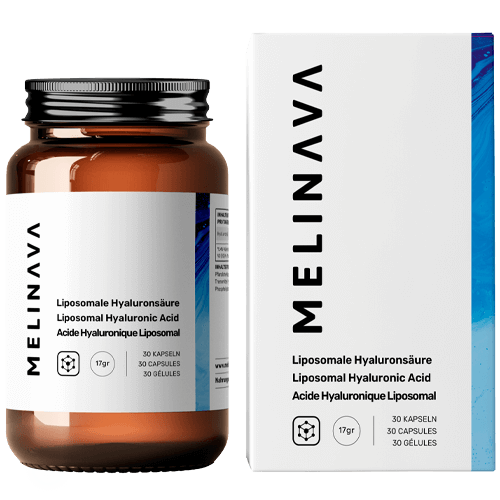
MELINAVA Liposomal Hyaluronic Acid
by MELINAVA
Pros
- Ideal dose: 150 mg (liposomal)
- Highest bioavailability thanks to liposome technology (absorption up to 64 times higher)
- Molecular weight of 800–1,000 daltons: ideal for hydration and long-lasting effects
- Zeta potential of -38.9 mV: shows the liposomes are highly stable and bioavailable
- Protected from stomach acid by the liposomal coating
- Longer-lasting effect
- Better tolerated
- Suitable for people with a sensitive stomach (no piperine)
- Free from soya, gluten and lactose
- Gelatine-free capsule
- No fillers
- Free from impurities
- Made in Europe (France)
- Comes in a high-quality glass bottle you can reuse at home, as a spice jar for example
Cons
- Only available online
- Often sold out
- Only available as capsules
Verdict
Melinava Liposomal Hyaluronic Acid has the highest overall rating and is therefore our winner.
Each capsule contains 150 mg of liposomal hyaluronic acid with a molecular weight of 800–1,000 daltons.
Thanks to liposome technology, the bioavailability of the capsules is considerably higher. This means the capsules work better even at a lower dose. At the same time, your body absorbs the hyaluronic acid molecules extremely well, whatever their size.
The liposome technology also leads to higher customer satisfaction, because it is gentle on the stomach and therefore better tolerated.
MELINAVA places great importance on high safety standards in manufacturing and on offering a natural, high-quality product without unnecessary additives, which also reduces the risk of side effects. The manufacturer takes tolerability very seriously, which is why the product is completely free from unwanted additives.
Melinava Liposomal Hyaluronic Acid has already been used with excellent results for problems such as dry skin, crow's feet or a weakened skin barrier.
Users also report a noticeable improvement in their joint health.
With Melinava Hyaluron, you only need to take one capsule a day. A pack contains 30 capsules.
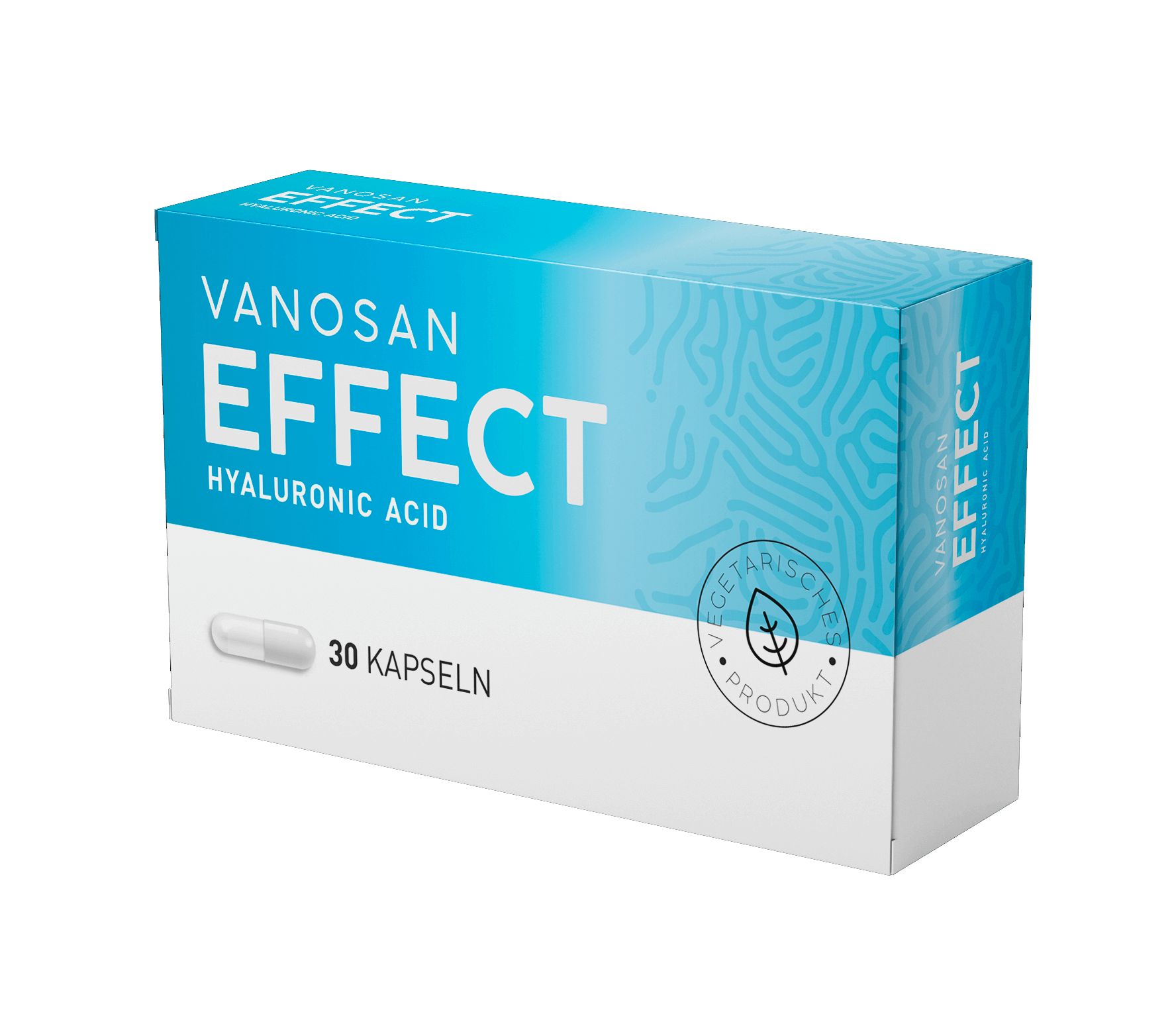
Vanosan Hyaluronic Acid
by VANOSAN
Pros
- 400 mg hyaluronic acid
- 500–700 kDa, easily absorbed
- Free from soya and gluten
- Vegan
- Contains piperine, which improves bioavailability
- Laboratory-tested
- Few additives
- Made in Germany
Cons
- No protection from stomach acid
- Contains preservatives
- Only available online
- No enhanced bioavailability
Verdict
Vanosan Hyaluron is well dosed, with 400 mg of hyaluronic acid a day. A molecular size of 500–700 kDa is generally easy to absorb. However, the form of the product limits how much is actually absorbed.
The capsule shell is made without animal ingredients, so it is also suitable for vegetarians and vegans.
Most users are positive about Vanosan Hyaluronic Acid. It is well tolerated and benefits the skin.
It is made in Europe, and delivery usually takes 1–3 working days. Take one capsule a day with a meal. A pack contains 30 capsules.
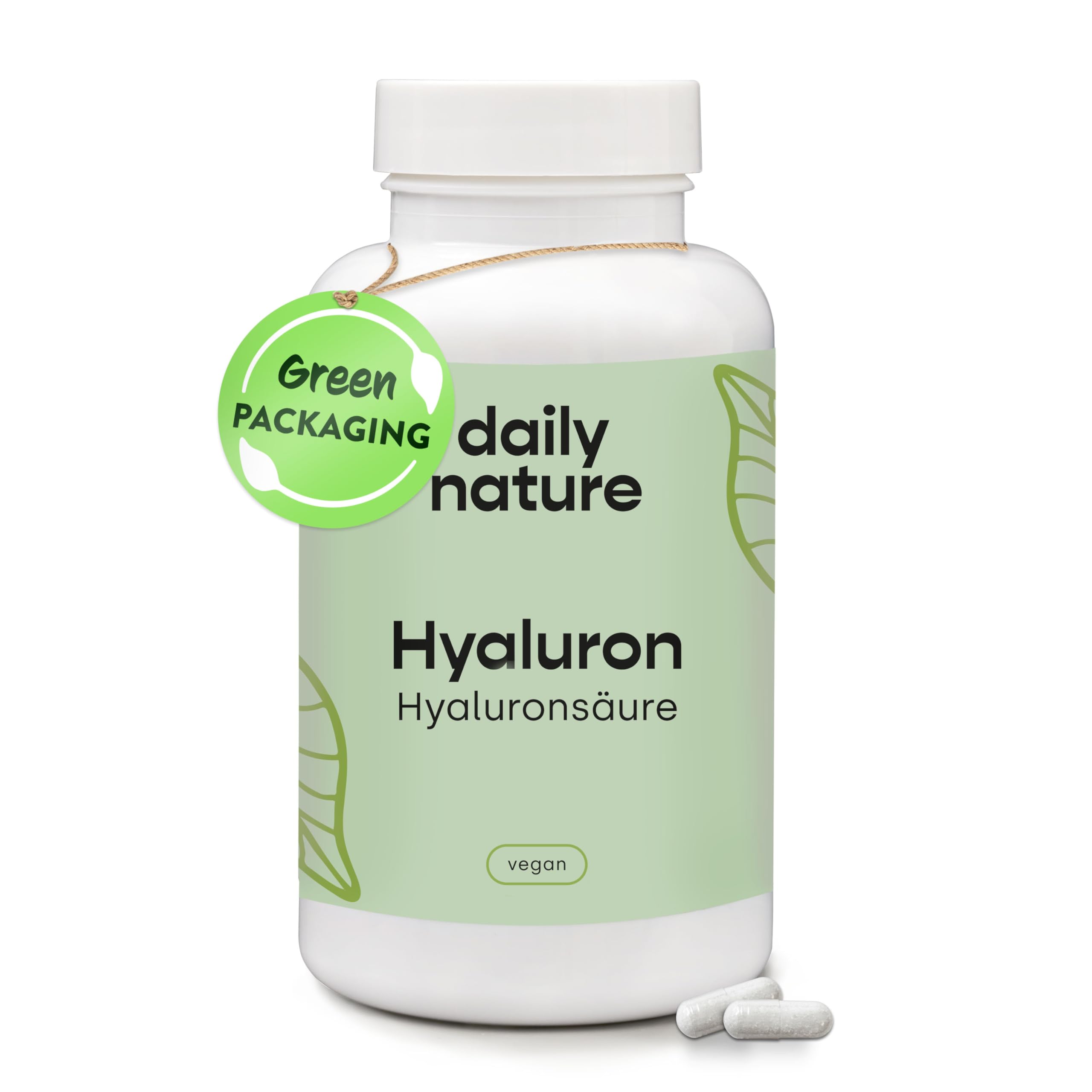
daily nature Hyaluronic Acid
by DAILY NATURE
Pros
- Low price
- Laboratory-tested
- Also contains grape seed extract
- Vegan
- Tested for contaminants
- Few additives
- Made in Germany
Cons
- Low dose
- No enhanced bioavailability
- No protection from stomach acid
- Some customers report little or no effect
- Only available online
- Should be taken with meals
Verdict
Each daily dose contains 500 mg of hyaluronic acid with a molecular weight of 1,100 kDa, higher than in most hyaluronic acid supplements.
Customers rate the capsules as good and effective. Many users have noticed visible positive changes in their skin.
However, high-molecular-weight hyaluronic acid without a liposomal coating may be less well absorbed, and the hyaluronic acid is not protected in the digestive tract either. As a result, some customers have reported stomach problems after taking it. It is best to take the capsules with a meal so they are better tolerated.
People with chronic symptoms may find the effect unsatisfactory. Take one capsule a day. A pack contains 60 capsules.
Delivery is free with Amazon Prime and usually takes 1–2 working days.
Hyaluronic acid for knee pain and knee problems
Hyaluronic acid is a natural component of synovial fluid (joint fluid), which lubricates and protects the joints.
Numerous studies from 2008 to 2015 (13 in total) prove that hyaluronic acid is effective for joint inflammation, knee osteoarthritis and joint pain.
Studies have repeatedly shown relief from knee pain, reduced inflammation and stronger knee muscles.Research has also shown that it protects cartilage and lubricates the joints.
Smaller studies have also produced promising results: after just two weeks of taking 60 mg of hyaluronic acid a day, people with chronic knee pain reported much less pain and noticeably better mobility.
Another study of 50 people found that knee mobility clearly improved, both when bending and when straightening the knee. These participants took 48 mg of hyaluronic acid a day for 90 days and felt noticeable relief.
As a food supplement, hyaluronic acid can be a simple and effective way to relieve knee pain and prevent problems, especially with conditions such as osteoarthritis. And the best part: there don't seem to be any side effects.
Hyaluronic acid can also support your bones
Hyaluronic acid is best known for its great effect on the skin, but it can also play an important part in supporting your bones. It could be especially valuable in osteoporosis, as it appears to contribute naturally to bone health. It seems to support bone metabolism and stimulate bone formation.
Larger studies in humans are still lacking, but the first results from animal studies are promising. A study in rats with bone loss showed that taking hyaluronic acid by mouth helped to markedly reduce the loss of bone mineral. The rats were given a small daily dose of hyaluronic acid for 8 weeks, and their bone loss was demonstrably reduced.
These early findings are exciting and show that hyaluronic acid supplements can do more than you might think: although they are mainly known for their effects on the skin, they could also give your bones valuable support.

Joint and bone problems can be painful and limiting. Studies now show that hyaluronic acid can be a great help with these problems too.
Hyaluronic acid and eye health
Because hyaluronic acid is also a major component of the vitreous humour in the eye, it's often added to eye drops. Too little hyaluronic acid in the eye (because of age or illness, for example) may play a role in diabetic retinopathy or myopia (short-sightedness). And many studies have already found that eye drops containing hyaluronic acid are effective for dry eyes. Across 53 clinical studies, a hyaluronic acid concentration of 0.1–0.4% relieved symptoms very well within 3 months. Here, too, there were hardly any side effects.
But hyaluronic acid can soothe and moisturise dry eyes not only from the outside but also from within, through supplements. After you take it, it spreads through the body and also keeps the mucous membranes of the nose and the eyes moist.

Hyaluronic acid isn't just an all-rounder for the skin: dry eyes can also benefit from its great capacity to hold moisture.
Our verdict: hyaluronic acid supports the body in many ways
The beauty molecule is a true all-rounder and can support the body in many different ways. For joint and bone problems in particular, hyaluronic acid has been shown to relieve symptoms, reduce inflammation and pain, and improve mobility.
The benefits for skin and eyes are remarkable too: taking it supports moisture retention, gives you firm, healthy skin and protects your eyes from drying out.
So hyaluronic acid can certainly benefit your health too. Take a look at the products that came out on top in our test and find the right one for you.
* We may earn a commission from some of the companies featured. This is how we keep our comparisons free to read.
Some of these companies are our commercial partners.
Sources
1. Gricelis Martínez, Michael R. Mijares, Juan B. De Sanctis. Effects of Flavonoids and Its Derivatives on Immune Cell Responses. Recent Patents on Inflammation & Allergy Drug Discovery. 2019, Vol.13, No.2, p.84.
2. Nutraceuticals in Prostate Disease: The Urologist's Role. J Curtis Nickel, MD, FRCSC,* Daniel Shoskes, MD, MSc, FRCS(C),† Claus G Roehrborn, MD, FACS,‡ and Mark Moyad, MPH§. Rev Urol. 2008 Summer; 10(3): 192-206. PMCID: PMC2556486.
3. https://pubmed.ncbi.nlm.nih.gov/27710596/
4. https://pubmed.ncbi.nlm.nih.gov/23333628/
5. https://pubmed.ncbi.nlm.nih.gov/25666032/
6. https://www.sciencedirect.com/science/article/pii/S0968089606007310