
Guide
Creatine for women: the best products compared (2026)
Last updated: 6 August 2026

Written by
Health Tested Editorial Team
Many women notice that at some point their body starts to feel different: energy fades, muscles feel weaker and the mind feels tired more often. It's often dismissed as an inevitable part of getting older, yet there's frequently a concrete cause behind it: creatine deficiency.
Creatine is a compound your body makes itself, and it's crucial for energy supply. With age, however, your body's own production drops noticeably. On top of that, women naturally have much lower stores than men.¹ More than 1,000 scientific studies have looked at what happens when you deliberately top up these stores, and the evidence shows that it can support your muscles, bones and mental performance.
In this comparison, you'll find out what creatine can really do for women and which products impressed us in our test.

There are countless creatine supplements on the market, but not all of them are effective.
The natural fuel for your muscles
Creatine has nothing to do with steroids or artificial stimulants. It's a compound your body makes itself, and it makes sure that energy used up in your cells is replenished straight away. Your body produces around 1–2 g a day; the rest comes from meat and fish.²
What makes women different: they naturally have up to 80% lower creatine stores than men.³ That sounds like a disadvantage, but it isn't. Lower starting stores simply mean your body responds particularly strongly to a supplement, so the effect of creatine is all the more noticeable in women.
Creatine was discovered in 1832 and is an organic acid that your body makes itself. Your body produces around 1–2 g of creatine a day from the amino acids glycine, arginine and methionine. Creatine is often associated with bodybuilding, but that doesn't do justice to its real importance. What makes creatine so special is its contribution to your energy: it's the fastest source of energy your muscles have. When you climb the stairs, get up from an armchair or lift something heavy, your body immediately draws on phosphocreatine to provide new energy. This process runs without oxygen, which makes it faster than any other way of producing energy.
How creatine works in the body
Every movement, every thought and every heartbeat uses energy. Your body supplies this energy through a molecule called ATP, which you can think of as the smallest unit of cellular energy. The ATP stored in your muscles is very limited and lasts only a few seconds at full exertion.⁴ Creatine makes sure that used ATP is replenished straight away. The more creatine you have stored, the longer and more efficiently this process can run, not only during exercise but also when you climb the stairs, carry the shopping or concentrate on your work.⁵

Many people know creatine as a sports supplement.
Falling creatine levels affect much more than your muscles, though: poor sleep, low mood, a sluggish metabolism. The connection often goes unrecognised.
The four biggest myths about creatine
Many women have heard of creatine, but they've also heard things that make them hesitate. Four concerns come up particularly often:
1. Will it make me bulky and muscular?
No. Building a lot of muscle mass takes high testosterone levels, which women biologically don't have. Creatine promotes firm, strong muscles, but not bulk. The effect is more like that of regular training: your body becomes firmer and more resilient without visibly getting bigger.
2. Does creatine cause bloating and water retention?
This worry puts many women off, and needlessly so. Creatine draws water into the muscle cells themselves, not under the skin. That's a desirable effect, because well-hydrated muscles look firmer and work more efficiently. It doesn't cause visible swelling or a 'puffy' appearance. As for bloating: at a normal daily dose, creatine is very well tolerated and doesn't cause digestive problems.
3. Will it make me put on weight?
If you notice a slight increase on the scales, it isn't fat you're seeing but water in your muscle cells. That's simply a sign that your muscles are better supplied. Creatine doesn't change your body fat at all. On the contrary: if creatine helps you train more effectively, you'll burn more fat in the long run.
4. Is it only worth it for women who do sport?
No. Creatine supports not only your performance in training but also your physical fitness in everyday life: climbing stairs, going for walks, moving freely without discomfort. Creatine is also involved in cognitive processes and can support thinking and mental resilience, especially at stressful times or when you're short of sleep. For women over 40 who want to stay both mobile and mentally sharp, creatine is a sensible addition.

A busy mind, a packed diary: creatine supports concentration and thinking even when stress and lack of sleep take their toll.
Creatine for women: support at different stages of life
What makes creatine so valuable for women isn't just its general effect on energy and strength. It's the fact that research now shows how relevant creatine is at very specific stages of life.
Active women and the menstrual cycle
In the second half of the cycle, energy and muscle performance drop measurably. Creatine can cushion this dip and keep body and mind performing well during this phase too. On top of that, your body gradually loses muscle mass from the age of 30, a process that speeds up considerably after 60. Studies show that women who take creatine and train regularly can not only maintain their muscle mass but in some cases even build it.⁶
Perimenopause and menopause
As oestrogen levels fall, the loss of muscle mass and bone density speeds up noticeably. Studies have shown that creatine combined with strength training can slow this process.⁷ ⁸ Stronger muscles stabilise the bones, lower the risk of falls and help you stay independent and active for longer.⁹
Vegan and vegetarian diets
If you follow a vegan or vegetarian diet, you'll have particularly low creatine stores, because in food, creatine is only found in meat and fish.¹⁰ This group tends to see the biggest improvements from taking a supplement.
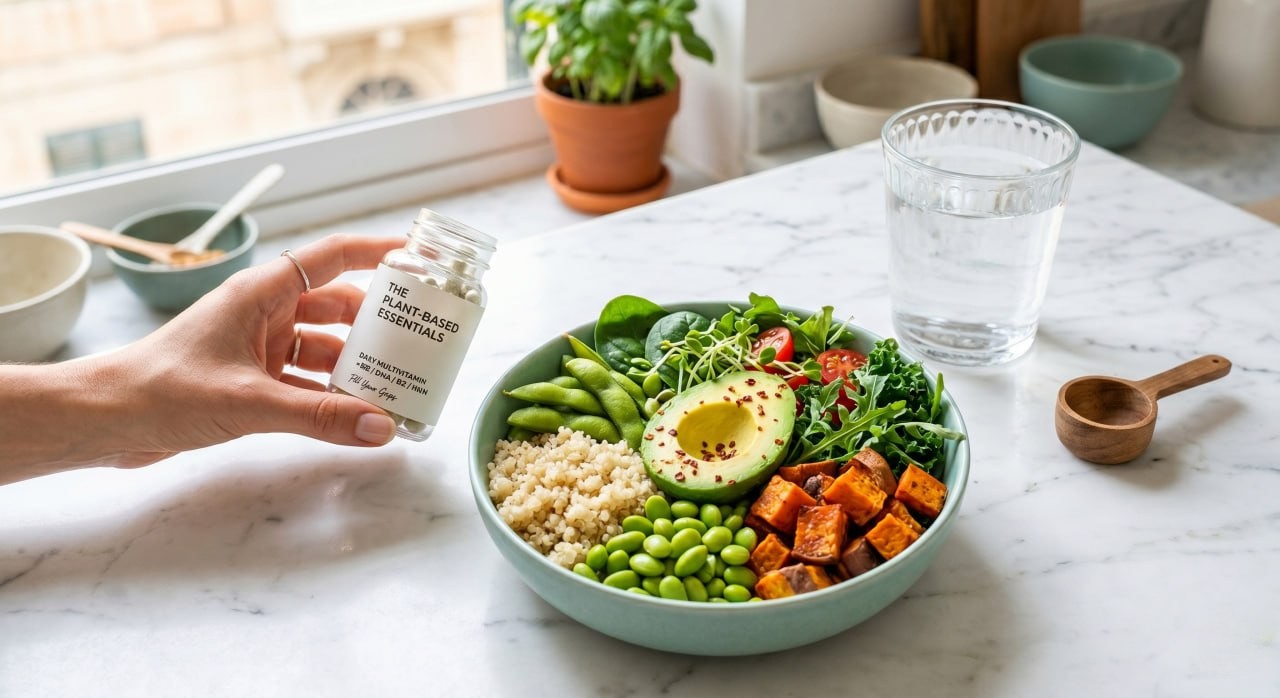
If you eat a plant-based diet, you get practically no creatine from food. This is where supplementing makes the biggest difference.
What few people know: creatine also affects the brain
The brain uses around 20% of the body's total energy and relies on the same mechanisms as the muscles. When oestrogen levels fall, whether during the cycle or in the menopause, the brain finds it harder to meet its energy needs. This shows up as poor concentration or forgetfulness. Topping up your creatine stores can restore mental clarity.
Clinical studies also show that creatine keeps thinking and memory stable even during demanding periods, in other words exactly when sleep and recovery fall short.¹¹ The mental effect even seems to be stronger in women than in men.
The key benefits of creatine for women
Taking creatine regularly can have many benefits. It can help you:
- maintain muscle mass and even build it as you get older
- improve muscle strength and endurance in everyday life
- support bone density and lower the risk of falls
- promote mental performance and memory
- recover faster after physical exertion
- protect your cells against oxidative stress
- improve how your body uses blood sugar
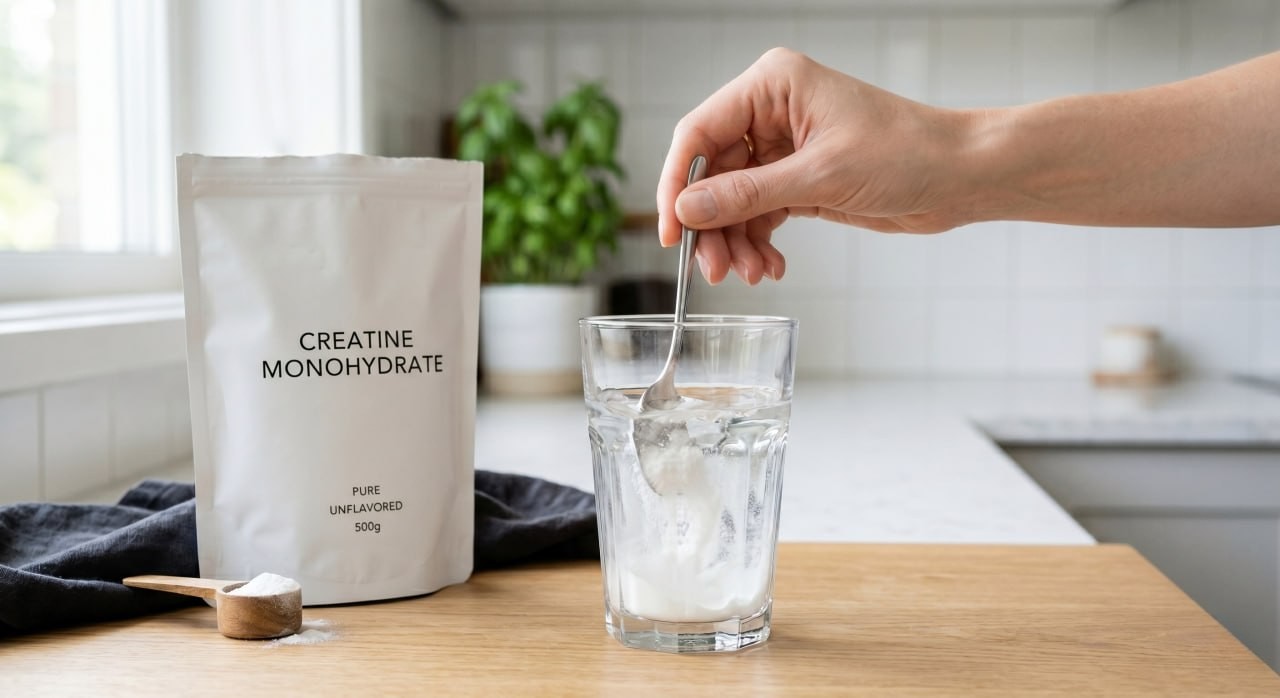
Easier than you might think: one teaspoon a day, dissolved in a drink, is all you need. The best choice is creatine monohydrate, as it's the best-tolerated form.
How to take creatine
- The daily dose: 3–5 g a day is plenty. For many people, 3 g a day is enough to benefit from the effects over the long term. You don't need a loading phase with high starting doses.¹²
- Consistency over timing: it makes no real difference whether you take it in the morning or evening, before or after food. What matters is taking it every day, so that your body's stores stay topped up. The first effects usually appear after a few weeks. Sticking with it pays off most: the full effect usually develops over several months.¹³
- What to look for when you buy: only creatine monohydrate has comprehensive scientific evidence behind it. It's the most researched and best-tolerated form there is. Ideally, choose a micronised powder, which dissolves more easily, and look for tested purity and quality.
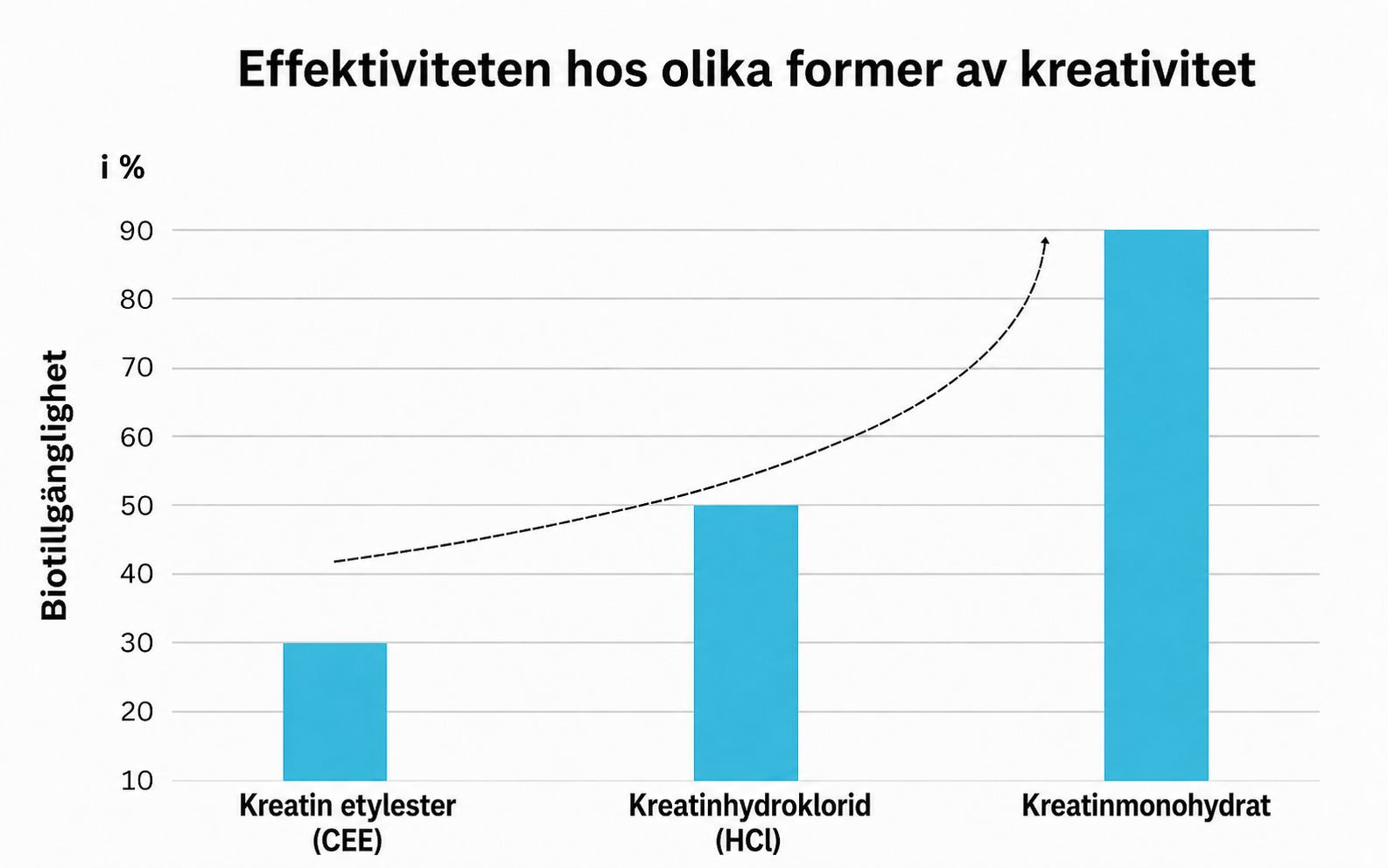
Creatine monohydrate is the best-researched form of creatine.
What to look for when buying creatine
Not all creatine supplements are created equal. It's worth taking a closer look at these points when you choose:
- creatine form: monohydrate is the best choice scientifically
- purity: at least 99%
- particle size: under 200 mesh
- dosage: 3–5 g per serving
- tolerability: micronised powder is gentler on the stomach
- packaging: airtight and protected from light
- origin: transparent information on manufacturing and composition
- price: a suspiciously low price points to inferior raw materials
Top 3: the best creatine products of 2026
There are countless creatine products on the market today. We assessed them against several criteria to find the best:

What is the supplement made of?

Are there scientific study results?

How high is the dosage of the nutrient?

Does the product contain allergens?

How good is the value for money?

Are there any special features in the composition or manufacturing?
product review
TESTED
our quality criteria
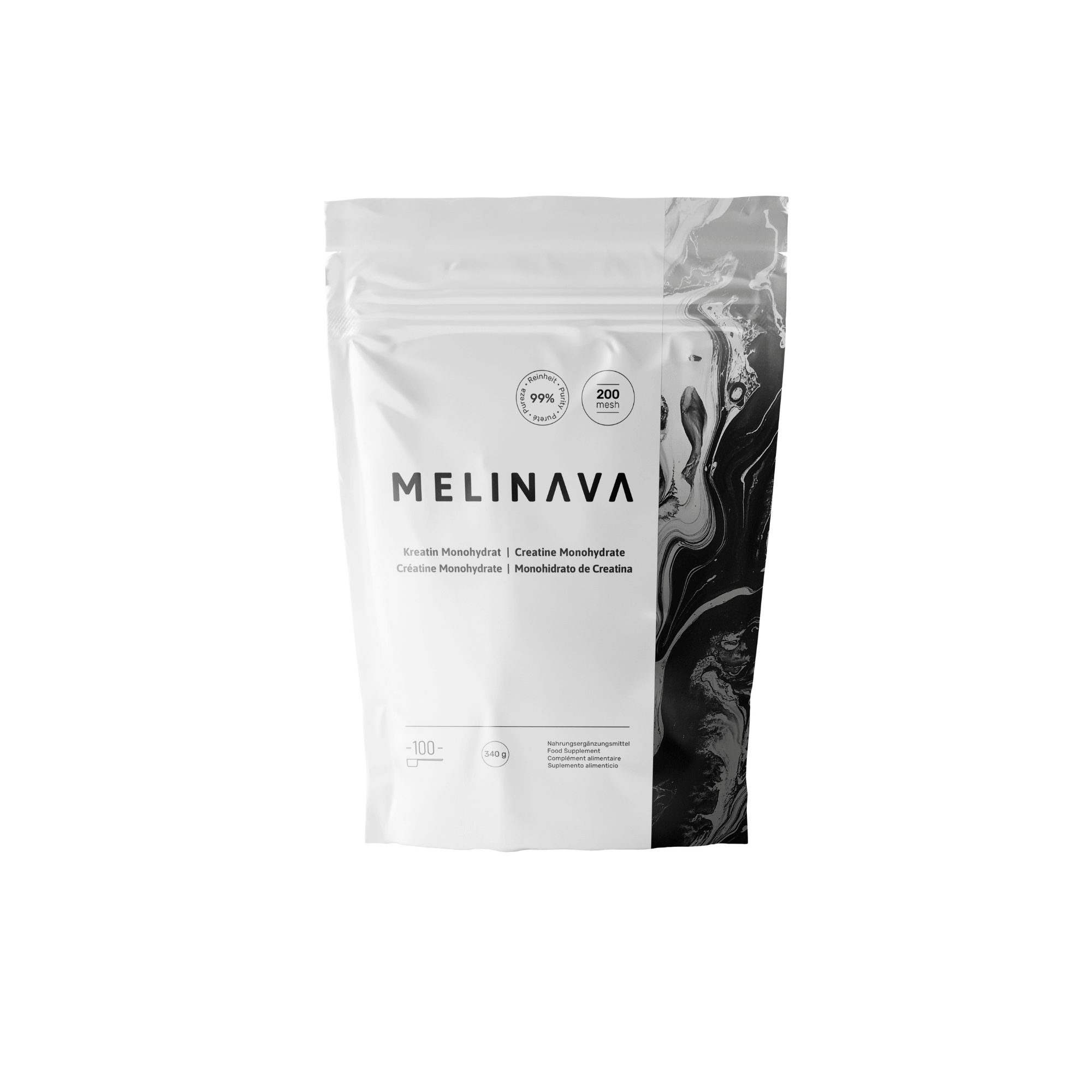
MELINAVA Creatine Monohydrate
by MELINAVA
Pros
- 100% pure creatine monohydrate
- Ideal dose: 3.4 g per serving
- Micronised powder for better solubility
- Free from allergens (gluten-free, lactose-free, soya-free)
- No artificial additives or fillers
- Vegan and GMO-free
- Neutral taste
- Handy measuring scoop included
- Made in Europe (France)
- Resealable, airtight pouch
Cons
- Only available online
- Only available as a powder
Verdict
Melinava Creatine Monohydrate powder takes first place in our test, offering high quality at a fair price. The ultra-fine powder has a purity of over 99.5% and a particle size under 200 mesh. It is also free from impurities and contaminants.
The dose of 3.4 g per serving matches the scientific recommendations exactly. The micronised powder dissolves much better than conventional creatine, making it gentler on the stomach. Customers report a pleasantly neutral taste. It is made in France to pharmaceutical standards.
Melinava discloses all the information on origin, manufacturing and composition, which is not a given in this product category.
Users report noticeably better strength and endurance after just two to three weeks. Faster recovery and less exhaustion after exertion are also often mentioned.
One pack of Melinava Creatine Monohydrate contains 340 g of creatine, and the scoop provided lets you measure out precise doses for 100 days.
The recommended daily dose of Melinava Creatine Monohydrate is 3.4 g.
The manufacturer takes the product's tolerability very seriously, which is why it is completely free from unwanted additives.
You can find more information on the manufacturer's website.
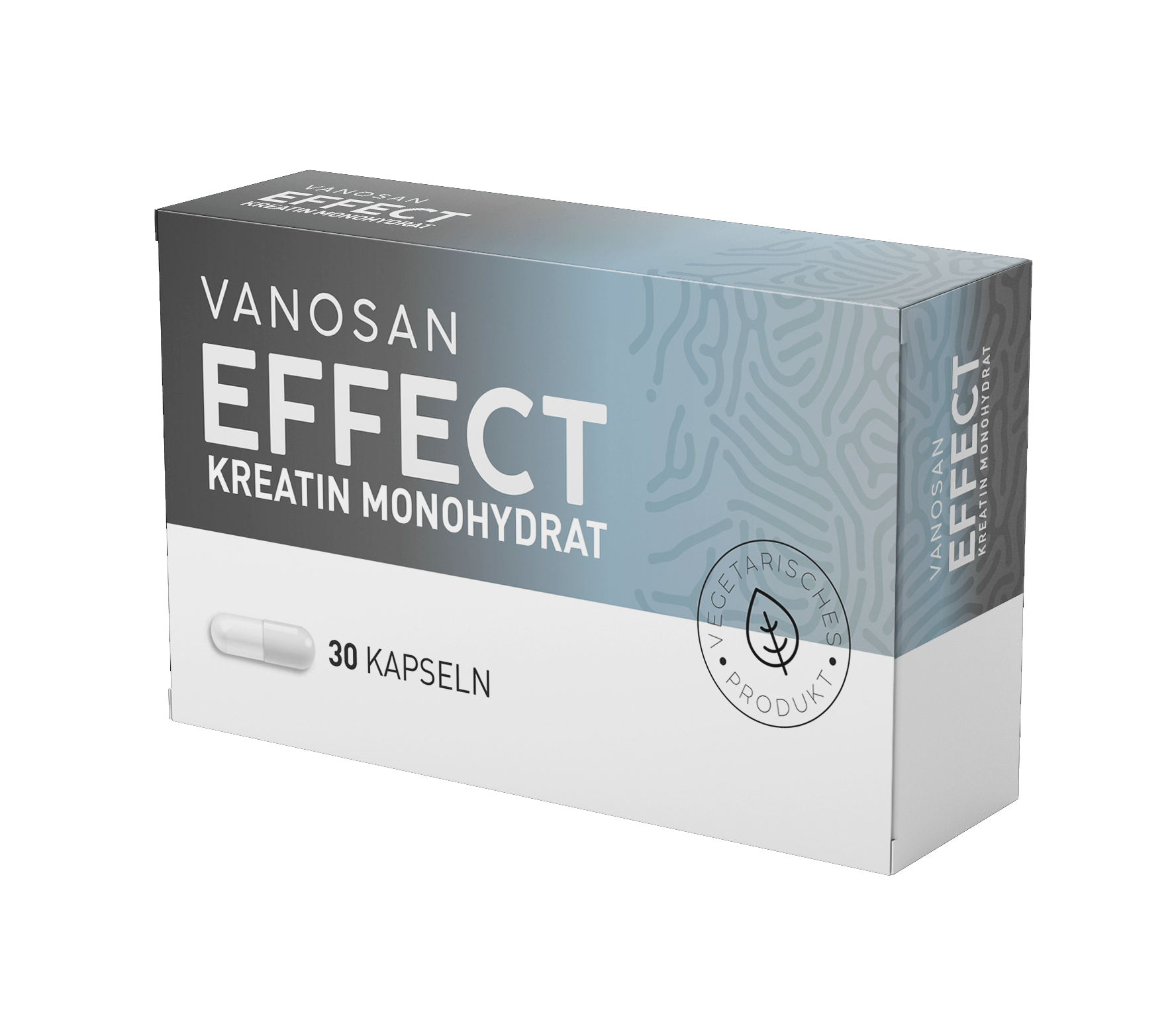
Vanosan Creatine
by VANOSAN
Pros
- Pure creatine monohydrate
- 1 g per capsule
- 30-day supply
- Made in Europe
- Gluten-free, lactose-free and vegan
- No unnecessary additives
- Good value for money
Cons
- 3 capsules a day
- Only available online
Verdict
Vanosan Creatine Monohydrate takes second place in our test and is a solid, well-made product with a good, straightforward formula. The capsules contain pure creatine monohydrate, which makes them a good starting point for improving muscle strength, endurance and recovery. On the plus side, it also contains no unnecessary additives, flavourings or fillers.
For people with higher needs, such as those aged 40 and over, the daily dose of 3 g may be on the low side. Some customers find taking 3 capsules a day impractical.
Thanks to its value for money, however, it is a satisfactory choice for anyone thinking about supplementing with creatine.
If you want to top up your creatine stores faster, take it with carbohydrate-rich meals. The product also fits easily into existing training and nutrition plans.
Vanosan usually delivers within a few days.
The recommended daily dose is 3 capsules. One pack contains 90 capsules.
ILN Creatine Ethyl Ester
by IRON LABS NUTRITION
Pros
- Suitable for vegetarians and vegans
- Available in shops
- 1-month supply
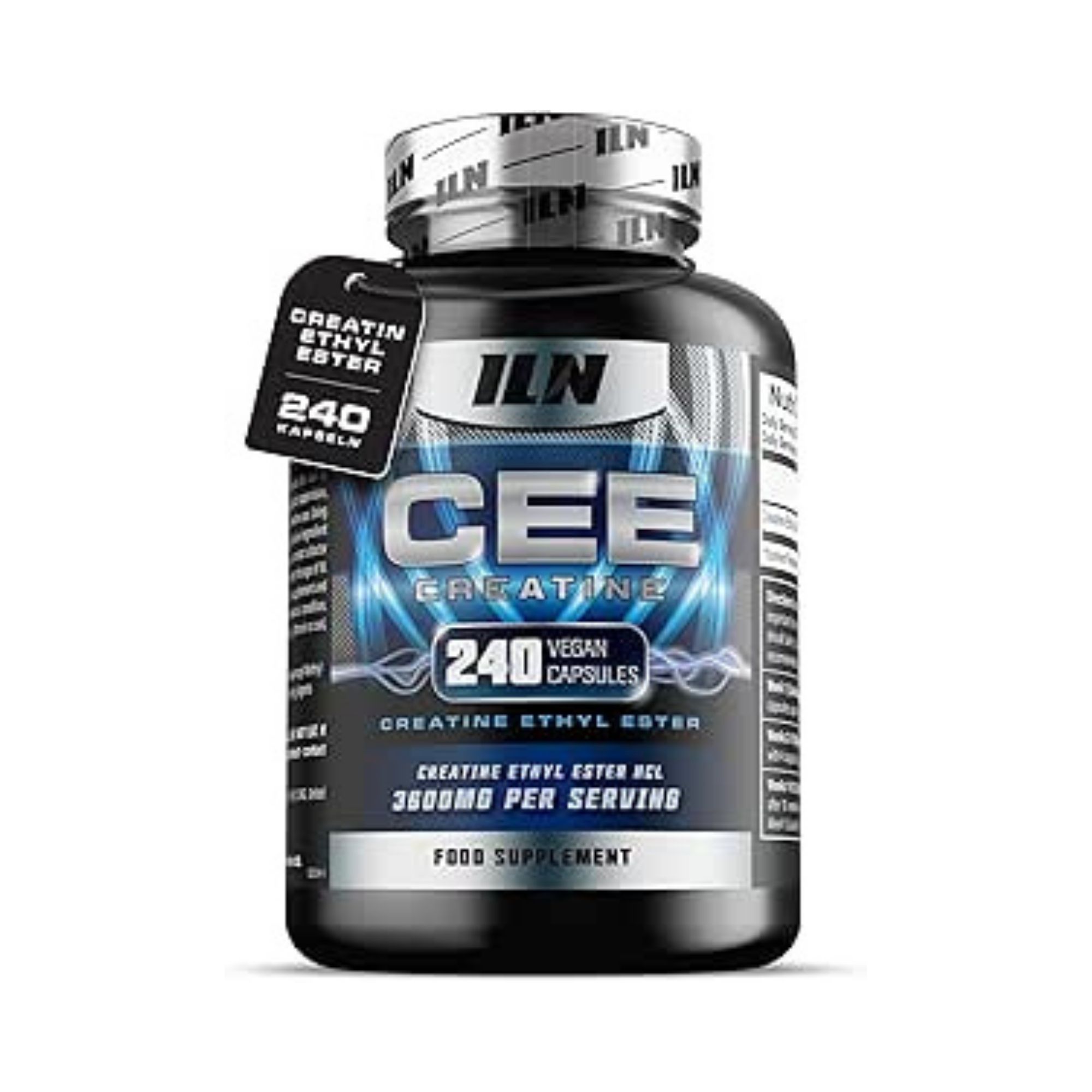
- 3.6 g per daily dose
Cons
- Uses creatine ethyl ester as its form of creatine
- Unclear origin of the creatine
- 8 capsules a day
- Made in China
Verdict
The creatine ethyl ester capsules from Iron Labs Nutrition stand out mainly for their vegetarian- and vegan-friendly formula. This makes them a good option for anyone who wants to avoid animal-derived ingredients. Unlike Vanosan and Melinava, however, ILN uses creatine ethyl ester, which is absorbed faster but also breaks down faster. The low stability of creatine ethyl ester also means that much of the active ingredient may be broken down before it is absorbed into the muscles, which reduces the product's effectiveness.
On the other hand, the capsule form has the advantage of masking the typically bitter taste of creatine ethyl ester. Less practical, though, is the recommended daily dose of at least 8 capsules, which can be a nuisance, particularly for older people or anyone who has difficulty swallowing. However, the number of capsules can be adjusted depending on what you are taking them for.
It is made in China, which makes independent quality certificates especially important when you buy.
The recommended daily dose is 8–10 capsules. One pack lasts 30 days.
Keep your muscle strength and stay independent
Age-related muscle loss, known medically as sarcopenia, starts as early as the age of 30. After 60, the process speeds up. On average, you lose 1–2% of your muscle mass a year unless you actively counteract it.¹¹
Numerous studies show that, in women, creatine combined with strength training can improve muscle retention even in later life.
In a three-year study, older people who took creatine regularly were able not only to maintain their muscle mass but even to increase it slightly. Over the same period, the control group without creatine lost a considerable amount of muscle mass.¹²
In everyday terms, that means staying independent for longer: climbing stairs without getting out of breath, getting up from a chair without needing support, keeping your balance better and avoiding falls.

If you actively counteract it, you can noticeably slow age-related muscle loss and enjoy a carefree life for longer. Creatine is one of the best-documented active ingredients for this.
Strengthening bone health
As you get older, it isn't only muscle mass that declines but bone density too, a process that can make osteoporosis more likely. Post-menopausal women are particularly affected.
Studies show that strength training combined with creatine not only strengthens muscles but can also have positive effects on bone structure. Stronger muscles take the load off your bones during everyday movements and lower the risk of fractures.
Stable bones, strong muscles and better balance work together. That's one of the most important foundations for an independent life in older age.Mental clarity and memory
It's well known that creatine increases muscle strength. Less well known is that it can also support the brain. Around 20% of the body's total energy needs go to brain function, and creatine supports this energy supply directly.
A study in older adults showed that creatine can improve working memory and processing speed. The effect was especially clear in people who were short of sleep or mentally exhausted. The participants were more alert and better able to concentrate. Positive effects were also seen in vegetarians and vegans, whose creatine stores in the brain are often lower.
For many people, staying mentally sharp in later life matters as much as physical strength. Creatine can support both.

Your brain works around the clock. As a source of energy, creatine is therefore crucial for cognitive performance too.
Our verdict
For women, creatine is one of the best-researched food supplements there is. And the evidence is clear: it works.
Two areas stand out in particular. Creatine has been shown to slow age-related muscle loss, and at the same time it supports cognitive performance: two factors that become increasingly important from 40 onwards.
There are now many products on the market, but not all of them deliver what they promise. Quality, purity and formulation vary considerably. If you're looking specifically for a high-quality supplement, you'll find proven products in our comparison.
Several proven creatine products
* We may earn a commission from some of the companies featured. This is how we keep our comparisons free to read.
Some of these companies are our commercial partners.
Sources
1. Kreider, R. B., et al. (2017). International Society of Sports Nutrition position stand: safety and efficacy of creatine supplementation in exercise, sport, and medicine. Journal of the International Society of Sports Nutrition, 14:18.
2. Wallimann T, Tokarska-Schlattner M, Schlattner U. The creatine kinase system and pleiotropic effects of creatine. Amino Acids. 2011;40(5):1271-1296.
3. Kreider, R. B., et al. (2017). International Society of Sports Nutrition position stand: safety and efficacy of creatine supplementation in exercise, sport, and medicine. Journal of the International Society of Sports Nutrition, 14:18.
4. Wallimann T, Tokarska-Schlattner M, Schlattner U. The creatine kinase system and pleiotropic effects of creatine. Amino Acids. 2011;40(5):1271-1296.
5. Ibidem.
6. https://pmc.ncbi.nlm.nih.gov/articles/PMC8619193/
7. Chilibeck PD, et al. Effects of creatine and resistance training on bone health in postmenopausal women. Med Sci Sports Exerc. 2022.
8. Candow DG, Chilibeck PD, Forbes SC. Creatine supplementation and aging musculoskeletal health. Endocrine. 2014;45(3):354-361.
9. https://beyond-lifespan.com/lexikon/kreatin/
10. Smith-Ryan AE et al. Creatine supplementation in women's health: A lifespan perspective. Nutrients. 2021.
11. https://jissn.biomedcentral.com/articles/10.1186/s12970-021-00412-w
12. https://www.transparentlabs.com/blogs/all/creatine-timing-how-long-until-you-see-results
13. https://www.transparentlabs.com/blogs/all/creatine-timing-how-long-until-you-see-results