
Guide
Collagen: the best products compared (2026)
Last updated: 6 August 2026

Written by
Health Tested Editorial Team
Past a certain age, many people notice that something is changing. Skin looks less smooth, connective tissue loses its firmness and joints feel stiffer than they used to. This often has to do with the body's natural collagen supply.
Collagen is a key structural protein found in skin, bones, tendons, ligaments and connective tissue.¹
As you get older, however, your body makes less and less of it, which is one reason why a growing number of people are turning to collagen supplements.
The market is huge, though, and the differences between powders, capsules, drinkable vials and vegan alternatives can be considerable. Quality, source and dosage vary widely.
In this article, you'll find out:
- what collagen does in the body
- the different forms and sources of collagen
- which criteria really matter when choosing one
- which collagen product came out best in our 2026 comparison

There are countless collagen supplements on the market, but not all of them are effective.
Collagen: a key structural protein
Collagen is one of the most important proteins in the body. It's found in skin, bones, tendons and connective tissue, among other places, where it provides structure and strength.³
Your body is constantly making and breaking down collagen. Over the years, though, this process slows down and the natural amount of collagen decreases. As a result, your skin loses some of its firmness, and tissues such as tendons and cartilage may seem less able to cope with strain.
Collagen and the skin
Collagen is the most abundant protein in the human body and makes up around 80% of the skin's weight.
It forms a stable network of fibres that gives the skin structure, firmness and suppleness.
Collagen loss has a particular impact on skin structure: the collagen fibres break and become shorter and fewer. As a result, they lose their ability to hold moisture, which leads to a loss of firmness and to wrinkles.
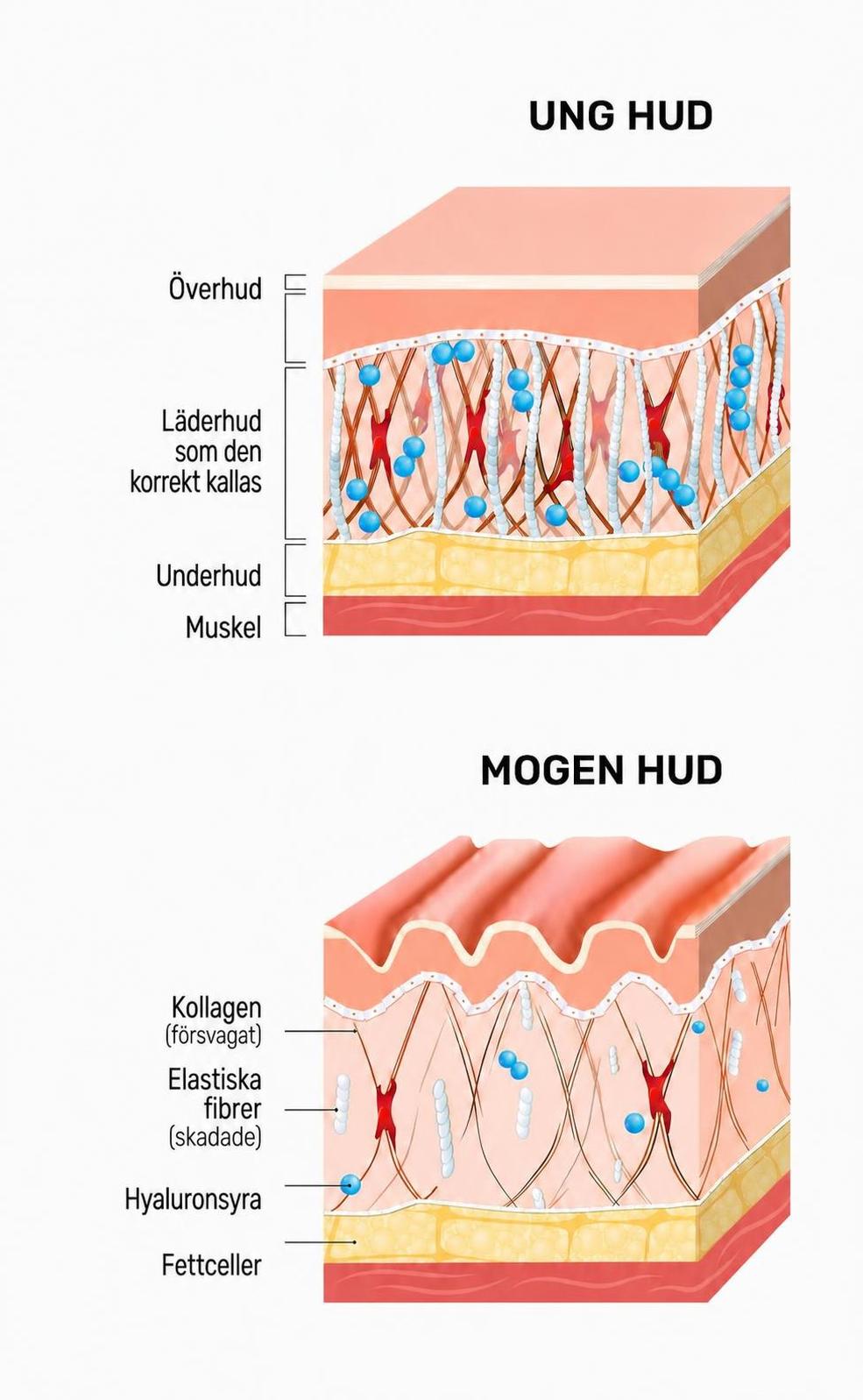
As you age, your body's collagen production declines, and this shows first in your skin. The deeper layers lose their structure, so the skin sags and wrinkles start to form.
Benefits of taking collagen
Collagen is also credited with many other positive effects on body and mind:
- improved skin elasticity
- fewer lines and wrinkles
- support for the joints
- better bone density and stability
- support for the muscles
- a stronger gut lining⁶
- improved elasticity of the blood vessels
- lower blood pressure and cholesterol
- a calming effect
- support for healthy, restful sleep
- support for mental performance and concentration
- an anti-inflammatory effect
- a stronger immune system
- an anti-ageing effect
Signs of collagen deficiency
A collagen deficiency can affect many areas of the body, because collagen is a key structural protein for skin, joints, bones and connective tissue. The symptoms are often non-specific and can be mistaken for other deficiencies:
- declining skin elasticity and wrinkles
- joint pain and reduced mobility
- weak connective tissue
- slow wound healing
- brittle nails
- thinning hair or hair loss
- weak bones and a higher risk of osteoporosis
- loss of muscle mass
- gum problems
- loose teeth

Faced with physical or mental health problems, most people don't immediately think of a nutrient deficiency, let alone a shortage of a protein the body makes itself. Rather than taking lots of different medicines, you may find that a single active ingredient makes all the difference. The answer often lies not in taking more, but in giving your body exactly what it's missing.
What to avoid when buying a collagen supplement
If you decide to take collagen, make sure you avoid the following:
- low bioavailability (peptides too large)
- products with too low a dose
- missing information on origin (especially with animal collagen)
- fillers and anti-caking agents
- allergens (lactose, gluten, soya)
- unnecessary additives
- sugar, alcohol or flavourings
- inflated prices

There are several factors to consider when choosing the right collagen supplement.
The different types of collagen
There are 28 different types of collagen in the human body, each with its own specific functions. The three most important are type I, type II and type III, and type I collagen is the dominant and most significant form.
Type I collagen: the all-rounder for skin, bones and connective tissue
- the most common type of collagen in the body (90%)
- central to skin, bones, tendons, ligaments and connective tissue
- forms particularly robust, long-fibred structures for stability and shape
- determines key properties of the skin and supporting tissue
- has the best-studied peptide profile in collagen research
- considered the most relevant form for beauty, anti-ageing, tissue structure and overall collagen supply
- often used in high-quality collagen products, especially marine collagen
Type II collagen: for the joints
- the main component of cartilage (80%)
- gives the joints stability and support
- sometimes also contains hyaluronic acid
- recommended for joint problems
Type III collagen: the elastic partner
- often found together with type I
- responsible for the elastic properties of tissue
- important for blood vessels, the gut and muscles
Why type I is the best choice
Type I supports the most tissues at once and has the most extensive body of scientific research. As the most common collagen in the body, it covers the widest range of effects, from anti-ageing for the skin to stronger bones and joints.
Vegan, bovine, porcine or marine collagen: which is best?
1. Vegan collagen: helpful, but not real collagen
Vegan 'collagen' contains no collagen at all. Instead, it's a mixture of vitamins and other nutrients such as vitamin C, zinc and biotin. These are meant to stimulate your body's natural collagen production. That can be helpful, but it doesn't replace real collagen.
In short: a good option for vegans, but not comparable to real collagen in its effect.
2. Bovine and porcine collagen: widely available, the classic approach
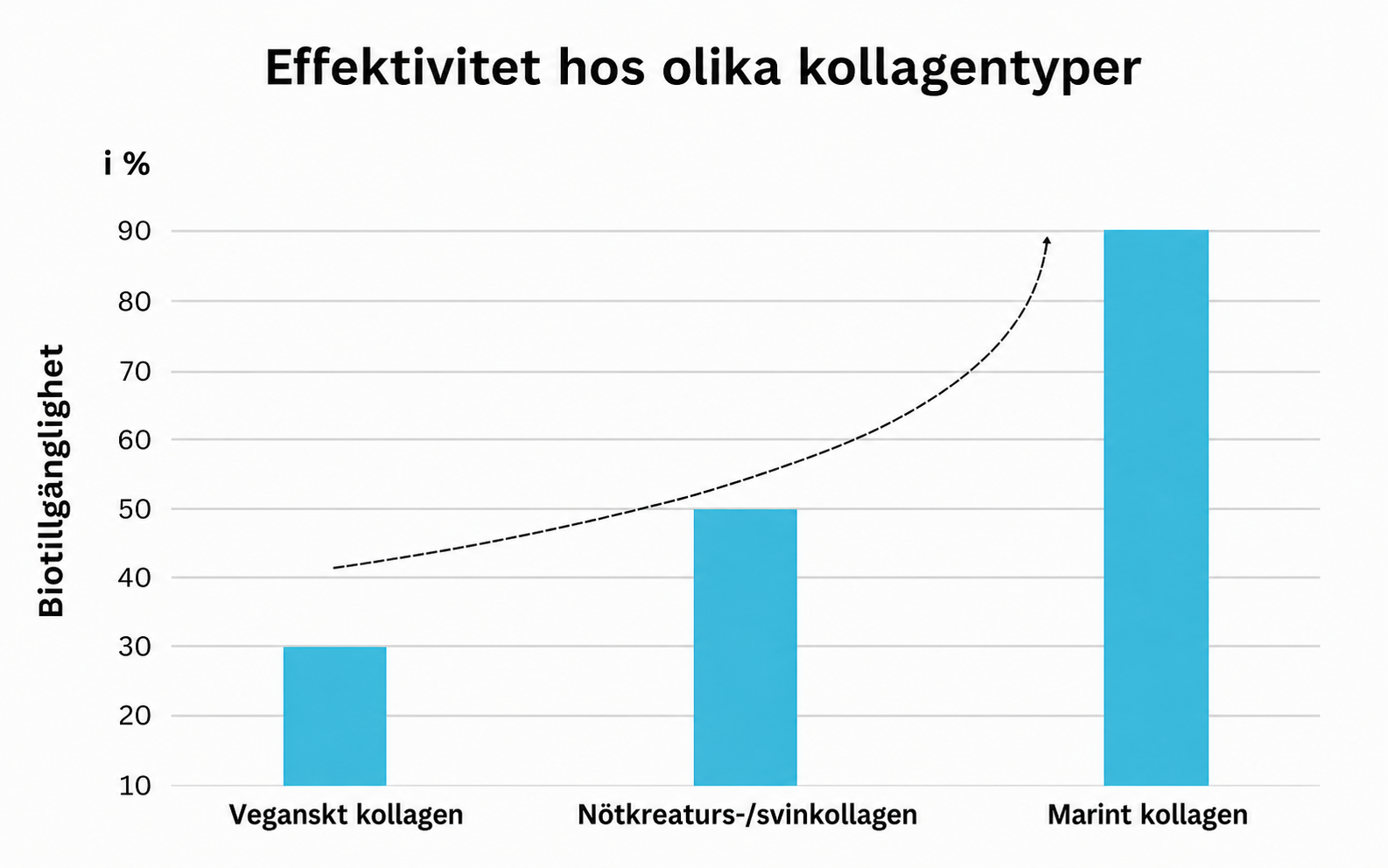
Collagen from cattle and pigs is widely available and provides relevant amino acids. However, its peptides are larger, which can make it more difficult to absorb, and it can sometimes be harder to digest too. Many people choose it for the price, while others avoid it for ethical or religious reasons.
In short: a solid basis, but often inferior in bioavailability and purity.
3. Marine collagen: fine structure, high purity
Marine collagen peptides usually come from fish skin and have a smaller molecular structure. Studies describe this as particularly bioavailable (up to 1.5 times better). Marine sources also contain mainly type I, the most important type of collagen for skin and connective tissue. Studies show that marine collagen can visibly improve skin elasticity, moisture and wrinkle depth after just a few weeks.
In short: a highly bioavailable, pure and modern source of collagen. It's often the preferred choice for high-quality products.
Vegan collagen
Pros
100% vegan
Suitable for vegetarians, vegans and people who cannot tolerate animal products
Sometimes combined with vitamins and amino acids
Cons
Not real collagen, but usually a collagen 'alternative' or collagen precursors
Effect on skin and connective tissue less well researched
Often more expensive, with limited effectiveness
Plant-based products contain no type I or type III collagen structures
Bovine and porcine collagen
Pros
Widely available and cheaper
Rich in type I and type III collagen
Often available in high doses
Cons
Lower bioavailability due to larger peptide size
Origin often hard to trace
Can be problematic for people with religious, ethical or cultural restrictions
Not suitable for vegans or vegetarians
Marine collagen
Pros
Highest bioavailability thanks to the smallest peptide structure
Rich in type I collagen
Odourless, with a neutral taste
Dissolves well
Very low risk of allergies
Sustainable use of fish by-products
Cons
Can be slightly more expensive than other animal collagen
Not suitable for vegans or vegetarians
Cannot be taken if you have a fish allergy
Bioavailability: why peptide size matters
Not all collagen is absorbed equally well by the body. What matters is the size of the peptides:
The smaller they are, the more easily they can pass through the digestive tract and be built into your body's tissue matrix.
- smaller peptides (under 3,000 daltons) pass through the gut wall faster and more efficiently
- larger molecules are absorbed less well or first have to be broken down further in the gut
So the smaller the collagen peptides, the higher the bioavailability, and the faster and more effectively they work in the body.
Top 3: the best collagen products of 2026
There are countless collagen products on the market today. We've assessed them against several criteria to bring you the best:
What is the collagen made of?

Are there study or test results?

How high is the dosage of each ingredient?

Does the product contain allergens?

How good is the value for money?

Are there any special features in the composition or manufacturing?
product review
TESTED
our quality criteria
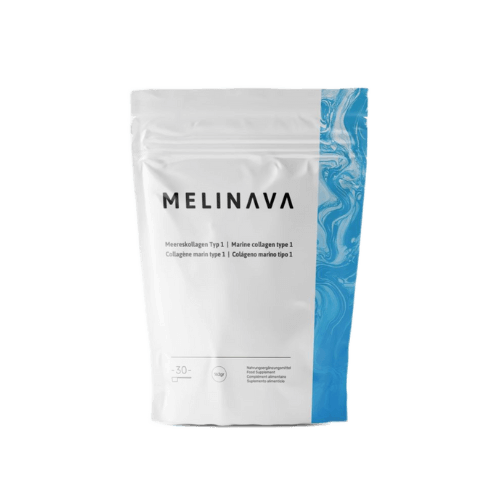
MELINAVA Marine Collagen
by MELINAVA
Pros
- 5 g of marine collagen per daily serving for optimal effect
- High-quality type I tripeptide collagen from sustainable marine sources
- Easy to stir into water, smoothies or other drinks
- Exceptionally small molecular size (under 300 daltons)
- Free from soya, gluten and lactose
- Supports the regeneration of joints, tendons and connective tissue
- No additives
- Made in Europe (France)
- 30 servings per pack, enough for one month
Cons
- Only available online
- Often sold out
Verdict
Melinava Marine Collagen is high-strength, with 5 g per daily serving. It is a high-quality collagen powder from sustainable marine sources and achieved the highest overall score in our test, taking first place (as of January 2026).
Thanks to its exceptionally small molecular size (under 300 daltons), the collagen can be fully absorbed and used by the body.
The type I tripeptide collagen it contains is a new generation of collagen with particularly high bioavailability. This means you need to take less and still get a stronger effect.
Thanks to the high-quality marine collagen peptides, the product is also particularly well tolerated. The manufacturer takes tolerability very seriously, which is why the product is completely free from unwanted additives. Melinava builds its products around high effectiveness and 100% pure, top-quality ingredients. This is also reflected in the positive customer reviews.
Users of Melinava Marine Collagen report that their skin became firmer and more supple again after just a few weeks. Some users noticed an improvement in cellulite in particular. Many also found that their hair and nails became noticeably stronger and more resilient. Users also report better concentration and greater calm. Melinava has also been used successfully for joint and muscle problems.
Daily use is simple: 1 serving (5 g) a day, stirred into a drink of your choice. One pack contains 150 g of powder, enough for 30 days. Discounts are available when you buy two or three packs.
Vanosan Collagen
by VANOSAN
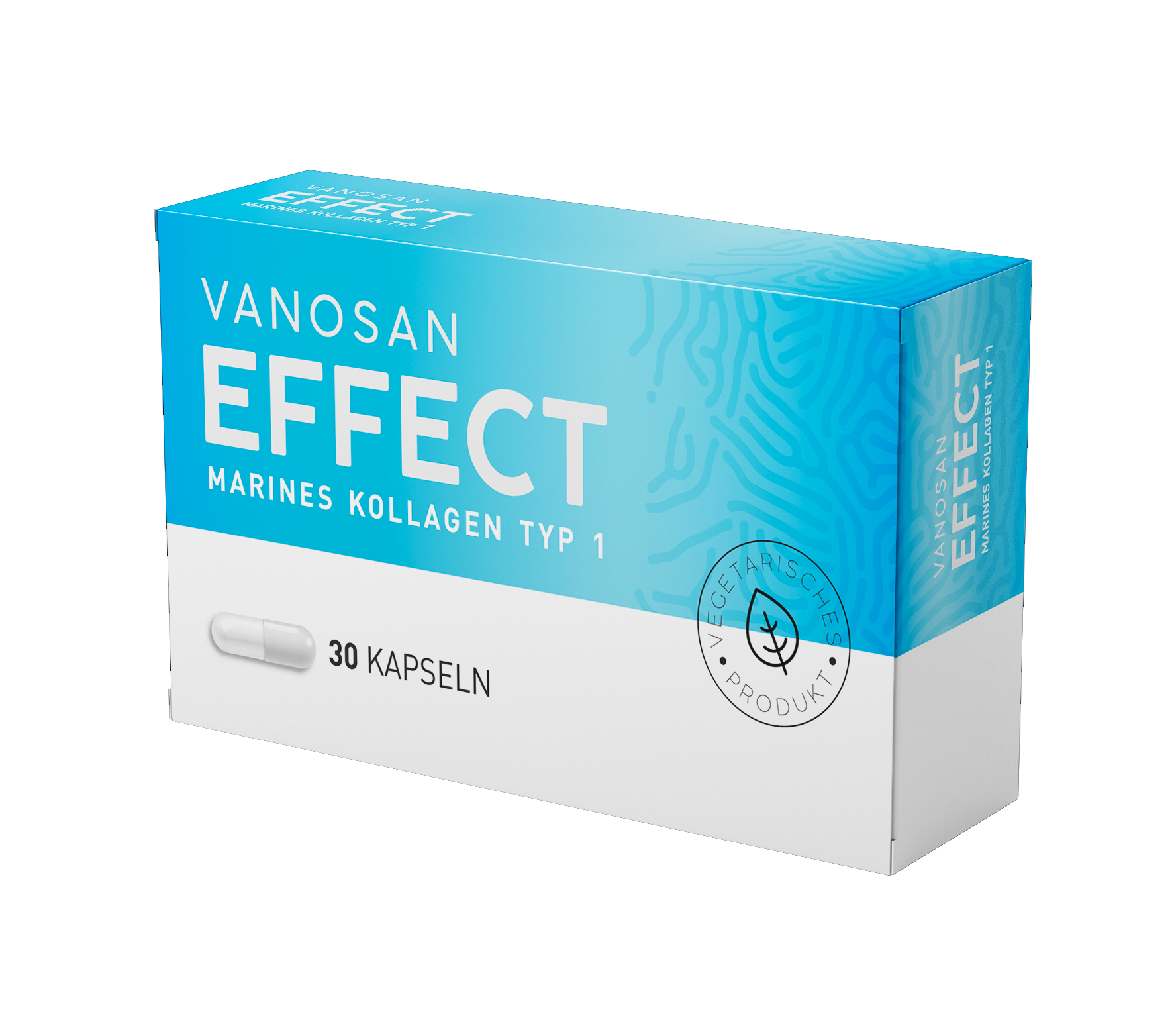
Pros
- Hydrolysed bovine collagen
- Nutrients kept within their safe upper limits
- Free from soya and gluten
- Laboratory-tested
- Free from many additives
- Made in Germany
Cons
- Does not protect against heartburn
- 3 capsules a day
- Only available online
- No enhanced bioavailability
Verdict
Vanosan Collagen contains hydrolysed bovine collagen, combined with vitamin C and zinc, both of which play an important role in the body's natural collagen synthesis.
The combination is well thought out and targets skin, hair, nails and connective tissue. On the plus side, it contains no unnecessary additives, flavourings or fillers.
For users with greater needs, such as people with joint problems, the dosage may be on the low side. Some customers also think three capsules a day is a lot.
It is made in Europe under controlled conditions. Vanosan usually delivers within a few days. The recommended dose is 3 capsules a day. One pack contains 90 capsules.
NATURTREU Vegan Collagen Powder
by NATURTREU
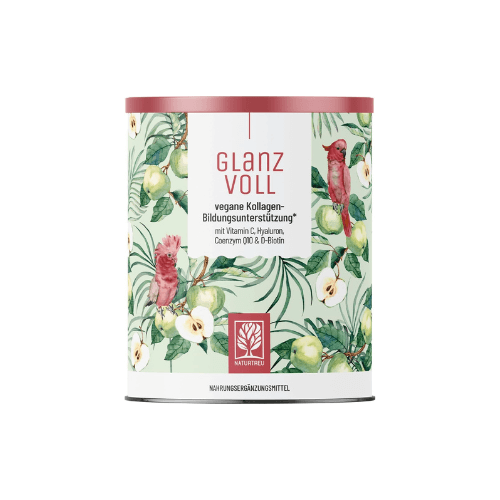
Pros
- Suitable for vegetarians and vegans
- Laboratory-tested
- Versatile and easy to use
- Combined with numerous nutrients, such as biotin, vitamin C and Q10
Cons
- Noticeable taste
- High price
- Only available online
- Lower bioavailability due to the vegan formula
Verdict
NATURTREU Vegan Collagen Powder is a high-quality plant-based alternative to animal collagen supplements. This makes it a very good fit for vegans and anyone who wants to avoid animal products.
Another plus is the combination with numerous active ingredients, such as hyaluronic acid or vitamin C, which support the body's natural collagen production. However, its bioavailability is far lower than that of products made with animal collagen. Customers therefore have to take considerably higher doses to achieve a roughly similar effect.
NATURTREU manufactures in Germany, and its product is laboratory-tested and certified. The recommended dose is 10 g a day. One pack contains 300 g.
Collagen: the formula for healthy, youthful skin
Skin is around 70% collagen fibres, which give it firmness and elasticity.¹⁰ When collagen content falls, the skin becomes thinner and drier and loses its firmness. This shows up above all as wrinkles, lines and deep crow's feet. Facial contours gradually sag, too.
Studies have shown that taking hydrolysed collagen regularly can improve skin moisture and increase elasticity, so lines and wrinkles can be visibly reduced. In effect, collagen plumps the skin from within, smoothing its upper layer.¹¹
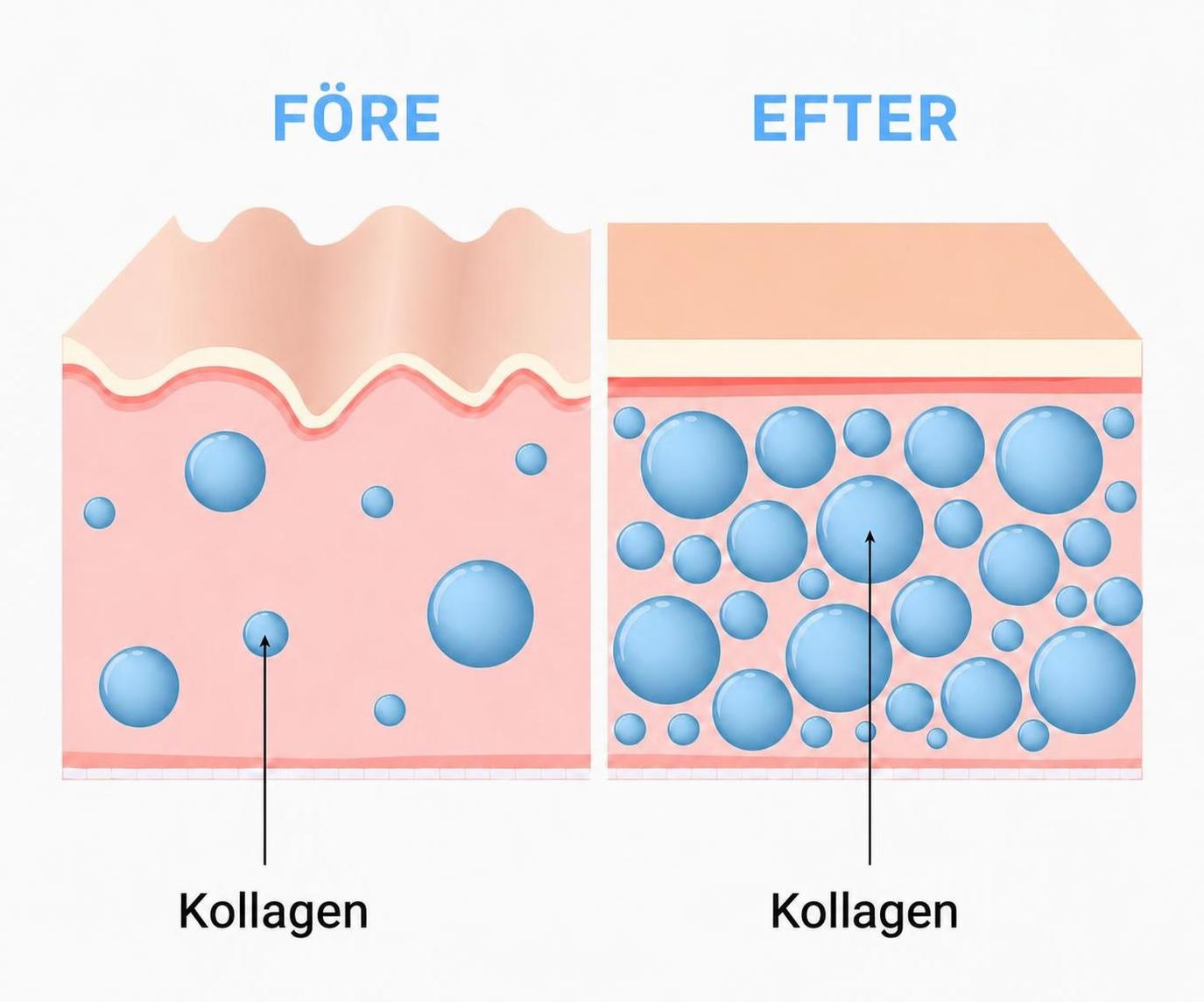
Taking collagen stimulates your body's natural collagen production. This plumps up the tissue, so the skin looks firmer and more supple.
Hair and nails: strengthened naturally
Collagen matters not only for healthy skin but also for hair, nails, tendons and ligaments.
Taking collagen regularly can reduce hair breakage and split ends and make nails more resilient. It also strengthens connective tissue. Studies have shown a clear improvement, particularly for problems such as brittle nails, weak hair or cellulite. So collagen doesn't just help your outward appearance: it also supports the health of tissues and structures throughout the body.

Joint and bone problems can be a real burden and limit what you can do. Collagen is an important component of these parts of the body and helps keep movement smooth.
Joints: staying mobile
Joints, bones and cartilage are largely made of collagen. As a food supplement, collagen can stimulate your body's natural collagen production and so contribute to healthy joints and bones. It supports elasticity and mobility, which is especially helpful as you get older or when sport puts your body under strain.
Our verdict: natural care from within
Collagen is found throughout the body and makes up a large part of its structure. As you get older, though, your body's own production steadily declines. Marine collagen in particular is considered one of the highest-quality sources of collagen, because it has particularly good bioavailability and is absorbed efficiently by the body.
It supports skin elasticity, strengthens connective tissue, hair and nails, and promotes joint mobility. Marine collagen is especially popular in skincare and anti-ageing, because it helps reduce wrinkles and makes the skin look firmer.
As well as its visible effects, marine collagen also contributes to the body's overall recovery. It can support muscles and joints and even benefit your mind by promoting concentration and relaxation.
This structural protein is extremely versatile and is used in many areas of health.
So collagen can certainly be good for your health too. Take a look at the products that came out on top in our test and find the one that's right for you.
See the collagen products we tested* We may earn a commission from some of the companies featured. This is how we keep our comparisons free to read.
Some of these companies are our commercial partners.
Sources
1. Ricard-Blum S. The collagen family. Cold Spring Harb Perspect Biol. 2011 Jan
3. https://www.hautarztpraxis-stuttgart.de/kollagen-das-wichtigste-strukturprotein/
4. https://pubmed.ncbi.nlm.nih.gov/24742964/
5. ibidem
6. https://pubmed.ncbi.nlm.nih.gov/31428768/
8. https://pubs.acs.org/doi/10.1021/jf100842c
9. https://pubs.acs.org/doi/10.1021/jf048381p
10. Fisher GJ, Varani J, Voorhees JJ. Looking older: fibroblast collapse and therapeutic implications. Arch Dermatol. 2008 Apr