
Guide
Coenzyme Q10: the best products compared (2026)
Last updated: 3 August 2026

Written by
Health Tested Editorial Team
Most people know coenzyme Q10 from creams and serums. But CoQ10 is far more than a skincare ingredient for smoother skin and fewer wrinkles. It's a substance your body makes itself, and one that your heart, muscles and brain depend on to produce energy and protect themselves against cell damage.
From the age of 40, however, your body's own CoQ10 production falls significantly. Persistent tiredness, flagging concentration or a general feeling of exhaustion can be the first signs of a deficiency that often goes unrecognised. Prematurely ageing skin and significant hair loss can also be signs.
In this comparison, we explain what really matters when you choose a CoQ10 supplement and present the most effective products of 2026.

There are countless CoQ10 supplements on the market, but not all of them are effective.
The energy engine in every cell
Coenzyme Q10 has made a name for itself in skincare, and rightly so. As a powerful antioxidant, it protects the skin against premature ageing and supports its natural renewal. But in the body, CoQ10 is involved in a far more fundamental process: energy production in every single cell, from the heart muscle to the brain.¹
In a cream, CoQ10 only works on the surface. Taken by mouth, it can work where it's needed most: in the heart, in the brain, in the muscles. Wherever your body needs energy.²
What is coenzyme Q10?
Coenzyme Q10, also known as ubiquinone, is a vitamin-like substance that your body makes itself and that's found in almost every cell. The name 'ubiquinone' reflects this: it comes from the Latin word 'ubique', which means 'everywhere'.
It's especially concentrated where energy demand is highest: in the heart, the muscles and the brain. At the same time, CoQ10 acts as an antioxidant and protects your cells against oxidative stress.³
CoQ10 was discovered back in 1957, but it took decades for its role in energy production and cell protection to be fully understood.
What does your body need CoQ10 for?
CoQ10 has two vital jobs in the body:
1. Energy production
CoQ10 is indispensable for making ATP, the energy carrier that every single cell needs to function. ATP is the body's universal energy currency. More than 95% of all the body's energy is produced in processes in which CoQ10 is directly involved. Without enough CoQ10, no cell can fully do its job.⁴
2. Antioxidant protection
CoQ10 is an extremely effective antioxidant. It protects your cells against free radicals and oxidative stress, which can contribute to premature ageing and chronic disease.

If you often feel tired despite sleeping well, you may have too little CoQ10. From the age of 40, your body naturally makes noticeably less of it.
Where is CoQ10 found?
Your body makes CoQ10 itself, but this ability declines markedly with age. From the age of 20, production falls slowly, and from 40 the decline becomes noticeable.⁵
CoQ10 is also found in foods such as oily fish, nuts and meat, but the amounts are small.
The average daily intake from food is only around 3–6 mg. That's far below the amounts that have shown positive effects in studies.⁶
The difference: taking CoQ10 rather than just applying it to your skin
In skincare products, CoQ10 has been one of the most popular anti-ageing ingredients for decades, because applying it to the skin can visibly improve how your skin looks.
However, your skin is a natural barrier that stops substances from outside getting into your body. CoQ10 molecules are relatively large and fat-soluble, so they find it hard to pass through the tough outer layer of the skin into the deeper layers. That means CoQ10 in creams mainly works on the surface. To support your body from within, you need a different route.
Taken by mouth, CoQ10 goes directly into the bloodstream and reaches every cell in the body. That way, it's not only your skin that benefits from its energising and protective effect, but your heart, brain and muscles too.

You'll find CoQ10 in every good anti-ageing cream, but taken from within, it works much more deeply. What your skin really needs starts inside the cells.
The key benefits of CoQ10
Taking CoQ10 regularly may offer a wide range of physical benefits:
- noticeably more energy in everyday life and less tiredness
- support for your heart in its daily work
- a positive effect on blood pressure
- reduced inflammation in the body
- better skin elasticity, slower wrinkle formation and a brighter complexion
- less hair loss and stronger hair
- protection for your cells against premature ageing
- better physical performance and recovery
- relief from muscle pain when taking statins

There are several factors to consider when choosing the right supplement.
How to spot a deficiency early
The following signs can point to a deficiency:
- persistent tiredness that sleep doesn't fix
- muscle weakness or cramps with no obvious cause
- tiring quickly with everyday tasks
- difficulty concentrating and a feeling of mental sluggishness
- frequent infections and a weakened immune system
- skin that looks duller and more tired despite a good skincare routine, and increased hair loss
When is taking CoQ10 recommended?
A CoQ10 supplement may be particularly helpful in the following situations:
- From the age of 40: your body's own CoQ10 production falls as you get older
- If you're physically or mentally exhausted: when you often feel tired or drained, CoQ10 may help you get your energy back
- If you have cardiovascular disease: CoQ10 supports heart function and is often used alongside other treatment for heart problems
- During and after long-term medication: statins in particular can lower CoQ10 levels in the body
- During periods of heavy stress or physical strain: athletes and people in stressful situations may improve their performance with CoQ10
Ubiquinone or ubiquinol: which form is better?
When you buy a CoQ10 supplement, you'll come across two forms that differ markedly in how effective they are.
Ubiquinone: the proven, stable form
- the best-researched form, with the most clinical studies
- proven in practice for decades
- much more stable than ubiquinol, with a longer shelf life
- bioavailability is highest with liposomal encapsulation
- your body converts it into ubiquinol naturally, as and when it needs to
Ubiquinol: the sensitive alternative
- the reduced form that circulates in the body
- sensitive to oxygen, so it can lose effectiveness before you even take it
- more expensive to make, with no proven overall advantage
- fewer long-term studies than ubiquinone
Dosage forms: how can you take CoQ10 supplements?
Some popular forms of CoQ10 supplement are:
- capsules
- tablets
- drops
- liposomal form
- powder
- softgels
Capsules
Pros
Easy to swallow
Convenient to take on the go and when travelling
Easy to dose (each capsule contains the same amount of active ingredient)
No unpleasant taste or smell
Can be combined with other active ingredients
Cons
Stomach acid can affect absorption of the active ingredient
Digestion can partly break down the active ingredient
The bioavailability of the active ingredient can vary
The capsule shell may contain gelatine
Often contain additives
Unsuitable for people with swallowing difficulties
Several capsules may be needed if the dose is low
Drops
Pros
Easy to dose
Fast absorption of the active ingredient (through the mucous membranes)
Good for people with swallowing difficulties or stomach problems
Versatile: can be mixed into drinks or food
Cons
The taste of the drops can be unpleasant
Exact dosing can be difficult, as the number of drops varies
The liquid can drip or spill
Short shelf life
Liposomal form
Pros
Higher bioavailability of the active ingredient
Better absorption by bypassing stomach acid
Lower dose needed for the same effect (usually just 1 capsule)
Can mask the taste of the active ingredient
No additives
Cons
May cost more because the production process is more complex
Availability and choice may be limited
Making liposomes can be difficult and requires specialist technology
Not all manufacturers use the process
Liposomal CoQ10: designed for better absorption
Many conventional CoQ10 products have one central problem: the coenzyme is sensitive and is partly broken down in the digestive tract before it reaches your cells.
Liposomal products tackle exactly this problem. The CoQ10 is embedded in tiny fat bubbles called liposomes. This coating protects the sensitive substance from being broken down by stomach acid and digestive enzymes.
At the same time, your body can absorb liposomes particularly easily, because their structure is similar to that of cell membranes.
The result: your body makes much better use of liposomal CoQ10, so even lower doses are enough to support energy metabolism.Gentle on the stomach and gut
Some people tolerate conventional CoQ10 capsules poorly at higher doses, and they can cause stomach upsets. Because liposomal CoQ10 works in smaller amounts and the liposomes reduce direct contact with the stomach lining, it's much better tolerated.
That makes liposomal supplements particularly suitable for people with a sensitive stomach, or for anyone who's had bad experiences with CoQ10 capsules in the past.

Simple model of a liposome. A liposome is like a tiny bubble with a layer of fat on the outside and a watery chamber inside. This structure makes liposomes particularly effective, because they can transport active ingredients and release them selectively. Thanks to this innovative technology, liposomes have become increasingly important in medicine and cosmetics. They allow active ingredients to be absorbed effectively, protect them from being broken down and offer a wide range of uses.
What to look for when choosing a CoQ10 product
If you decide to take CoQ10, here's what to look out for:
1. Form: ubiquinone or ubiquinol
- Ubiquinone: the best-researched form, considered particularly stable, which makes it a very good choice for long-term use
- Ubiquinol: an alternative, but less stable and often more expensive, with no proven overall advantage
2. Dosage
The ideal daily dose depends on why you're taking it:
- General health maintenance: 100–200 mg
- When taking statins: 100–200 mg (ideally ubiquinone)
- For heart failure: 100–300 mg (after talking to your doctor)
- Athletes: 200–300 mg
- For migraine: 300–400 mg⁹
3. Bioavailability: the liposomal formulation
CoQ10 is fat-soluble, which means it's only absorbed together with fat. Make sure that:
- the product contains CoQ10 already dissolved in oil
- you take the capsules with a meal that contains healthy fats
- you choose liposomal formulations where possible
Liposomal CoQ10 offers the highest bioavailability: the CoQ10 is embedded in tiny fat bubbles (liposomes) that protect it from being broken down in the digestive tract and allow it to be absorbed directly into the cells. As a result, its effectiveness is often three to five times higher than that of conventional capsules.
4. Packaging
CoQ10 is sensitive to light and oxygen. High-quality products come in:
- dark blister packs or
- brown glass bottles
Avoid clear plastic tubs.
Top 3: the best CoQ10 products of 2026
There are countless CoQ10 products on the market today. We've assessed them against several criteria to bring you the best:
What is the supplement made of?

Are there study or test results?

How high is the dosage of the nutrient?

Does the product contain allergens?

How good is the value for money?

Are there special features in the composition or manufacturing?
product review
TESTED
our quality criteria
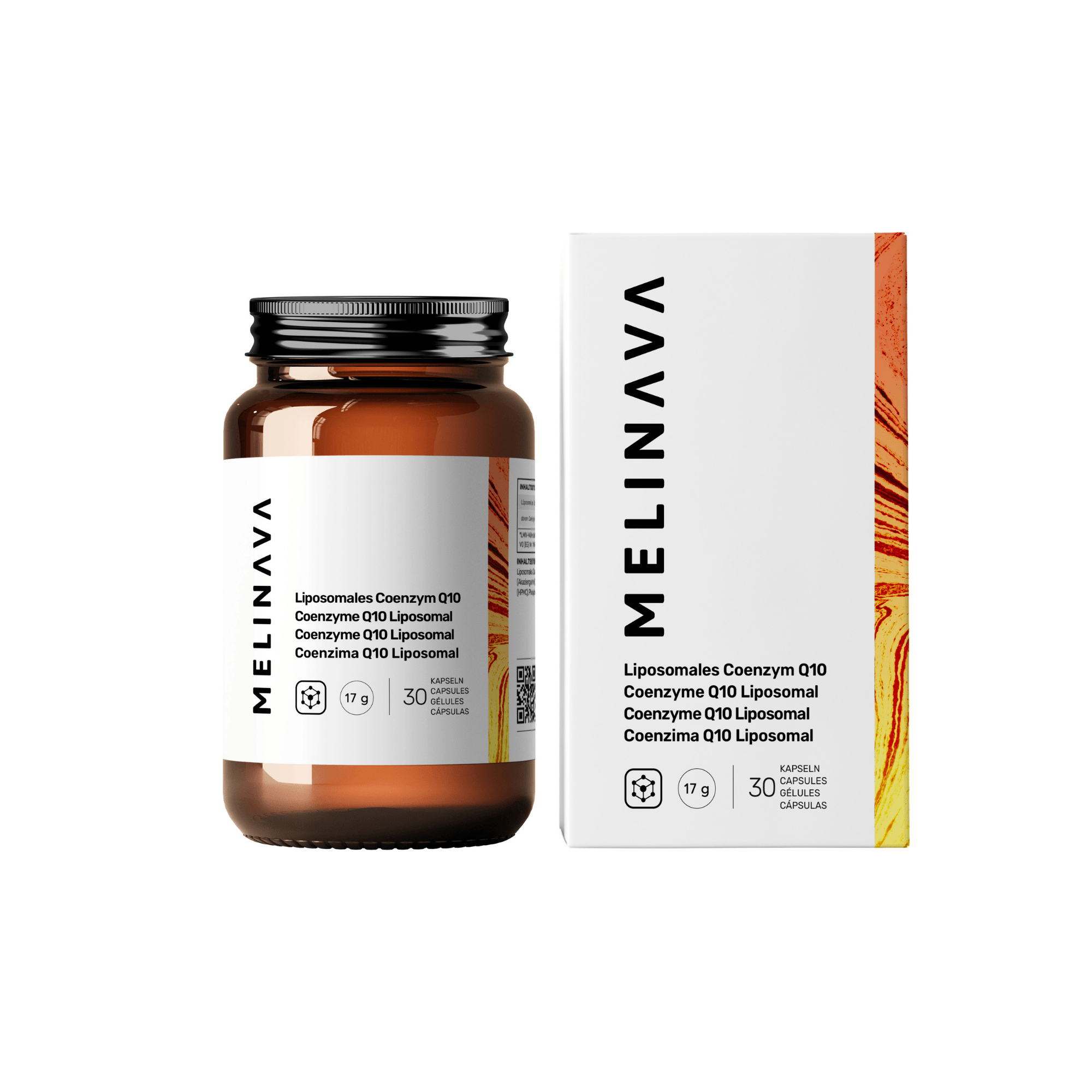
Melinava Liposomal Coenzyme Q10
by MELINAVA
Pros
- 400 mg high-quality ubiquinone per capsule
- Liposomal encapsulation for higher bioavailability
- Much more stable than ubiquinol (no risk of oxidation)
- Only 1 capsule a day
- GMO-free
- Made in Europe (France)
- Sustainable, reusable glass packaging
- Free from soya, gluten and lactose
- Vegan capsule shell
- Based on the form used in most studies
Cons
- Only available online
- Only available as capsules
Verdict
Melinava Liposomal Coenzyme Q10 takes first place in our test and is our winner. With 400 mg of high-quality ubiquinone per capsule, it offers a high, therapeutic-level dose in the best-researched form of CoQ10.
Unlike ubiquinol, which loses effectiveness on contact with oxygen, ubiquinone stays stable right up to the last day of its shelf life. It is made in France to GMP standards, without artificial additives, and comes in light-protective glass packaging.
The product is particularly suitable for people under increased physical strain, with cardiovascular problems or with a greater need for antioxidant support.
Users report noticeably more energy after two to three weeks, as well as better recovery. Statin users in particular report relief from muscle pain.
Melinava has also been used with very good results for prematurely ageing skin and significant hair loss.
Melinava Liposomal Coenzyme Q10 is very well tolerated thanks to its liposomal formulation, even by people with a sensitive stomach.
Take one capsule of Melinava Liposomal Coenzyme Q10 a day.
One pack contains 30 capsules. The manufacturer takes the product's tolerability very seriously, which is why it is completely free from unwanted additives.
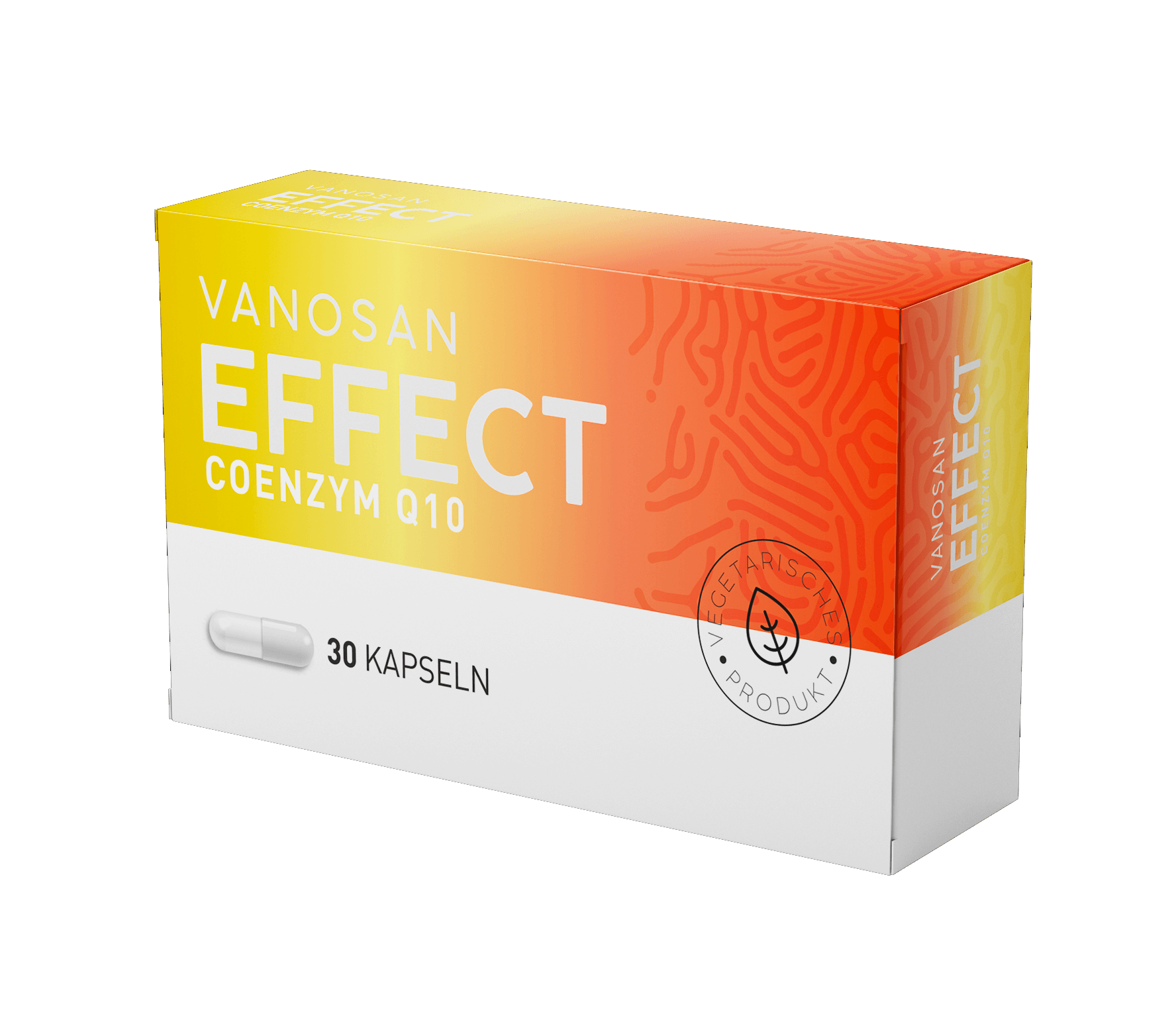
Vanosan Coenzyme Q10
by VANOSAN
Pros
- Contains 200 mg ubiquinone per daily dose
- 2 capsules a day
- Plant-based ingredients, suitable for vegans
- Free from GMOs, colourings and preservatives
- Laboratory-tested quality
- Made in Germany
- Few additives
Cons
- Only available online
- Plastic packaging
- No bioavailability-enhancing formulation (e.g. liposomes or ubiquinol)
Verdict
Vanosan Coenzyme Q10 provides a good baseline intake of coenzyme Q10, an important substance for your cells, at a relatively high dose of 200 mg a day.
The ubiquinone it uses is clean, vegan and free from unnecessary additives, which makes it ideal if you value natural products.
Customers report feeling slightly less tired and a more even complexion after a few weeks.
One small drawback, however, is that it lacks the absorption-enhancing technology some other supplements use (e.g. liposomal forms or ubiquinol instead of ubiquinone). Some users also find having to take more than one capsule a day inconvenient.
Even so, Vanosan remains a solid choice for health-conscious users looking for a pure, well-tolerated CoQ10 product. Value for money is reasonable.
Take two capsules a day with a meal.
One pack contains 120 capsules.
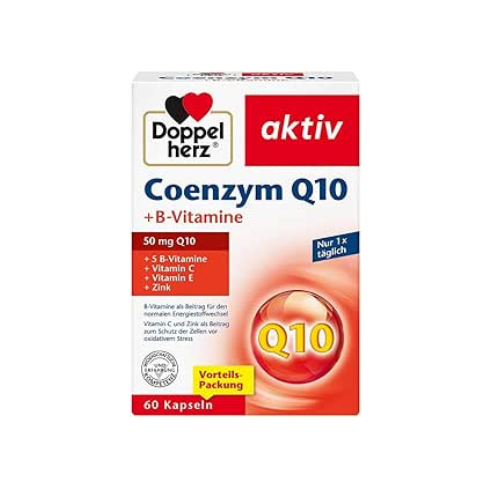
Doppelherz aktiv Coenzyme Q10
by DOPPELHERZ
Pros
- Contains 50 mg natural coenzyme Q10 per capsule
- Enriched with extra vitamins and minerals (including zinc and vitamin C)
- Made in Germany
- GMO-free
- Only 1 capsule a day
- Available online and in many high-street shops and pharmacies
Cons
- Low dose
- No information on the form of CoQ10 used
- Contains gelatine, so not suitable for vegetarians or vegans
Verdict
Coenzyme Q10 from Doppelherz aktiv is a widely available product on the supplement market. It stands out for a well-thought-out blend of active ingredients with B vitamins, zinc, vitamin C and vitamin E that sensibly complements the CoQ10.
As a first step into CoQ10 supplements, it is a solid choice. But if you have a greater need, as older people in particular do, or are looking specifically for better absorption, you will run up against the limits of a 50 mg dose per capsule with no modern formulation technology.
It also remains unclear which specific form of CoQ10 is used (ubiquinone or ubiquinol), which limits transparency for consumers.
Another drawback is the gelatine capsule shell, which makes the product unsuitable for vegetarians and vegans.
Users are very positive, however, about taking just 1 capsule a day and about the low price. The product is also available both online and in high-street shops and pharmacies.
One pack contains 30 capsules.
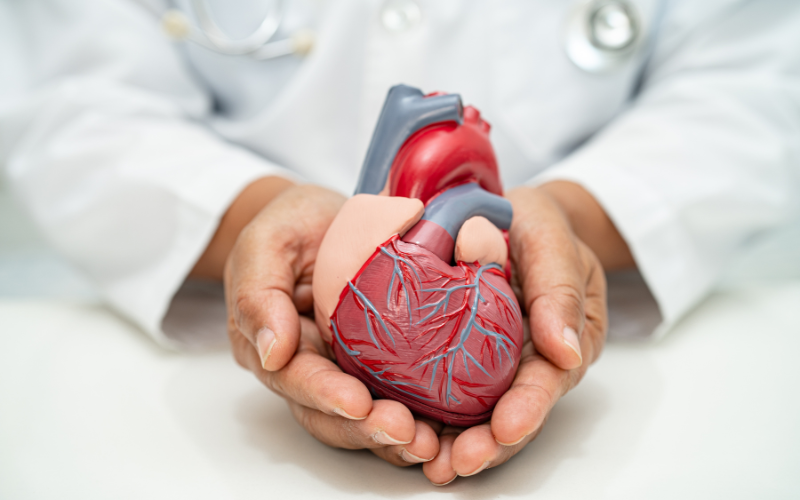
The heart is the muscle with the highest CoQ10 requirement in the whole body. No wonder cardiologists have been taking a close look at coenzyme Q10 for decades.
The heart: protection for your most important organ
Your heart is your hardest-working muscle. It beats around 100,000 times a day, for your whole life, without a break. To keep up this constant effort, the heart muscle needs more energy than any other organ. Without enough CoQ10, it can't produce enough ATP to pump efficiently. According to studies, CoQ10 levels in the heart muscle are often 50% to 75% lower in people with heart failure.¹⁰
Clinical studies show that taking CoQ10 supplements can support heart function, stabilise blood pressure and reduce oxidative stress in the cardiovascular system.
Older people and those with existing heart problems benefit from CoQ10 in particular. Thanks to its protective properties, it may contribute to keeping your heart healthy in the long term.
The skin: cell protection and visible vitality
Every day, your skin is exposed to UV radiation, air pollution and other environmental stresses. All of this leaves its mark: your skin loses firmness, wrinkles appear earlier and your complexion looks duller. On top of that, the natural CoQ10 content of your skin falls with age, and your skin becomes thinner, drier and more prone to wrinkles.
As a supplement, CoQ10 works where creams can't reach. It gets to your skin cells through the bloodstream, protects them as an antioxidant against environmental damage and supports their energy production. Well-supplied cells renew themselves faster, and it shows: in more elasticity, a more even complexion and a fresher look.

Your skin is your body's largest organ and one of the first places where a CoQ10 deficiency becomes visible. Fine lines and loss of firmness depend not only on age, but also on how well your skin cells are supplied with energy.
Our verdict
Coenzyme Q10 is found in every cell of the body and is involved in two of the most important processes: producing energy and protecting cells.
What many people don't know is that from the age of 40, your body's own production falls significantly, while your need for it can keep rising because of stress, physical strain or medicines.
If you take CoQ10 by mouth, you supply not just your skin but also your heart, brain and muscles with an active ingredient your body really needs and makes less and less of itself.
What matters is the right form and good bioavailability, so the CoQ10 actually gets to where it's needed.
Find the right CoQ10 product for your needs in our comparison.
* We may earn a commission from some of the companies featured. This is how we keep our comparisons free to read.
Some of these companies are our commercial partners.
Sources
1. https://journals.lww.com/jpbs/fulltext/2011/03030/coenzyme_q10__the_essential_nutrient.26.aspx
3. https://journals.lww.com/jpbs/fulltext/2011/03030/coenzyme_q10__the_essential_nutrient.26.aspx
4. Ernster L, Dallner G. Biochemical, physiological and medical aspects of ubiquinone function. Biochim Biophys Acta. 1995;1271(1):195-204.
5. https://aocs.onlinelibrary.wiley.com/doi/10.1007/BF02535072
7. https://kardiologieoberland.de/ist-die-einnahme-von-coenzym-q10-bei-statin-einnahme-sinnvoll/
9. https://www.neurology.org/doi/10.1212/01.WNL.0000151975.03598.ED