
Guide
Calcium: the best products compared (2026)
Last updated: 31 July 2026

Written by
Health Tested Editorial Team
Calcium does many important jobs in the body. It strengthens bones and teeth, keeps muscles and nerves working smoothly and supports healthy hair and nails. It even affects your mental health.
Yet despite its importance, deficiency is widespread. Around 60% of people in Germany don't get enough calcium from their diet. That's why more and more people are turning to calcium supplements.
Below, we explain the benefits of taking calcium, how to take it and what to look for when you buy. You'll also find a detailed assessment of the best calcium products to help you choose.

There are countless calcium products on the market, but not all of them are effective.
Calcium: the all-rounder among minerals
Calcium is an essential mineral and one of the electrolytes, which means it carries an electrical charge in the blood. Around 99% of the body's calcium is stored in the bones, with the rest in the muscles and blood. To keep the calcium level in your blood stable, your body draws calcium from the bones when it needs to.
If you don't get enough calcium from your diet, your body may take too much from your bones, which then become weaker. The best-known consequence of this is osteoporosis, a loss of bone density.
Not just essential for bones: the important roles of calcium
Calcium isn't only crucial for strong bones and strong teeth: it has many other important jobs in the body. It supports blood clotting, ensures a stable heart rhythm and is indispensable for the stability of cell walls. Every single cell needs calcium, because it's involved in signal transmission and the conduction of impulses in the muscles and nervous system, which means it also plays a part in hearing, sight and the sense of touch.

Calcium is a key mineral for healthy bones and strong teeth.
The key benefits at a glance
Taking calcium regularly can offer many health benefits. These are the most important:
- maintaining and building healthy bones and teeth
- support for muscle function
- support for nerve function
- an important contribution to blood clotting
- proper transmission of impulses and signals in muscles and nerves
- prevention of muscle cramps, including calf cramps
- support for heart health
- activation and function of digestive enzymes
- regulation of the acid-base balance
- healthy skin, nails and hair
Benefits for mental health
With the right calcium supplement, you can achieve the following:
- greater resilience to stress
- prevention of neurological problems such as tingling and numbness
- support for cognitive function
- relief from mood swings
- more inner calm
- support for restful sleep
- less tiredness
- support for emotional balance (a deficiency can contribute to irritability, anxiety and depression)
- protection against serious mental health symptoms (such as hallucinations or psychosis if the deficiency is severe)
Healthy calcium levels are crucial: how to spot the first signs of deficiency
Signs of calcium deficiency
Because calcium is involved in so many functions in the body, the signs of a deficiency vary widely and can also have other causes, such as other deficiencies or illnesses:
- muscle cramps (in the calves, hands or feet)
- tingling or numbness
- muscle weakness or trembling
- brittle nails, dry skin or hair loss
- increased irritability or nervousness
- poor concentration or confusion
- dental problems (such as brittle tooth enamel)
- heart rhythm problems
- bone pain or more fragile bones
- mental health symptoms
Who is most at risk of calcium deficiency?
In theory, a balanced diet with plenty of dairy products and green vegetables covers your calcium needs. In practice, many people fall short. According to the German Nutrition Society (DGE),¹ the average daily calcium intake is 807 mg for men and 738 mg for women, well below the recommended amount of around 1,000 mg.
The groups most at risk of calcium deficiency are:- children and teenagers, because their growing bodies need a particularly large amount of calcium
- pregnant and breastfeeding women and women going through the menopause, because hormonal changes affect the body's calcium balance and increase their needs
- older people, because bone density decreases with age and the gut absorbs less calcium
- vegans and people with lactose intolerance, who eat little or no dairy
- people with digestive problems such as irritable bowel syndrome (IBS), Crohn's disease or coeliac disease, because these conditions can hinder calcium absorption
- people with certain chronic conditions, such as chronic kidney disease, in which calcium metabolism is disturbed
Because your body also needs enough vitamin D to absorb calcium, there's a further problem: only 38.4% of people in Germany get enough of this micronutrient.²
A lack of vitamin D can not only make it harder to absorb calcium but also have other consequences for your health, because vitamin D also strengthens the immune system and has a positive effect on mood, among other things.

Calcium is found mainly in dairy products and green leafy vegetables. Even so, more than half of people don't get enough calcium from their diet.
Why combine calcium with vitamin D and K2?
It's particularly worthwhile to combine calcium with vitamins D3 and K2, ideally in a single product. These three nutrients work hand in hand in the body:
-
Vitamin D3 helps your body absorb calcium from food and regulates calcium metabolism. It makes sure calcium reaches the blood, where it's used to build and strengthen bones. Yet a large proportion of people in Germany are vitamin D deficient, and without enough vitamin D, calcium absorption can be less effective.
-
Vitamin K2 has an important protective role. It prevents calcium from being deposited in the blood vessels, which could be a health risk if your intake is too high. Instead, vitamin K2 directs calcium specifically to the bones, where it's needed. It does this by activating osteocalcin, a protein that binds calcium in the bones and so supports their strength and stability.
What should you look for when buying calcium products?
When you buy calcium products, getting the right dose matters most, because both a deficiency and an overdose can cause health problems. Your daily requirement varies with age but is around 1,000 mg of calcium.³
Experts recommend taking no more than 500 mg of calcium a day from supplements, as larger amounts can make absorption less efficient.⁴
Also look for products that combine calcium with vitamins D3 and K2, to help your body use the calcium and to help prevent deposits in the blood vessels.
Not all calcium is the same: there are big differences between supplements
What to avoid when buying calcium
If you decide to take a calcium supplement, watch out for the following:
- low bioavailability
- doses above 500 mg
- products without vitamins D3 and K2
- capsule shells made of gelatine
- fillers and anti-caking agents
- allergens such as lactose, gluten and soya, if you have an allergy
- unnecessary additives
- sugar, alcohol or flavourings
- suspiciously low prices

There are several factors to consider when choosing the right calcium supplement.
Dosage forms: how can you take calcium?
Calcium comes in various forms. As a food supplement, it's mainly sold as tablets and capsules.
Popular forms of calcium
- effervescent tablets
- powder
- tablets
- capsules
- calcium in liposomal form
A newer option is calcium encapsulated in liposomes, which is notable for its very high bioavailability and is easier on the stomach.
To help you choose, we've summarised the pros and cons of the most popular forms here:
Tablets
Pros
Easy to take: just swallow
Practical on the go and when travelling
Easy to dose (consistent active ingredient content)
Tablets are usually cheaper than capsules
Cons
Stomach acid can affect absorption of the active ingredient
Digestion can partly break down the active ingredient
Often contain additives and a lot of fillers
High doses may require several tablets
Capsules
Pros
Easy to take: just swallow
Practical on the go and when travelling
Easy to dose (consistent active ingredient content)
No unpleasant taste or smell
Can be combined with other active ingredients
Need fewer fillers than tablets
Cons
Sometimes larger than tablets
Digestion can partly break down the active ingredient
Bioavailability of the active ingredient can vary
The capsule shell may contain gelatine
Unsuitable if you have difficulty swallowing
High doses may require several capsules
Liposomal form
Pros
Easy to swallow in capsule form
Highest bioavailability of the active ingredient
Better absorption (thanks to protection from stomach acid)
A lower dose is needed for the same effect
Can mask the taste of the active ingredient
No additives
Fewer side effects
Cons
May cost more because manufacturing is more complex
Making liposomes can be difficult and requires specialist technology
Smaller choice, as not all manufacturers can use the method
Because they're tiny, just nanometres across, and rich in fat, liposomes protect the calcium inside them from being broken down by enzymes, such as those in saliva and gastric juice. They deliver the calcium directly into the bloodstream, which significantly improves absorption.
Calcium in liposomal form: what is it and what makes it special?
Liposomal calcium is surrounded by a protective shell of liposomes. This barrier protects the active ingredient from stomach acid, digestive enzymes and oxidation, which significantly improves absorption in the gut and, with it, bioavailability. It can also reduce the risk of side effects.
Benefits of liposomal calciumBetter absorption: with conventional calcium supplements, a large part of the calcium is lost during digestion, whether through reactions with stomach acid, digestive enzymes or components of food. Often only a fraction of the calcium is actually absorbed by the body. Liposomal calcium, on the other hand, is almost completely absorbed thanks to its protective liposome shell.
Protection from side effects: in some people, conventional calcium can cause digestive problems such as constipation, bloating or a feeling of fullness. Liposomal calcium can protect against side effects like these, because it stops the calcium from interacting with the gut lining.
No interactions: in the gut, conventional calcium can react with components of food, for example by forming poorly soluble salts that make absorption harder. Liposomal calcium protects the calcium ions from reactions like these and so ensures consistently high bioavailability.
Better tolerated alongside medication: calcium supplements can affect how well certain medicines work, such as antibiotics, blood pressure medication or thyroid hormones, and vice versa. Liposomal calcium bypasses these interactions thanks to its special absorption route in the body, which makes taking it easier and safer.⁶
Flexible to take: many conventional calcium supplements have to be taken with meals, because they need stomach acid to be absorbed properly. Liposomal calcium, by contrast, can be taken with or without food. That makes it particularly suitable for people with low stomach acid and gives you maximum flexibility over when you take it.

A simple model of a liposome, with a fatty layer on the outside and a watery chamber inside. Liposomes are an innovative technology for the targeted, efficient release of active ingredients. That's why they're now well established in medicine and cosmetics, where they have many applications.
Top 3: the best calcium products in 2026
There are now countless calcium products on the market, so we assessed them against the following criteria to find the best for you:
How is the calcium product formulated? Does it contain vitamins D3 and K2?
Are there any study or test results?
How high is the dose of calcium?
Does it contain any allergens?
How good is the value for money?
Is there anything special about the formulation or production?
product review
TESTED
our quality criteria
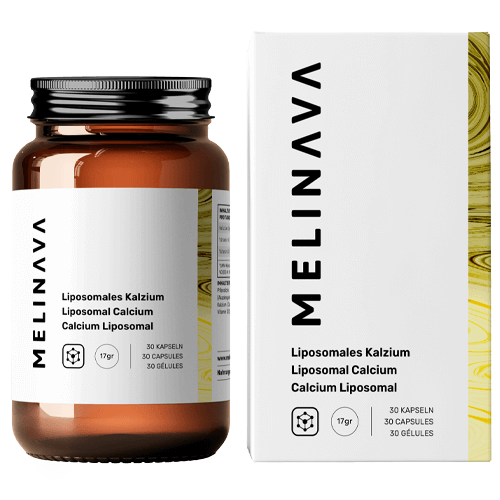
MELINAVA Liposomal Calcium
by MELINAVA
Pros
- Ideal dose: 80 mg calcium as calcium carbonate (liposomal)
- Combined with 16.7 µg (668 IU) vitamin D3 and 25 µg vitamin K2 (liposomal)
- Highest bioavailability thanks to liposome technology (up to 64 times better absorption)
- Protection from stomach acid thanks to the liposomal coating
- Longer-lasting effect
- Fewer side effects
- Suitable for people with a sensitive stomach
- Free from soya, gluten and lactose
- Gelatine-free capsule
- No fillers
- Free from impurities
- Made in Europe (France)
- Supplied in a high-quality glass bottle that you can reuse at home, e.g. for spices
Cons
- Only available online
- Often sold out
- Only available as capsules
Verdict
Melinava Liposomal Calcium achieved the highest overall score and is our winner.
With 80 mg of calcium as calcium carbonate in liposomal form, the product provides an ideal dose. It also contains vitamins D3 and K2, which help your body absorb and use the calcium.
Liposomal encapsulation means active ingredients can be given in lower doses and still be more effective. This makes the product ideal for correcting a calcium deficiency quickly.
Customers also appreciate that the liposome technology is gentle on the stomach and so lowers the risk of side effects.
Melinava focuses on effectiveness and on 100% pure, top-quality ingredients, which is reflected in its positive customer reviews.
Satisfied users and the many positive reviews reflect the quality of Melinava Calcium.
For symptoms such as brittle tooth enamel, other dental problems and declining bone density, users report excellent results with Melinava Liposomal Calcium. They also notice better performance, thanks to its support for muscle and nerve function. They also report improved cognitive performance (concentration, memory). Particularly at stressful times, calcium has a balancing effect on mood and also improves sleep.
With Melinava Calcium, you only need to take a single capsule a day.
A pack contains 30 capsules.
The manufacturer takes product tolerability very seriously, which is why the supplement is completely free from unwanted additives. You can find more information on the manufacturer's website.
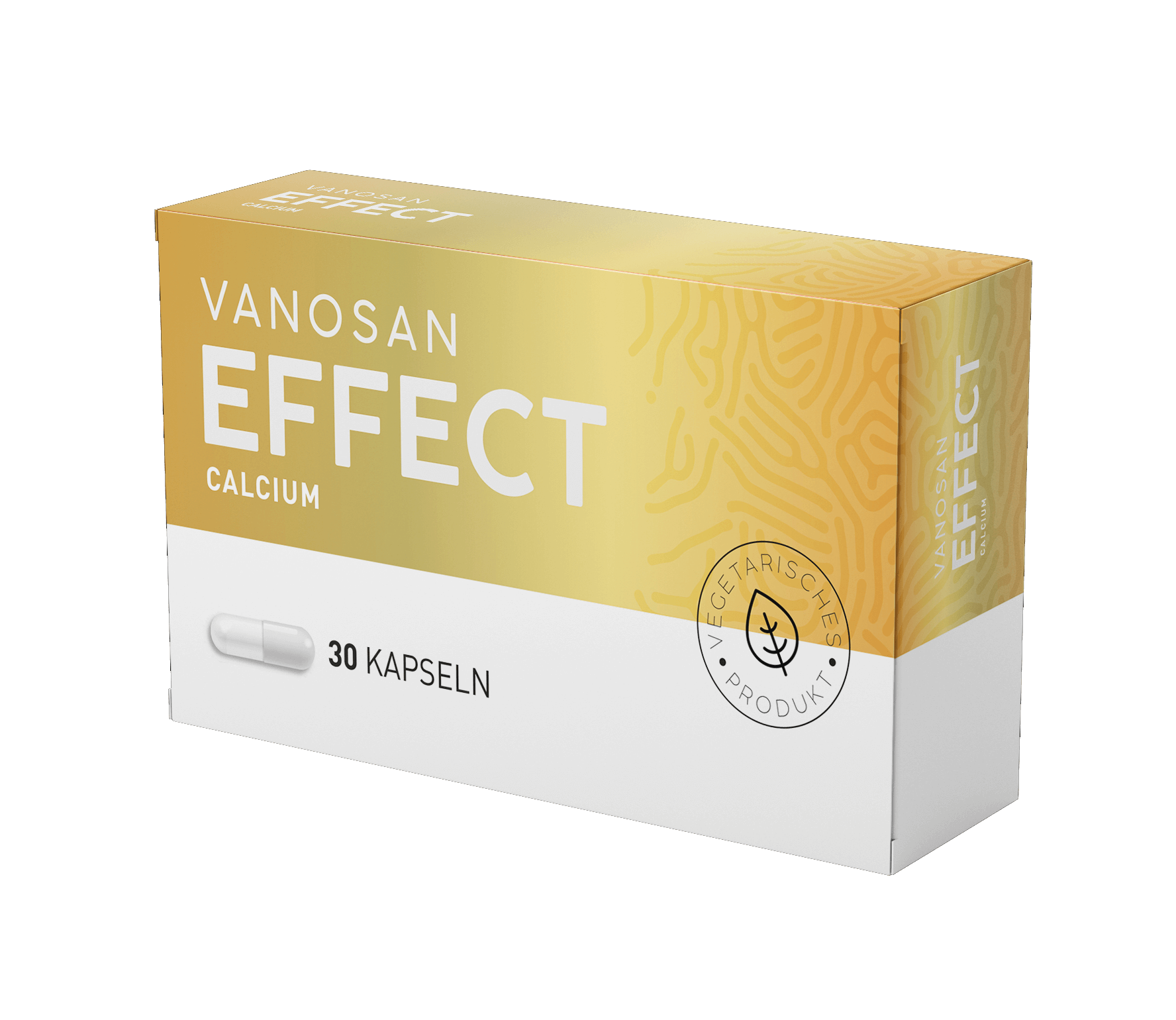
Vanosan Calcium
by VANOSAN
Pros
- 250 mg calcium as calcium carbonate
- Combined with 15 µg (600 IU) vitamin D3 and 20 µg (800 IU) vitamin K2
- Free from soya and gluten
- Vegetarian
- Laboratory-tested
- Few additives
- Made in Germany
Cons
- No protection from stomach acid
- Contains preservatives
- Only available online
- Bioavailability not enhanced
Verdict
Vanosan Calcium provides a good amount, with 250 mg of calcium a day. Again, the calcium it contains is calcium carbonate, which is less easily absorbed without liposome technology. The supplement also contains vitamins D3 and K2 in an optimal dose, which help your body absorb and use the calcium.
Reviews of Vanosan Calcium are positive. Many users say it has helped their muscles and eased symptoms such as cramps and trembling. Some customers, however, report that Vanosan is less well tolerated on an empty stomach, so it should be taken with a meal.
Some users also criticise the fact that the calcium in the product is not in a highly bioavailable form, which may limit its effect.
It is made in Europe, and orders are usually dispatched within 1–3 working days.
Take one capsule a day with a meal.
A pack contains 30 capsules.
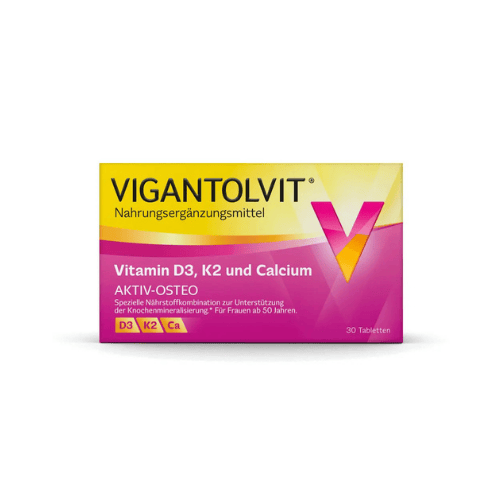
VIGANTOLVIT
by VIGANTOLVIT
Pros
- 500 mg calcium as calcium carbonate
- Combined with 25 µg (1,000 IU) vitamin D3 and 75 µg (3,000 IU) vitamin K2
- Affordable
- Available in pharmacies
- Vegan
- Tested for contaminants
- Laboratory-tested
- Made in Germany
Cons
- Dose may be too high if you already get plenty of calcium from your diet
- Bioavailability not enhanced
- No protection from stomach acid
- Contains sucrose
- Contains fillers
- Should be taken with meals
Verdict
This product from WICK Pharma contains 500 mg of calcium carbonate, the maximum recommended daily dose of calcium from supplements. You should therefore avoid getting too much extra calcium from food.
VIGANTOLVIT combines calcium with vitamin D and vitamin K2, which help your body absorb it. Vitamin D can help strengthen the immune system and improve mood.
The main point in the product's favour is that it does not exceed the recommended maximum amount.
However, the calcium carbonate it contains is not as easily absorbed, and the calcium is not protected in the digestive tract, which could lead to side effects. Most customers, though, report that it is well tolerated.
Overall, most customers are happy with the tablets, which helped them relieve symptoms such as cramps, tingling and numbness. Some customers, however, complain that the effect was too weak and, in rare cases, not noticeable at all.
Take one tablet a day with a meal.
A pack contains 30 tablets.
Calcium: the secret to healthy hair, strong nails and radiant skin
Calcium is indispensable not only for bones and teeth but also for hair, nails and skin, and a deficiency often shows there first: brittle nails, dry skin or hair loss are possible consequences.
The link between calcium and hair growth is particularly interesting. Calcium supports the release of hormones, including androgens, which promote hair growth. That's why getting enough calcium is linked with healthy, shiny hair. A lack of nutrients such as calcium, on the other hand, can lead to hair loss and frizzy, dry hair.
Studies suggest that calcium and vitamin D also play an important role in the hair growth cycle and may help with hair loss, for example during the menopause.⁸Your nails also benefit from getting enough calcium. Thin, brittle nails and cracked skin can be early warning signs of a deficiency. In some cases, skin conditions have even been seen to clear up once a calcium deficiency was corrected.⁹

A balanced calcium intake can strengthen you from within and also help you look well cared for on the outside. This powerful mineral has a positive effect on hair, nails and skin.
Our verdict: calcium supports the body in many ways
Calcium is far more than a mineral for strong bones. It supports your health on many levels, from healthy teeth and shiny hair to a balanced nervous system and strong nails. At the same time, it's clear that many people don't get enough calcium from their diet.
If you belong to one of the risk groups or notice the first symptoms of a calcium deficiency, it makes sense to consider a supplement. People who eat little dairy, are pregnant, are going through the menopause or are over 50 are particularly at risk. Getting enough calcium is also very important for children and teenagers, as their bones and teeth are still growing and developing.
A high-quality calcium supplement can help make up for possible shortfalls and support your long-term health. Take a look at our top picks and find the product that suits you.
Compare the calcium products we tested
* We may earn a commission from some of the companies featured. This is how we keep our comparisons free to read.
Some of these companies are our commercial partners.
Sources
1. https://www.dge.de/gesunde-ernaehrung/faq/calcium/#c3106
3. https://www.dge.de/wissenschaft/referenzwerte/calcium/
6. https://www.tandfonline.com/doi/full/10.1080/08982104.2023.2285973#abstract
7. https://www.sciencedirect.com/science/article/pii/S0022202X16308764
8. https://www.ncbi.nlm.nih.gov/pmc/articles/PMC4828511/
9. https://www.endocrinecenter.com/blog/how-your-skin-and-nails-tell-you-theyre-hungry-for-calcium