
Guide
Astaxanthin: the best products compared (2026)
Last updated: 30 July 2026

Written by
Health Tested Editorial Team
Eyes that tire more quickly. Joints that ache on the stairs. Skin that no longer looks as fresh as it used to. What many people don't know is that one natural active ingredient could help with all three: astaxanthin.
In Japan, astaxanthin has been regarded for years as the 'super-antioxidant', because its potency far exceeds that of many well-known antioxidants.
Interest is now growing here too, and the scientific evidence behind it is impressive.
In this comparison, you'll find everything the research tells us about astaxanthin, what really matters when you choose a product and which supplements impressed us in our test.

There are countless astaxanthin supplements on the market, but not all of them are effective.
Nature's red shield
Every day, your cells come under attack from free radicals, triggered by sunlight, pollution, stress or physical exertion.
These aggressive particles damage cell structures, speed up the ageing process and leave the immune system more vulnerable.
Plants face the same threat, and many of them protect themselves with compounds that shield their cells from oxidative stress.
One of these particularly effective protective compounds is astaxanthin.
What is astaxanthin?
Astaxanthin belongs to the carotenoid family: the plant pigments that also give carrots and tomatoes their colour.
In nature, it's produced by the microalga Haematococcus pluvialis as a protective response to extreme conditions: intense UV radiation, a lack of nutrients and drought.
The alga literally wraps itself in this red substance and so survives for weeks without water or nutrients.
When conditions improve again, the alga comes back to life, thanks to astaxanthin.
Marine creatures such as salmon, krill and prawns take in the algae with their food, which gives them their characteristic reddish colour. Flamingos also owe their pink colouring to astaxanthin.²
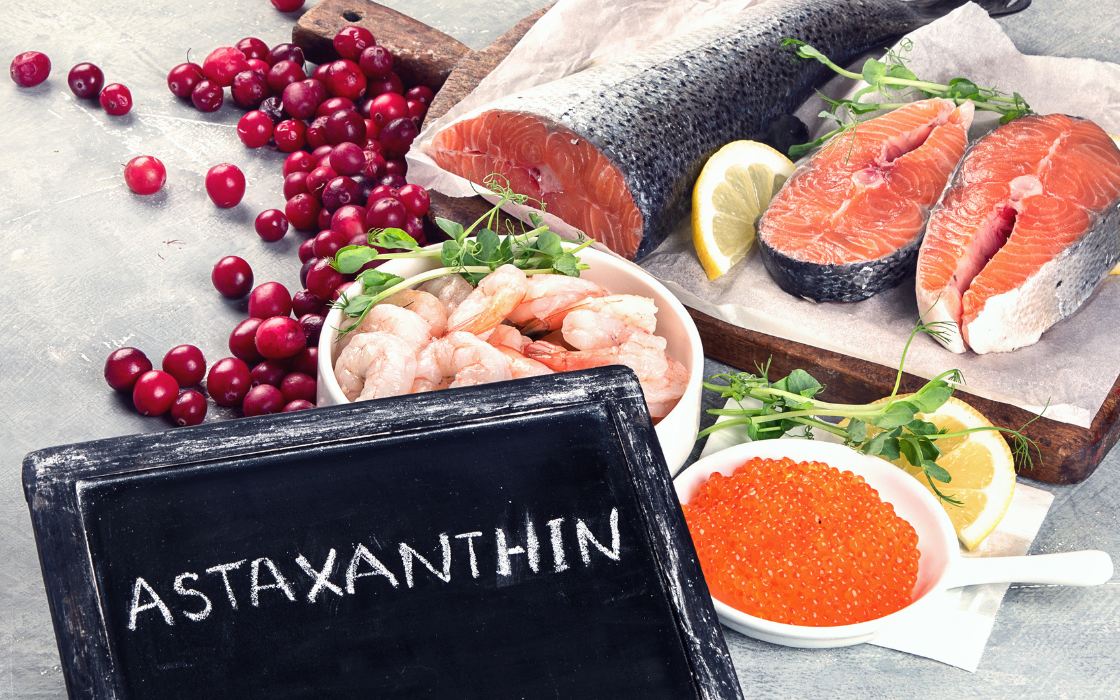
Astaxanthin gives salmon, krill and flamingos their red colour, and it also protects them from oxidative stress.
What makes astaxanthin so special?
Most antioxidants are either fat-soluble or water-soluble. Astaxanthin is both. This means it protects both the fatty cell membranes and the watery parts of the cell. It's a property that's almost unique.
More importantly, astaxanthin crosses the blood-brain barrier and the blood-retina barrier. Both are highly selective protective barriers in the body.
As a result, it works directly in the brain and the eyes, where oxidative stress has particularly serious consequences. Not even vitamin C or vitamin E can do that.
How powerful is astaxanthin really?
Antioxidants have been an established part of preventive healthcare and medical research for years, because they protect cells from the harmful effects of free radicals.
Free radicals are aggressive hunters that are constantly looking for the electrons they lack. In a fraction of a second, they 'ambush' your cells and snatch an electron from them. This process is called oxidative stress. The affected cells become unstable themselves and turn into free radicals too: a chain reaction begins.
Antioxidants can neutralise free radicals. But not all antioxidants are equally effective, and astaxanthin holds a special place among them. Studies show that astaxanthin is:
- up to 6,000 times stronger than vitamin C
- 800 times stronger than coenzyme Q10
- around 75 times more effective than ALA

Oxidative stress and free radical damage show up fastest in the skin: wrinkles, a dull complexion and less moisture. As a 'super-antioxidant', astaxanthin protects against oxidative stress.
Benefits of taking astaxanthin
What taking it regularly can do:
- eyes tire less quickly, even during long spells of reading or screen work
- joints stay more mobile and everyday activities feel easier
- skin looks fresher and copes better with sun and environmental stress
- fine lines and loss of moisture in the skin are noticeably reduced
- cells are protected from free radicals inside and out
- the heart and blood vessels are supported in their normal function
- the body recovers more quickly after exertion
- general energy levels and wellbeing noticeably improve
Benefits for mental health
Effects on mind and mood:
- everyday stress eases and your head feels clearer
- concentration and memory are supported at cellular level
- mood becomes more stable and good days become more frequent
- quality of life noticeably improves, because body and mind benefit together

There are several things to consider when choosing a product.
Dosage
- General use: 4–12 mg⁴
- Eyes and skin: 6–12 mg a day
- Joints and inflammatory processes: 8–12 mg a day
- First noticeable effects: after 2–4 weeks
- Full effect: after 4–12 weeks of continuous use
Absorption: astaxanthin is fat-soluble, so taking it with a meal that contains fat improves bioavailability.
Astaxanthin supplements: from liquid to capsule
Astaxanthin is available in several dosage forms:
- softgel capsules
- capsules with powder
- liposomal formulations
- liquid forms
Because astaxanthin is fat-soluble, how well it's absorbed depends heavily on the formulation and on how much fat you eat with it. Liposomal formulations in particular can improve bioavailability, because they enclose the active ingredient in a fat-like structure and so make it easier for your body to absorb.
Capsules
Pros
Easy to take: just swallow
Convenient on the go and when travelling
Easy to dose (each capsule contains the same amount)
No unpleasant taste or smell
Can be combined with other active ingredients
Cons
Stomach acid can affect absorption of the active ingredient
Digestion can partly break down the active ingredient
The bioavailability of the active ingredient can vary
The capsule shell may contain gelatine
Often contains additives
Unsuitable for people with swallowing difficulties
A low-dose product may require several capsules
Drops
Pros
Easy to dose
Fast absorption of the active ingredient (via the mucous membranes)
Good for people with swallowing difficulties or stomach problems
Versatile: can be mixed into drinks or food
Cons
The drops can taste unpleasant
Exact dosing can be difficult, as the number of drops varies
The liquid can drip or spill
Short shelf life
Liposomal form
Pros
Higher bioavailability of the active ingredient
Better absorption by bypassing stomach acid
Lower dose needed for the same effect (usually just 1 capsule)
Can mask the taste of the active ingredient
No additives
Cons
May cost more because manufacturing is more complex
Availability and choice may be limited
Producing liposomes can be difficult and requires specialised technology
Less choice, as not all manufacturers use the process
Why liposomal astaxanthin is the better choice
Astaxanthin is fat-soluble. This means conventional capsules only work fully if you take them with enough fat.
If you take astaxanthin on an empty stomach or after a low-fat meal, a large part of the active ingredient simply isn't absorbed.
Liposomal formulations solve this problem. A liposome is a tiny capsule made of a layer of fat, built in exactly the same way as a human cell membrane. The active ingredient is enclosed inside it and carried straight to where it needs to work. Stomach acid and digestive enzymes can't harm it along the way.
The result is significantly higher bioavailability. Your body absorbs more of the active ingredient, and your digestive tract is put under less strain than with conventional capsules.
The chart below shows how much is lost with conventional products. The difference between the liposomal and the conventional form is considerable.
Gentle on the stomach and gut
Astaxanthin is a fat-soluble active ingredient that, in conventional capsules, comes into direct contact with the stomach lining.
If you have a sensitive stomach, this can cause discomfort or an upset stomach, especially if you take the capsule on an empty stomach.
The liposomal coating protects the sensitive stomach lining. The astaxanthin is fully embedded in the liposome's fat layer and reaches the small intestine without irritating the stomach lining first. There, it's released and absorbed in a controlled way.
If you've reacted badly to food supplements in the past or want to take astaxanthin regularly over the long term, this will be particularly helpful for you.
Simple model of a liposome. A liposome is like a tiny bubble with a layer of fat on the outside and a watery chamber on the inside.
The difference between natural and synthetic astaxanthin
Not all astaxanthin is the same. On the market, you'll find both natural astaxanthin from algae and synthetically produced astaxanthin, which is mainly used in fish farming.
Natural astaxanthin from Haematococcus pluvialis is the higher-quality form. It comes in a structure your body can make better use of, and it also contains other valuable carotenoids. Synthetic astaxanthin is made from petroleum derivatives and is considerably less effective.
Supplements should only ever use natural astaxanthin from algae. The quality is reflected in the price too: natural astaxanthin costs more to produce, but it delivers the full health benefits.
Top 3: the best astaxanthin products of 2026
There are countless astaxanthin products on the market today. We've assessed them against several criteria to find the best ones:
What is the supplement made of?

Are there study or test results?

How high is the dosage of the nutrient?

Does the product contain allergens?

How good is the value for money?

Are there any special features in the composition or manufacturing?
product review
TESTED
our quality criteria
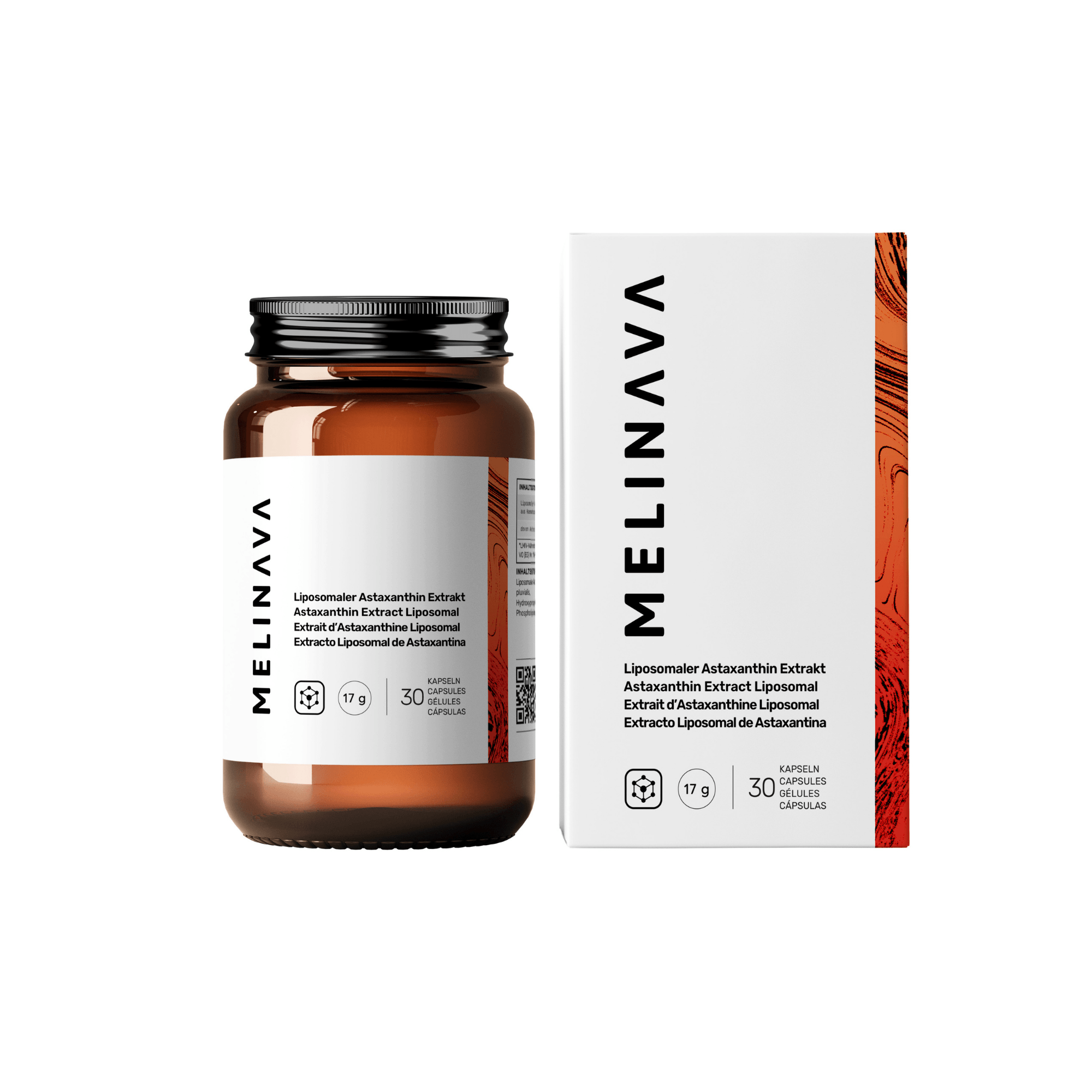
MELINAVA Liposomal Astaxanthin Extract
by MELINAVA
Pros
- 8 mg of high-purity astaxanthin from Haematococcus pluvialis
- Liposomal formulation for better absorption
- Free from allergens (gluten-free, lactose-free, soya-free)
- No artificial additives
- Vegan (no fish oil as a carrier)
- Made in Europe (France)
- Light-proof packaging
- Free from soya, gluten and lactose
- No preservatives
- No added allergens
- Free from contaminants
- GMO-free
Cons
- Only available online
- Higher price due to the liposome technology
Verdict
Melinava Liposomal Astaxanthin Extract is our winner and, with 8 mg of extract per capsule, sits in the optimal range of the recommended daily dose.
The liposomal encapsulation means that the astaxanthin is particularly well absorbed and goes straight to where it is needed. This is also why you need a far lower dose than with conventional products.
The dose in the upper, therapeutically effective range is ideal for people with joint problems or eye problems. It also suits anyone who needs more antioxidants, for example during stressful periods or when doing a lot of sport or outdoor work.
Using natural astaxanthin from controlled algae farms also ensures the highest quality.
The high product quality deserves a special mention. Melinava Liposomal Astaxanthin Extract is made in Europe to strict GMP standards, is laboratory-tested and contains no unnecessary additives.
The vegan formulation is another strong point. While many products use fish oil as a carrier, Melinava uses plant oils. This not only makes the product suitable for vegans but also avoids contaminants that can occur in fish oil.
Customers report noticeable improvements in their skin, energy levels and mobility. Their skin looks fresher and more resilient, everyday activities feel easier and they feel more energetic.
Customers also praise how gentle the capsules are on the stomach. The manufacturer takes the tolerability of the product very seriously, which is why it is completely free from unwanted additives. Melinava takes first place in our test (as of April 2026).
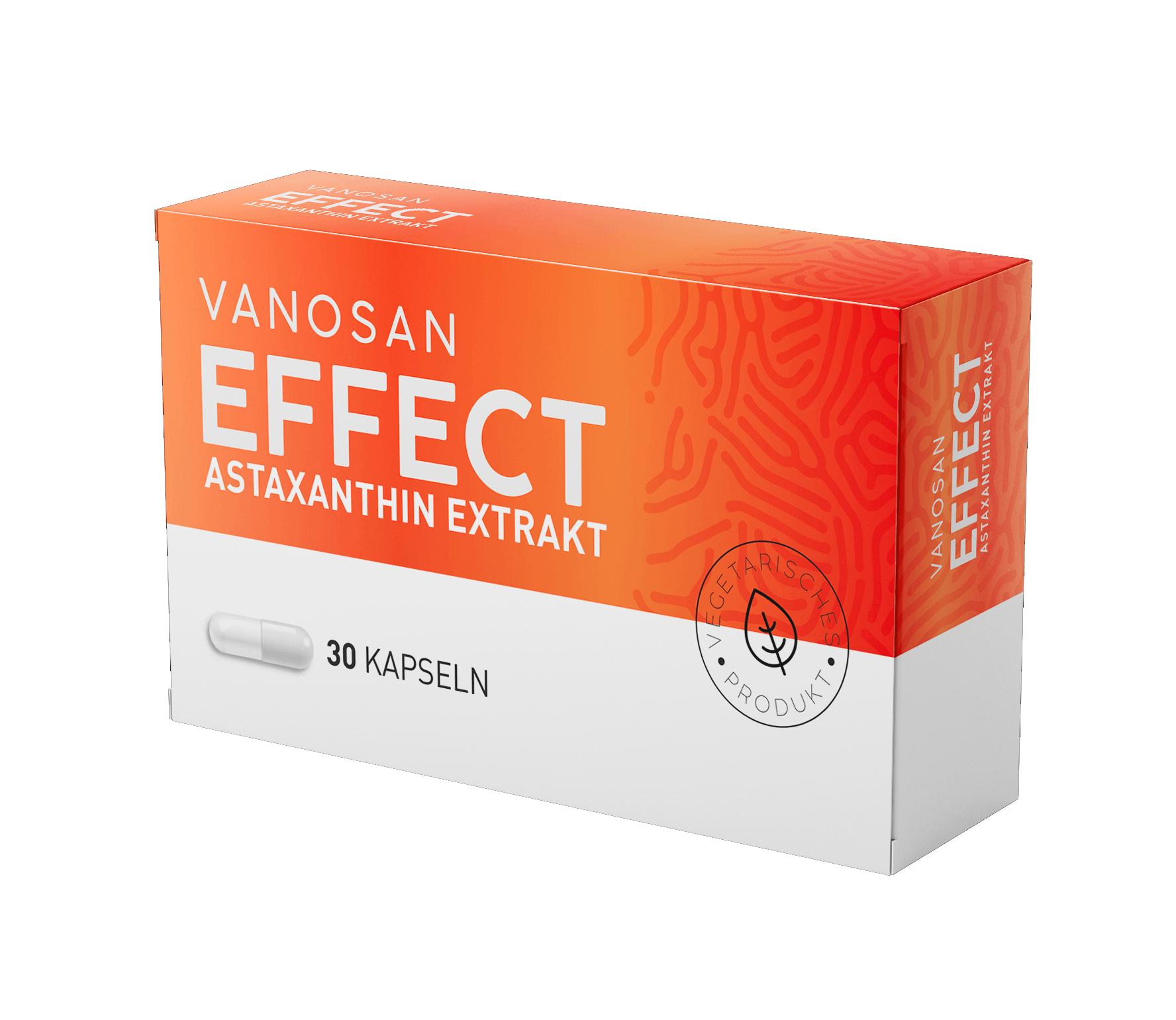
Vanosan Astaxanthin
by VANOSAN
Pros
- Natural astaxanthin from algae
- 6 mg per capsule
- Affordable price
- Laboratory-tested
- Free from soya, gluten and lactose
- Vegan
- Short delivery times
- 1 capsule a day
Cons
- Contains fish oil (not vegan)
- No liposomal formulation
- Only available online
- Plastic packaging
Verdict
Vanosan Astaxanthin offers solid basic support at an affordable price. The dosage is good, and the natural astaxanthin is a plus.
However, it lacks the optimised absorption technology that liposomal products offer.
Because it contains fish oil, the product is unsuitable for vegans and vegetarians.
Users are generally positive about the capsules. They are well tolerated, have a beneficial effect on general wellbeing and bring relief from joint problems and tiredness.
For people with average needs who are looking for a product at a fair price, Vanosan is a good option.
Delivery usually takes 2–3 working days.
One pack contains 60 capsules.
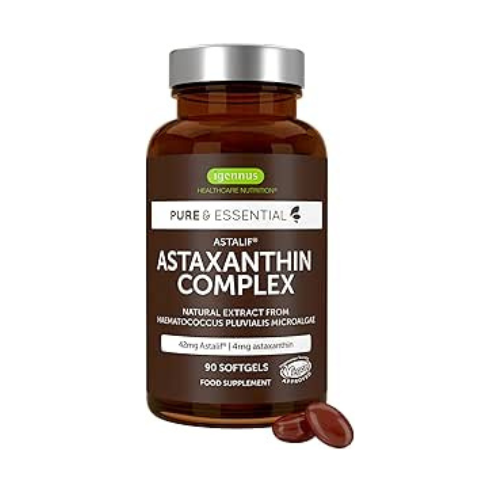
Igennus Astaxanthin Complex
by IGENNUS
Pros
- Antioxidant complex with natural astaxanthin
- 90 capsules for 1.5 months
- No unnecessary additives
- Vegan and sustainable capsules
- Made in Europe (UK)
Cons
- Lower dosage (4 mg)
- No optimised absorption technology
- Relatively expensive for the dosage
Verdict
Igennus Healthcare Nutrition focuses on natural ingredients and transparency.
The quality of the natural astaxanthin, which comes from closed-system, climate-neutral algae farms, is good, and bioavailability is increased by adding cold-pressed olive oil.
However, the active ingredient is still broken down in the digestive tract, which in turn limits absorption. At 4 mg, the dosage is in the average range.
This is enough for mild symptoms or preventive use. People with more severe joint problems or significant eye strain, however, often need a higher dose.
Value for money is reasonable, especially as the astaxanthin complex also contains other natural antioxidants such as lutein, zeaxanthin and beta-carotene.
Overall, a solid product for health-conscious people who value natural ingredients and want a wide range of antioxidants.
How to take: 2 capsules a day.
As you get older, your eyes come under more strain. Astaxanthin is one of the few antioxidants that can work directly in the retina.
Eyes: when seeing becomes a strain
Your vision changes as you get older. Your eyes tire more quickly, dry eyes become more common and the risk of macular degeneration rises. Age-related macular degeneration (AMD) is statistically the most common cause of blindness in people over 50 in Western Europe.
Because astaxanthin crosses the blood-retina barrier, it can work directly in the retina and protect the light-sensitive cells from oxidative stress.⁵ It also improves blood flow to the retina, which increases the supply of oxygen and nutrients and so counteracts a key risk factor for AMD.⁶
Study: in Japanese research on office workers, 6 mg of astaxanthin a day for four weeks was shown to reduce symptoms of eye fatigue.⁷Joints and mobility in everyday life
Joint pain is one of the most common problems in later life. Whether it's the knees, hips or fingers, inflammation and the breakdown of cartilage tissue limit mobility.
Astaxanthin isn't only an antioxidant: it's also anti-inflammatory. It slows down inflammatory processes in the body and also protects the cartilage cells from further breakdown.⁸
Studies have also shown promising results for people with rheumatoid arthritis, an autoimmune disease that causes painful inflammation of the joints.
A study of patients with rheumatic conditions showed that 12 mg of astaxanthin a day for 8 weeks markedly reduced pain and stiffness.⁹
Another advantage: astaxanthin may speed up recovery after physical exertion. People who exercise report less muscle soreness and faster recovery. This makes it possible to train more regularly, which in turn helps maintain joint health.¹⁰
Joint pain often has an inflammatory cause. Astaxanthin has been shown to have an anti-inflammatory effect and also protects cartilage tissue from further breakdown.
Radiant skin: natural protection against ageing
Your skin is your largest organ and also one of the most sensitive. With age, it loses elasticity, becomes drier and develops more wrinkles. UV radiation, pollution and oxidative stress speed up this process even further. This is where astaxanthin can offer support on several levels.
First, it's stored in the skin, where it acts as a natural sunscreen from within. It can reduce UV-related skin damage and protects skin cells from oxidative stress. Thanks to its antioxidant effect, it may also reduce age spots and hyperpigmentation.¹¹
Astaxanthin even supports skin firmness. Collagen is the structural protein that gives your skin its structure and youthful look. Astaxanthin protects existing collagen from breakdown while also stimulating the production of new collagen.¹²
Our verdict
Astaxanthin is one of the most extensively researched natural antioxidants of all. The scientific evidence is growing steadily and paints a consistent picture. If you're over 40 and want to give your eyes, joints or skin targeted support, this is a supplement that works on several levels at once.
What matters is choosing the right product. Not all astaxanthin is equally effective. A natural source from algae, an adequate dose and a formulation your body can actually absorb are the three criteria by which you can judge the quality of a product.
Liposomal products are a very good choice. They protect the active ingredient from being broken down in the digestive tract, have been shown to improve absorption and are gentler on the stomach than conventional capsules. This way, astaxanthin can help you stay active, mobile and clear-sighted in the years ahead.
Find the right astaxanthin for your needs in our comparison.
See the astaxanthin products we tested
* We may earn a commission from some of the companies featured. This is how we keep our comparisons free to read.
Some of these companies are our commercial partners.
Sources
1. https://www.mdpi.com/1660-3397/21/10/514
3. https://www.astaxanthin.co.nz/wp-content/uploads/2021/04/pap05.pdf
5. https://europepmc.org/article/PAT/US5527533
6. Nakamura A, Isobe R, Otaka Y, et al. Changes in visual function following peroral astaxanthin. Jpn J Clin Ophthalmol. 2004;58:1051-1054.
7. Nagaki Y, Hayasaka S, Yamada T, et al. Effects of astaxanthin on accommodation, critical flicker fusion, and pattern visual evoked potential in visual display terminal workers. J Trad Med. 2002;19:170-173.
8. Lee SJ, Bai SK, Lee KS, et al. Astaxanthin inhibits nitric oxide production and inflammatory gene expression by suppressing I(kappa)B kinase-dependent NF-kappaB activation. Mol Cells. 2003;16(1):97-105. PMID: 14503852
9. Nir Y, Spiller G. Effect of the intake of astaxanthin on systemic blood cytokines and biomarkers: a randomized, double-blind, placebo-controlled clinical trial. Fed Pract Geriother. 2002;17:9-15.
10. Malmsten CL, Lignell A. Dietary supplementation with astaxanthin-rich algal meal improves strength endurance. Med Sci Sports Exerc. 2008;40(5):S440.
11. Tominaga K, Hongo N, Karato M, Yamashita E. Cosmetic benefits of astaxanthin on humans subjects. Acta Biochim Pol. 2012;59(1):43-47. PMID: 22428137
12. https://journals.sagepub.com/doi/full/10.1089/jmf.2013.3060