
Guide
The best ashwagandha supplements compared (2026)
Last updated: 27 July 2026

Written by
Health Tested Editorial Team
Ashwagandha is one of the most important medicinal plants in Ayurvedic medicine. It's considered a natural adaptogen and has proved particularly useful for stress, sleep problems, anxiety and depression in studies. It also contains a wealth of antioxidants, which have an anti-inflammatory effect and can protect your body from free radicals.
But which ashwagandha is right for you?

There are countless ashwagandha supplements on the market, but not all of them are effective.
The queen of Ayurvedic herbs
Ashwagandha (Withania somnifera) is a plant from the nightshade family. It's also known as sleep berry, winter cherry, Indian ginseng and the queen of Ayurvedic herbs.
The plant has been used for around 5,000 years in Ayurveda, the traditional Indian system of medicine, which values it for its wide range of beneficial properties. In traditional Chinese medicine (TCM), too, ashwagandha root is used to treat stress-related symptoms such as anxiety, sleep problems and tiredness. People take it to support physical and mental endurance, strengthen the immune system and balance hormones. It's also said to work as an aphrodisiac.
Ashwagandha is native to India, the Middle East and North Africa.
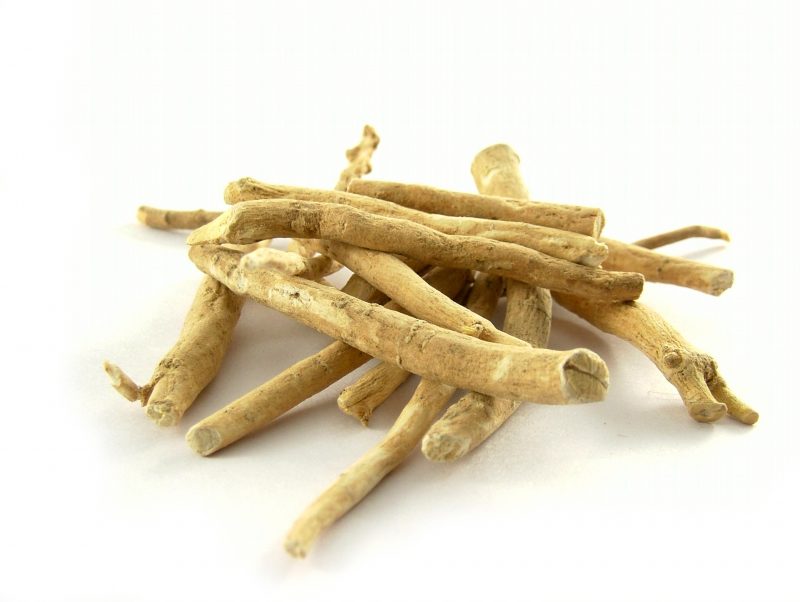
Laboratory analyses have identified more than 35 chemical constituents in the roots of Withania somnifera.
Adaptogenic medicinal plants promote resilience
Ashwagandha is considered a natural adaptogen. Adaptogens are biologically active substances found in various plants, and they help these plants become more resilient and better able to adapt.
Ashwagandha is one of the best-known adaptogenic plants and is valued for helping the body adapt to challenging situations. Adaptogens act on the hypothalamic-pituitary-adrenal axis (HPA axis), which plays an important role in hormone balance and the stress response.
Stressors such as lack of sleep, environmental toxins or pain can put a strain on your body, but adaptogens have a balancing effect and promote your body's resilience. They can improve quality of life and help keep both body and mind on an even keel.
Benefits of taking ashwagandha
Healing for body and mind
According to studies, the medicinal plant may have the following positive effects:
- better sleep quality and less insomnia
- more muscle mass, strength, endurance and energy
- a stronger immune system
- reduced inflammation
- cell regeneration
Benefits for mental health
Taking ashwagandha can also relieve psychological symptoms:
- relief from stress and anxiety
- lower levels of the stress hormone cortisol
- better emotional stability
- more effective stress management
- better brain function (especially memory and concentration)

There are several factors to consider when you choose an ashwagandha product.
What to avoid when buying ashwagandha
When you buy an ashwagandha supplement, make sure it doesn't contain additives that could undermine the product's intended benefits.
When you're looking for the right ashwagandha product, watch out for the following:
- a low dose of ashwagandha extract
- ashwagandha extract made from the leaves
- a low withanolide content (below 3%) or no information from the manufacturer
- low bioavailability
- gelatine capsule shells, binders and anti-caking agents
- capsules that aren't gastro-resistant
- any allergens you react to, such as soya, gluten and lactose
- supplements at suspiciously low prices
- products that supposedly contain extremely high doses
What forms of ashwagandha are there?
Powder, capsules or liquid? Ashwagandha comes in several forms, each with its own advantages and drawbacks:
- powder
- capsules
- drops
- liposomal form
Powder, made from the dried and ground root, is one of the most disputed forms. It is often simply ground root rather than a concentrated extract, so its withanolide content is very low.
There are no significant differences in how ashwagandha capsules and drops work, so you can choose according to personal preference. There's just one exception: liposomal ashwagandha.
Capsules
Pros
Easy to swallow
Practical when travelling and on the go
Easy to dose (consistent amount of active ingredient)
No unpleasant taste or smell
Cons
Stomach acid can affect absorption of the active ingredient
Digestion can partly break down the active ingredient
The bioavailability of the active ingredient can vary
The capsule shell may contain gelatine
Often contain additives
Unsuitable for people with swallowing difficulties
A high dose may require several capsules
Drops
Pros
Easy to dose
Fast absorption of the active ingredient (via the mucous membranes)
Good for people with swallowing difficulties or stomach problems
Versatile: can be mixed into drinks or food
Cons
The drops can taste unpleasant
Exact dosing can be difficult, as the number of drops varies
The liquid can leak or spill
Shorter shelf life than capsules
Liposomal form
Pros
Higher bioavailability of the active ingredient
Better absorption by bypassing stomach acid
Lower dose needed for the same effect
Can mask the taste of the active ingredient
No additives
Cons
May cost more because manufacturing is more complex
Availability and choice may be limited
Producing liposomes can be difficult and requires specialised technology
Ashwagandha in true liposomal form
Liposomes are tiny lipid vesicles made of the same substance as human cell membranes. Liposome technology encapsulates nutrients (such as ashwagandha root extract), so your body doesn't treat the coated active ingredient as a 'foreign body' and it can pass directly into the bloodstream.
The liposomal coating is an innovative solution that lets your body absorb and make full use of large amounts of the active ingredients.Note: not every liquid product is automatically liposomal.
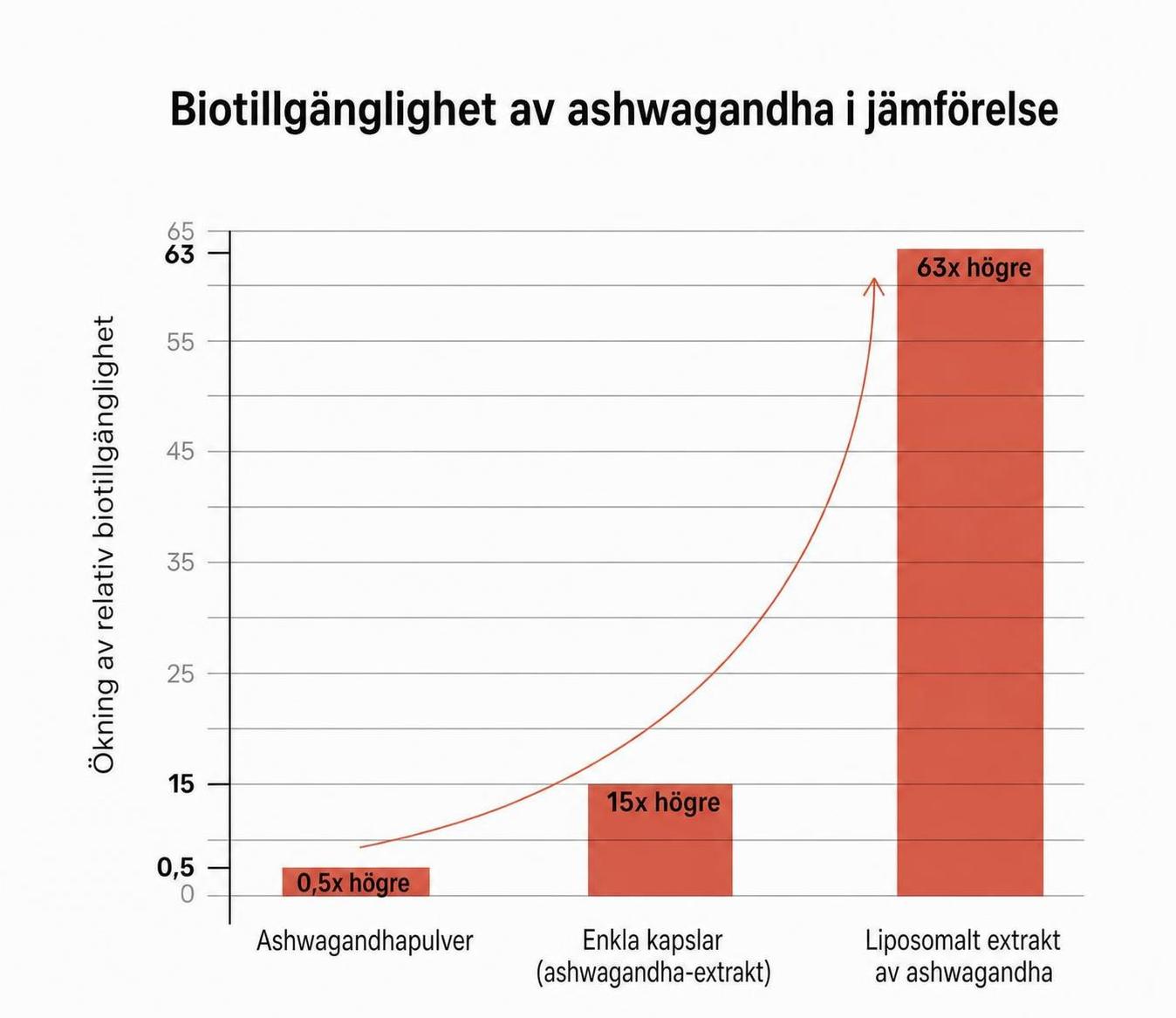
Because they measure just nanometres across and are rich in fats, liposomes protect the active ingredients inside them from being broken down by enzymes, such as those in saliva and stomach acid. They release them directly into the bloodstream, which significantly improves absorption of the active ingredients.

A simple model of a liposome, with a fatty outer layer and a watery chamber inside. Liposomes are an innovative technology for releasing active ingredients precisely and efficiently. That's why they've earned a firm place in medicine and cosmetics, where they have a wide range of uses.
Top 3: the best ashwagandha supplements on the market
Finding the right ashwagandha isn't easy.
That's why we assess ashwagandha supplements against the following six criteria:
How is the ashwagandha formulated?
Are there any study or test results?
How high is the withanolide content (above 3%)?
Does the product contain allergens?
How good is the value for money?
Is there anything special about the formulation or manufacturing?
The most important factor: how is the ashwagandha formulated?
As with most plants, the best and most concentrated constituents of ashwagandha are found not in the leaves but in the root.
Alongside amino acids, fatty acids and choline, the root contains alkaloids and, above all, withanolides.
Ashwagandha owes its effect mainly to its high concentration of withanolides, which are biologically active substances. These phytochemicals are best known for their anti-inflammatory, antioxidant and stress-reducing properties.
In studies, these active ingredients have proved effective at fighting inflammation and neutralising free radicals. Ashwagandha can also help your body prepare better for stressful situations and reduce stress reactions.
The withanolide content is the most important quality marker when you're looking for the right ashwagandha product. Different growing and processing methods can affect the concentration and effectiveness of withanolides. That's why it's important to buy high-quality ashwagandha products from trustworthy manufacturers, so you get enough withanolides.
product review
TESTED
our quality criteria
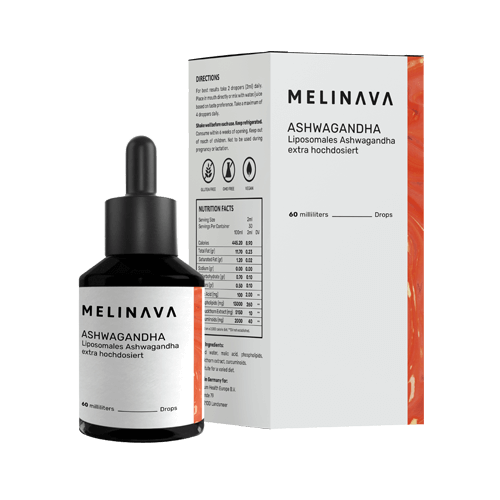
MELINAVA Ashwagandha
by MELINAVA
Pros
- Liposome technology
- High bioavailability thanks to liposomes (64 times higher)
- 50 mg ashwagandha extract
- Extracted exclusively from the root
- 10% withanolides
- Active ingredient not destroyed by stomach acid (thanks to the liposomal coating)
- Vegan
- Made in Europe
- Free from soya, gluten and lactose
- No added preservatives
- No added allergens
- GMO-free
Cons
- Only available online
- Often sold out
Verdict
Melinava Ashwagandha is high-strength, with 50 mg of ashwagandha root extract per daily dose.*
The ashwagandha extract is obtained exclusively from the root and contains no leaves. At around 10%, its withanolide content is the highest that can be achieved naturally from a pure root extract.
Melinava is one of the strongest over-the-counter ashwagandha products on the European market.
*Because the nutrients are readily absorbed, much lower doses are needed than with conventional extracts.
The formulation and dosage are designed to work together to prevent and relieve a wide range of symptoms.
The innovative liposome technology ensures optimal absorption in the gut and from there into the bloodstream.
User satisfaction and the many positive customer reviews of Melinava Ashwagandha speak for themselves.
Melinava has been used with very good results for symptoms such as lack of energy, sleep problems and poor concentration, as well as for inflammation.
The manufacturer takes tolerability very seriously, which is why the product is completely free from unwanted additives. You can find more information on the manufacturer's website.*
A one-month course of Melinava costs 509 kr (discounts are available when you buy two or three packs, as of January 2026).
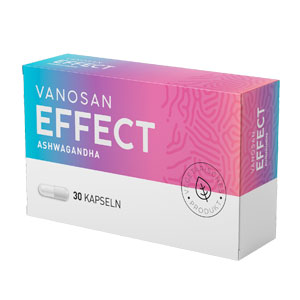
Vanosan Ashwagandha
by VANOSAN
Pros
- Organic-quality raw materials from India
- Laboratory-tested
- Made in Europe
- Vegan
- Free from soya, gluten and lactose
- No added preservatives
- No added allergens
- GMO-free
Cons
- No root extract, only ashwagandha powder
- No information on the withanolide content
- Low bioavailability
- 3 capsules a day
- Only available online
Verdict
Vanosan's ashwagandha is well dosed, at 2,600 mg of ashwagandha powder per day. The capsules contain powder made from the ground root rather than a root extract. For this reason, the withanolide content per capsule cannot be determined.
In addition, bioavailability is severely limited in powder form. There are no studies on how much of the ashwagandha is actually available to the body.
The manufacturer sources its raw materials from India. They are laboratory-tested on site, and the product is made in Europe.
The recommended daily dose of three capsules is high compared with other ashwagandha products.
The capsule shell is made without animal ingredients, so it is also suitable for vegetarians and vegans.
Users are generally positive about Vanosan Ashwagandha. It is well tolerated and helps with sleep problems and nervousness. Some customers criticise the taste and the large number of capsules you have to take (three a day).
Delivery is free, and orders usually arrive within 3 working days.
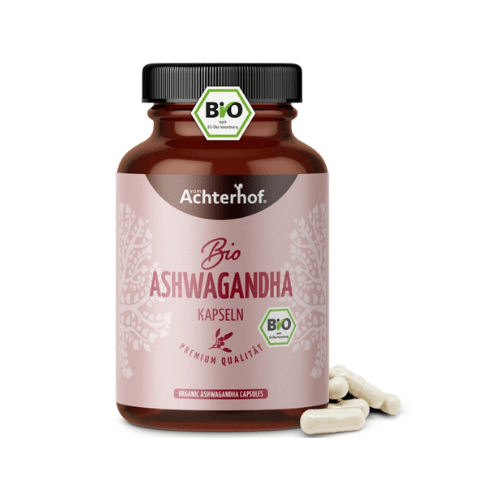
Achter Ashwagandha organic capsules
by ACHTERHOF
Pros
- Low price
- Vegan
- Made in Europe
- Free from soya, gluten and lactose
- No added preservatives
- No added allergens
- GMO-free
Cons
- No information on the withanolide content
- No information on a gastro-resistant capsule shell
- 3 capsules a day
Verdict
Achter Ashwagandha organic capsules have a standard dosage of 1,500 mg a day. The capsules contain powder made from the ground root rather than a root extract. For this reason, the withanolide content per capsule cannot be determined. The product offers very good value for money.
The recommended daily dose of three capsules is moderate compared with other ashwagandha products.
The capsule shell is made without animal ingredients, so it is also suitable for vegetarians and vegans.
Users are fairly positive about Achterhof. Taking it relieves symptoms such as sleep problems and restlessness, and it is well tolerated. However, users with chronic symptoms often find the effect unsatisfactory. Some customers also criticise the smell, and a few say it does not agree with them.
Delivery costs 57 kr and usually arrives within 2–3 working days.

The active ingredients in ashwagandha may help your immune system respond better to threats by stimulating the production of antibodies and immune cells.
Natural immune support
One of ashwagandha's most important properties is its ability to reduce oxidative stress. Oxidative stress can weaken the immune system, because free radicals damage immune cells and can impair how well they work.
Ashwagandha is rich in antioxidants. These can protect the cells of the immune system from free-radical damage and so strengthen the body's defences. Ashwagandha can also have an anti-inflammatory effect, which benefits your defences too, because inflammation can put a strain on the immune system and seriously impair how it works.
Some studies have shown that taking ashwagandha can strengthen the immune system and increase the number of immune cells in the blood. Taking ashwagandha may also increase the production of antibodies, which play an important role in fighting infections.
Calming and energising at the same time
Ashwagandha is often used for emotional tension, anxiety and sleep problems. Yet it also provides more energy and better performance. How is that possible?
In general, tiredness, exhaustion and restlessness during the day can be caused by (ongoing) lack of sleep and poor sleep quality. Ashwagandha's sleep-promoting properties can help counteract this. The adaptogen can lower levels of the stress hormone cortisol. After restful sleep, your body has more energy during the day.
You can also time your dose to suit your personal preferences or your individual symptoms.
If you suffer from nervousness, anxiety or restlessness, it's best to take it in the morning or during the day. On particularly stressful, demanding days, taking it early can also help you feel more resilient and calm.
If your main aim is to improve your sleep quality, it's best to take it in the evening.
Ashwagandha and its positive effect on hair
Ashwagandha is also valued for its effect on hair. Hair problems such as hair loss or thinning hair are often closely linked to stress, and this is where ashwagandha comes in. The medicinal plant is thought to have a positive effect on hair by reducing stress and anxiety. Studies suggest that ashwagandha can inhibit the release of the stress hormone cortisol, which in turn is associated with hair problems. Inhibiting cortisol in this way may help strengthen the hair roots and reduce hair loss.
Ashwagandha also has a remarkably high tyrosine content. Tyrosine is an amino acid that stimulates the production of melanin, the pigment responsible for your hair's natural colour. By promoting melanin production, tyrosine may help counteract premature greying and keep your hair its natural colour for longer.
Ashwagandha can also improve microcirculation in the scalp, which improves the supply of essential nutrients to the hair follicles and so supports healthy hair roots. This helps promote hair growth and reduce hair loss.

Your skin may benefit from ashwagandha too
Thanks to the high concentration of antioxidants in ashwagandha, taking this medicinal plant can also have a positive effect on skin health. Antioxidants protect skin cells from the harmful effects of free radicals caused by UV radiation, pollution and other external factors. They can also support your skin's own collagen production, which can make your skin firmer and more elastic over time.
Several ashwagandha products tested
* We may earn a commission from some of the companies featured. This is how we keep our comparisons free to read.
Some of these companies are our commercial partners.
Sources
- Chandrasekhar, K., Kapoor, J., & Anishetty, S. (2012). A prospective, randomized double-blind, placebo-controlled study of safety and efficacy of a high-concentration full-spectrum extract of ashwagandha root in reducing stress and anxiety in adults. Indian journal of psychological medicine, 34(3), 255–262. https://doi.org/10.4103/0253-7176.106022 — FECYT (Spanish Foundation for Science and Technology, 2012) https://www.sciencedaily.com/releases/2012/01/120110102058.htm
- Gupta A, Mahdi AA, Shukla KK, et al. Efficacy of Withania somnifera on seminal plasma metabolites of infertile males: a proton NMR study at 800 MHz. Journal of Ethnopharmacology. 2013 Aug;149(1):208-214. DOI: 10.1016/j.jep.2013.06.024. PMID: 23796876.
- Raut, A. A., Rege, N. N., Tadvi, F. M., Solanki, P. V., Kene, K. R., Shirolkar, S. G., ... & Vaidya, R. A. (2012). Exploratory study to evaluate tolerability, safety, and activity of Ashwagandha (Withania somnifera) in healthy volunteers. Journal of Ayurveda and Integrative Medicine, 3(3), 111–114.
- Singh N, Bhalla M, de Jager P, Gilca M. An overview on ashwagandha: a Rasayana (rejuvenator) of Ayurveda. Afr J Tradit Complement Altern Med. 2011;8(5 Suppl):208-213. doi:10.4314/ajtcam.v8i5S.9
- Raut AA, Rege NN, Tadvi FM, et al. Exploratory study to evaluate tolerability, safety, and activity of Ashwagandha (Withania somnifera) in healthy volunteers. J Ayurveda Integr Med. 2012;3(3):111-114. doi:10.4103/0975-9476.100168
- Pratte MA, Nanavati KB, Young V, Morley CP. An alternative treatment for anxiety: a systematic review of human trial results reported for the Ayurvedic herb ashwagandha (Withania somnifera). J Altern Complement Med. 2014;20(12):901-908. doi:10.1089/acm.2014.0177
- Chandrasekhar K, Kapoor J, Anishetty S. A prospective, randomized double-blind, placebo-controlled study of safety and efficacy of a high-concentration full-spectrum extract of ashwagandha root in reducing stress and anxiety in adults. Indian J Psychol Med. 2012;34(3):255-262. doi:10.4103/0253-7176.106022
- Mishra LC, Singh BB, Dagenais S. Scientific basis for the therapeutic use of Withania somnifera (ashwagandha): a review. Altern Med Rev. 2000;5(4):334-346. PMID: 10956379.
- Bonilla, D. A., Moreno, Y., Gho, C., Petro, J. L., Odriozola-Martínez, A., & Kreider, R. B. (2021). Effects of Ashwagandha (Withania somnifera) on physical performance: Systematic review and bayesian meta-analysis. Journal of Functional Morphology and Kinesiology, 6(1), 20.