
Guide
Alpha-lipoic acid (ALA): the best products compared (2026)
Last updated: 27 July 2026

Written by
Health Tested Editorial Team
Tingling in your feet. Blood sugar that doesn't behave the way it used to. The feeling of having less energy than you did just a few years ago. What many people put down to the inevitable signs of ageing often has a common cause: weakening protection of your cells.
Alpha-lipoic acid (ALA) is the only substance that tackles all of these at once. It's the only antioxidant that dissolves in both water and fat. That gives it a reach no other antioxidant can match.¹
ALA is used mainly for raised blood sugar, memory problems and exhaustion, and to protect against premature ageing.
In this comparison, you'll find out what science knows about ALA, what to look for when choosing a product and which supplements really impressed us in our 2026 test.

There are countless ALA supplements on the market, but not all of them are effective.
The superstar among antioxidants
The world of antioxidants is vast: vitamin C, vitamin E, resveratrol, coenzyme Q10, astaxanthin. Each has its own properties and protects your body against oxidative stress in its own way.
But one of them clearly stands out from the rest. Alpha-lipoic acid can do something no other antioxidant can in quite the same way: it reaches almost every cell in your body and, at the same time, regenerates other antioxidants that have been used up.
When vitamin C or glutathione runs low, ALA returns it to its active state. Taking ALA strengthens not just a single protective mechanism but your body's entire antioxidant system.²
How ALA works in the body
Alpha-lipoic acid is a fatty acid that contains sulfur and is involved in one of the most fundamental processes in your body: turning food into energy.
In the mitochondria, the powerhouses of every cell, ALA is directly involved in energy production. Without it, this process works less efficiently.³
ALA also helps your body put sugar to use instead of storing it. It improves how your cells respond to insulin, the key that opens cells so they can take up sugar from the blood.
When that no longer works properly, sugar stays in the blood, blood sugar rises and the excess is stored as fat.
ALA helps bring this mechanism back into balance. Your cells take up sugar more efficiently, your blood sugar stabilises and your weight is easier to control.
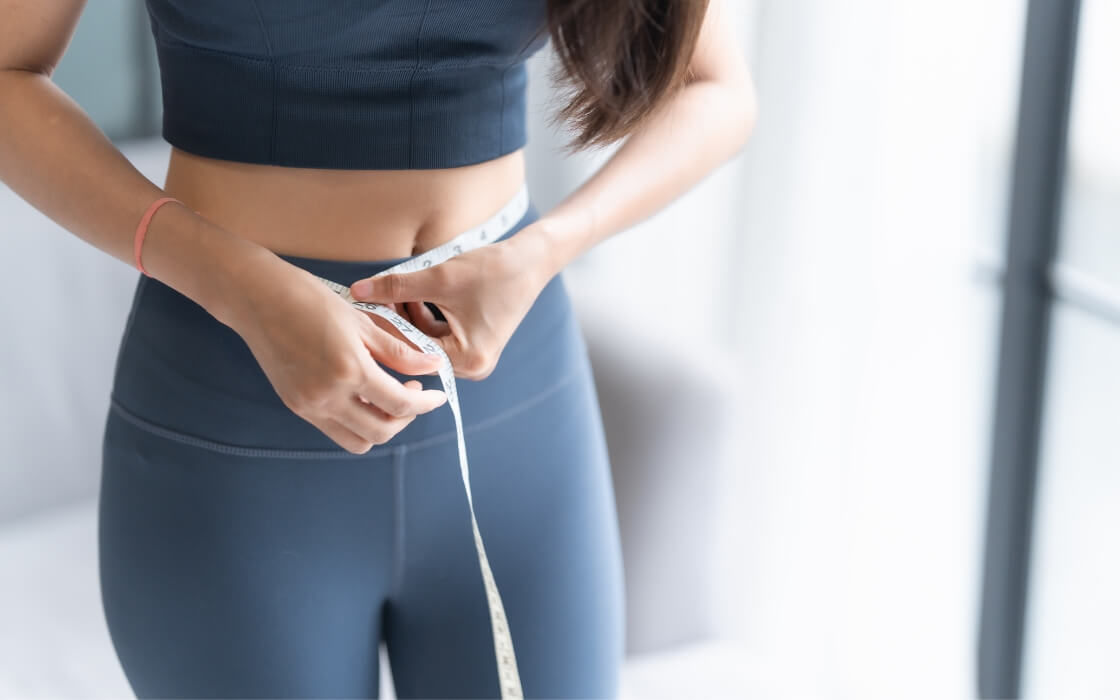
More energy, steadier blood sugar, easier weight control. ALA supports your metabolism exactly where it weakens most with age.
ALA and its antioxidant power: protection at every level
Free radicals form in your body every day as a result of exercise, stress, UV radiation and environmental toxins. In small amounts they're harmless, but when they get out of hand, they damage cells, tissues and even DNA.
Most antioxidants can only neutralise free radicals in one particular environment: either in the watery interior of the cell or in the fat-rich cell membranes.
ALA is the only antioxidant that works in both environments at the same time. Without enough protection in both areas, gaps appear: cell membranes become more permeable, inflammation spreads more easily, nerves deteriorate faster and skin ages sooner. ALA closes these gaps and protects every cell completely, from its outer shell right through to its interior.⁴
On top of that, it has an ability no other antioxidant has in quite the same way. Vitamin C and coenzyme Q10 become inactive in the body once they've done their job. ALA returns them to their active state, and they regain their antioxidant power.
Help with insulin resistance and diabetes
Many women over 40 know the feeling. Their diet has hardly changed, yet their weight keeps creeping up. This is often down to declining insulin sensitivity.
Your cells respond less strongly to insulin, take up less sugar from the blood, and the excess is stored as fat.
One of the best-documented effects of alpha-lipoic acid is its ability to improve insulin sensitivity and regulate blood sugar levels.
It activates transport mechanisms in muscle and fat cells that help them take up sugar from the blood, much as insulin does.⁵ Blood sugar stabilises, your cells once again get their fuel more efficiently and your body stores less fat.
A meta-analysis of 11 randomised controlled trials showed that ALA significantly lowers fasting blood sugar and HbA1c in patients with type 2 diabetes.⁶
Alpha-lipoic acid is also the only natural active ingredient approved in Germany as a medicine for the treatment of diabetic neuropathy. It's a unique status that no other over-the-counter product in this area can claim.⁷
The key benefits of ALA
- support for energy production at a cellular level
- protection of cells against oxidative stress, in the cell membrane and inside the cell at the same time
- regeneration of used-up antioxidants such as vitamin C, vitamin E and glutathione
- protection of the nervous system and relief of neuropathy symptoms
- steadier blood sugar and improved insulin sensitivity
- stronger mitochondrial function and less exhaustion
- inhibition of inflammation in the tissues

Tingling, numbness, nerve pain. ALA is the only natural active ingredient approved as a medicine for the treatment of diabetic neuropathy.
When ALA is particularly valuable
Type 2 diabetes or prediabetes
ALA is the only natural active ingredient approved as a medicine for the treatment of diabetic neuropathy. For people with raised blood sugar or early insulin resistance, ALA offers natural, evidence-based support.
People with neuropathy symptoms
Burning, tingling and numbness in the hands and feet can be relieved by ALA supplements. The ALADIN study (Alpha-Lipoic Acid in Diabetic Neuropathy), one of the most important randomised controlled trials on the subject, demonstrated this effect. It showed that over 3 weeks ALA clearly reduced the symptoms of diabetic neuropathy, such as pain, burning or numbness. Further long-term studies confirm its lasting effectiveness when taken orally.⁸
Athletes and physically active people
Intensive training considerably increases oxidative stress. Thanks to its broad antioxidant action, ALA can help reduce exercise-related cell damage and speed up recovery. At the same time, ALA supports energy metabolism in the muscle cells.
From 40 onwards
Because the body's own production of ALA falls with age and mitochondrial function declines, ALA is one of the best-documented anti-ageing supplements at a cellular level.
People who are overweight or have metabolic syndrome
ALA tackles several aspects of metabolic syndrome at once: insulin resistance, oxidative stress and inflammation. A meta-analysis showed consistent effects on body weight and waist circumference, which were particularly pronounced in people with excess weight and insulin resistance.⁹
Why conventional ALA is often not enough
ALA naturally has low bioavailability. Much of the active ingredient you take never even reaches the bloodstream.
There are two reasons for this. ALA is sensitive to stomach acid and is partly destroyed in the stomach itself. Whatever gets through the stomach is carried from the gut straight to the liver, where a significant share is broken down before it reaches the blood. This effect, known as the first-pass effect, is particularly pronounced with ALA.
Studies show that with conventional products, often less than 50% of the active ingredient taken actually reaches the blood.¹⁰ That's why such products usually come in very high doses, just so that they have any effect at all.

There are several factors to consider when choosing the right supplement.
R-ALA vs S-ALA: the crucial difference in quality
Alpha-lipoic acid comes in two forms, R-ALA and S-ALA, which differ markedly in effectiveness and stability.
R-ALA is the naturally occurring, biologically active form. Your body makes it itself. It binds better to enzymes, has higher bioavailability and works at lower doses. Pure R-ALA is, however, sensitive to heat and light, which can impair its stability and therefore its bioavailability.¹¹
S-ALA is a synthetic form that doesn't occur in nature. It's chemically more stable, but biologically less active.
Many conventional products use a combination of both forms, known as the racemic mixture.
The best solution combines both properties: biological activity from R-ALA and stability from a controlled formulation.Dosage: how to take ALA correctly
The optimal dosage depends on what you're taking it for. ALA is best taken on an empty stomach, as meals can slow down its absorption.
For insulin resistance and raised blood sugar:
300–600 mg a day, 30 minutes before main meals, split into two to three doses.
For diabetic neuropathy:
600 mg a day, clinically tested. Take it for at least three months for measurable effects.
For antioxidant support:
100–300 mg a day, in the morning on an empty stomach.
For excess weight and metabolic syndrome:
300–600 mg a day, before meals.
If you already take medication, talk to your doctor before you start taking ALA.
What to avoid when buying an ALA supplement
Not every product on the market lives up to its promises. When choosing, it pays to look closely at the following:
- no information on which form of ALA is used
- unstabilised R-ALA with no mention of a protective formulation
- a dose below 300 mg for therapeutic use
- no proof of purity from independent laboratory testing
- no information on where the active ingredient comes from
- unnecessary fillers or preservatives
- no information on bioavailability or dosage form
Forms of ALA
ALA is available in several forms:
- capsules
- tablets
- soft capsules (softgels)
- powder
- liposomal formulations
Each of these forms has its own advantages and drawbacks, but one stands out in particular: liposomal ALA.
Capsules
Pros
Easy to swallow
Convenient on the go and when travelling
Easy to dose (each capsule contains the same amount)
No unpleasant taste or smell
Can be combined with other active ingredients
Cons
Stomach acid can affect absorption of the active ingredient
Digestion can partly break down the active ingredient
Bioavailability of the active ingredient can vary
Capsule shell may contain gelatine
Often contain additives
Unsuitable for people who have difficulty swallowing
At a low dose, several capsules may be needed
Drops
Pros
Easy to dose
Fast absorption of the active ingredient (through the mucous membranes)
Well suited to people with difficulty swallowing or stomach problems
Versatile: can be mixed into drinks or food
Cons
The drops can taste unpleasant
Exact dosing can be difficult, as drop size can vary
The liquid can drip or spill
Short shelf life
Liposomal form
Pros
Higher bioavailability of the active ingredient
Better absorption by bypassing stomach acid
Lower dose needed for the same effect (usually just 1 capsule)
Can mask the taste of the active ingredient
No additives
Cons
May cost more because of the more complex production process
Availability and choice may be limited
Making liposomes can be difficult and requires specialised technology
Smaller selection, as not all manufacturers use the process
Liposomal ALA: designed for better absorption
The problem of ALA's low bioavailability is well known. The solution lies in how the active ingredient is 'packaged'. Liposomes are tiny spheres made of a double layer of fat. They're built in much the same way as the natural outer layer of your body's cells. This structure makes them an ideal transport system for sensitive active ingredients, because they enclose the active ingredient completely. That way, they protect it from the acidic environment of the stomach and stop it being broken down in the digestive tract.
The alpha-lipoic acid passes through the stomach protected, is absorbed directly into the cells at the gut wall and largely avoids being broken down in the liver. As a result, much more of the active ingredient gets where it's needed: into the blood and into the cells.
At the same time, there's no direct contact between ALA and the stomach lining, so the stomach problems typical of conventional ALA, such as mild nausea or unpleasant irritation, are significantly reduced or avoided altogether.

Simple model of a liposome. A liposome is like a tiny bubble with a layer of fat on the outside and a watery chamber on the inside. This structure makes liposomes particularly effective, as they can transport and release active ingredients selectively. Thanks to this innovative technology, liposomes have become increasingly important in medicine and cosmetics. They allow active ingredients to be absorbed effectively, protect them from being broken down and have a wide range of applications.
Top 3: the best ALA products of 2026
There are countless ALA products on the market today. We've assessed them against several criteria to show you the best ones:
What is the supplement made of?

Are there study or test results?

How high is the dosage of the nutrient?

Does the product contain allergens?

How good is the value for money?

Are there any special features in the composition or manufacturing?
product review
TESTED
our quality criteria
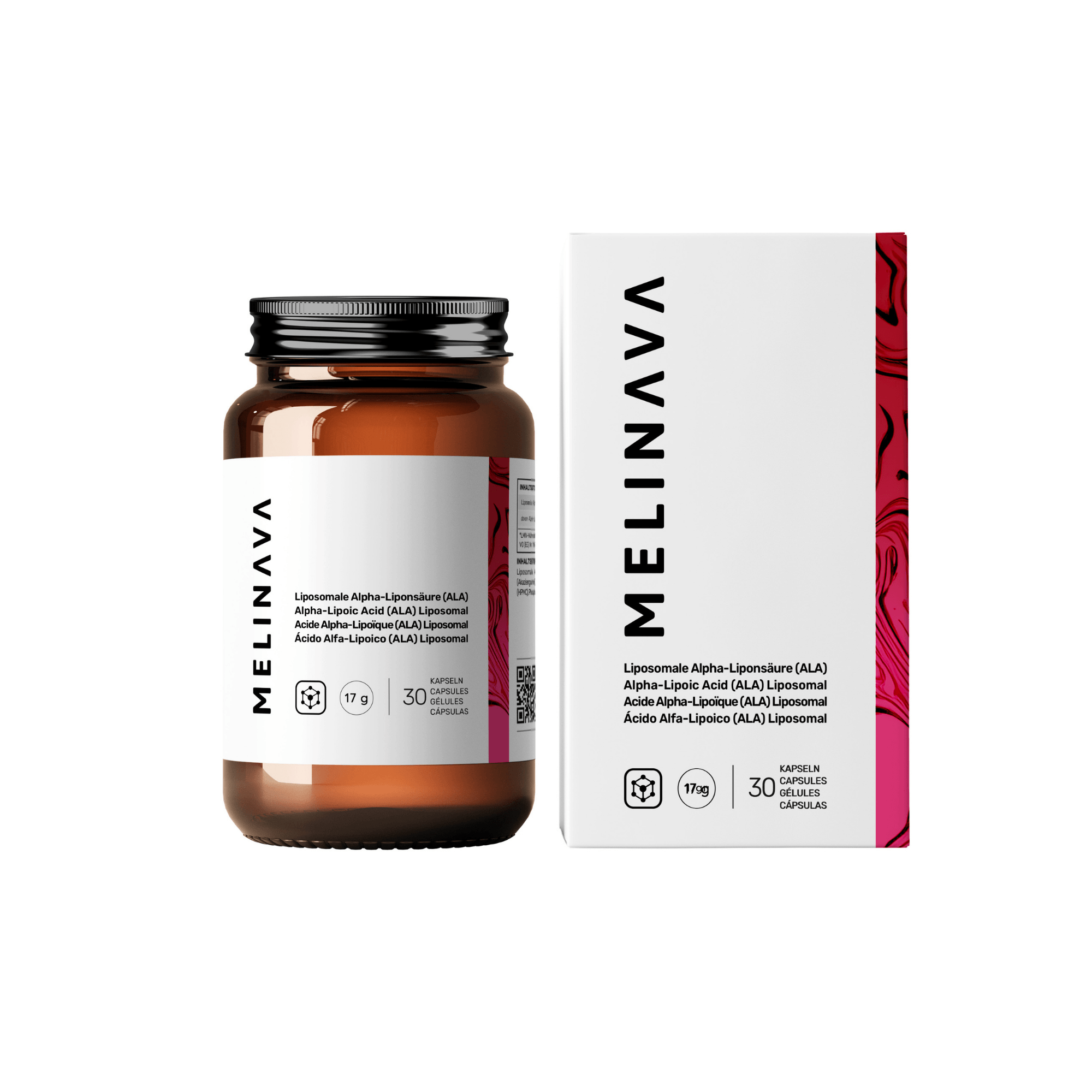
MELINAVA Liposomal Alpha-Lipoic Acid
by MELINAVA
Pros
- Blend of 50% natural R-form and 50% active S-form
- 450 mg R-ALA per capsule
- Free from allergens (gluten-free, lactose-free, soya-free)
- No artificial additives
- Vegan
- Made in Europe (France)
- Just 1 capsule a day
- Laboratory-tested
- Pharmaceutical grade
- 100% free from solvent residues
- 30 servings per pack
- Gentle on the stomach
Cons
- Only available online
- Often sold out
- Only available as capsules
Verdict
Melinava Liposomal Alpha-Lipoic Acid provides an optimal 450 mg per daily dose. The capsules use a combination of R-ALA and S-ALA, which is both biologically active and stable in heat and during storage.
The liposomal formulation protects the ALA from being broken down by stomach acid and digestive enzymes and allows direct release into the bloodstream. Compared with conventional capsules, much more of the active ingredient gets where it is needed.
This makes Melinava one of the strongest over-the-counter ALA products on the European market.
Customers report noticeably less tingling and numbness in their hands and feet after taking it regularly for four to eight weeks.
People with raised blood sugar also report more stable readings and more energy. Tolerability is rated as very good across the board, even when it is taken on an empty stomach as recommended.
Many users also appreciate needing to take just one capsule a day.
One pack of Melinava Liposomal Alpha-Lipoic Acid lasts 30 days. Melinava took first place in our test (as of March 2026). The manufacturer takes the product's tolerability very seriously, which is why it is completely free from unwanted additives.
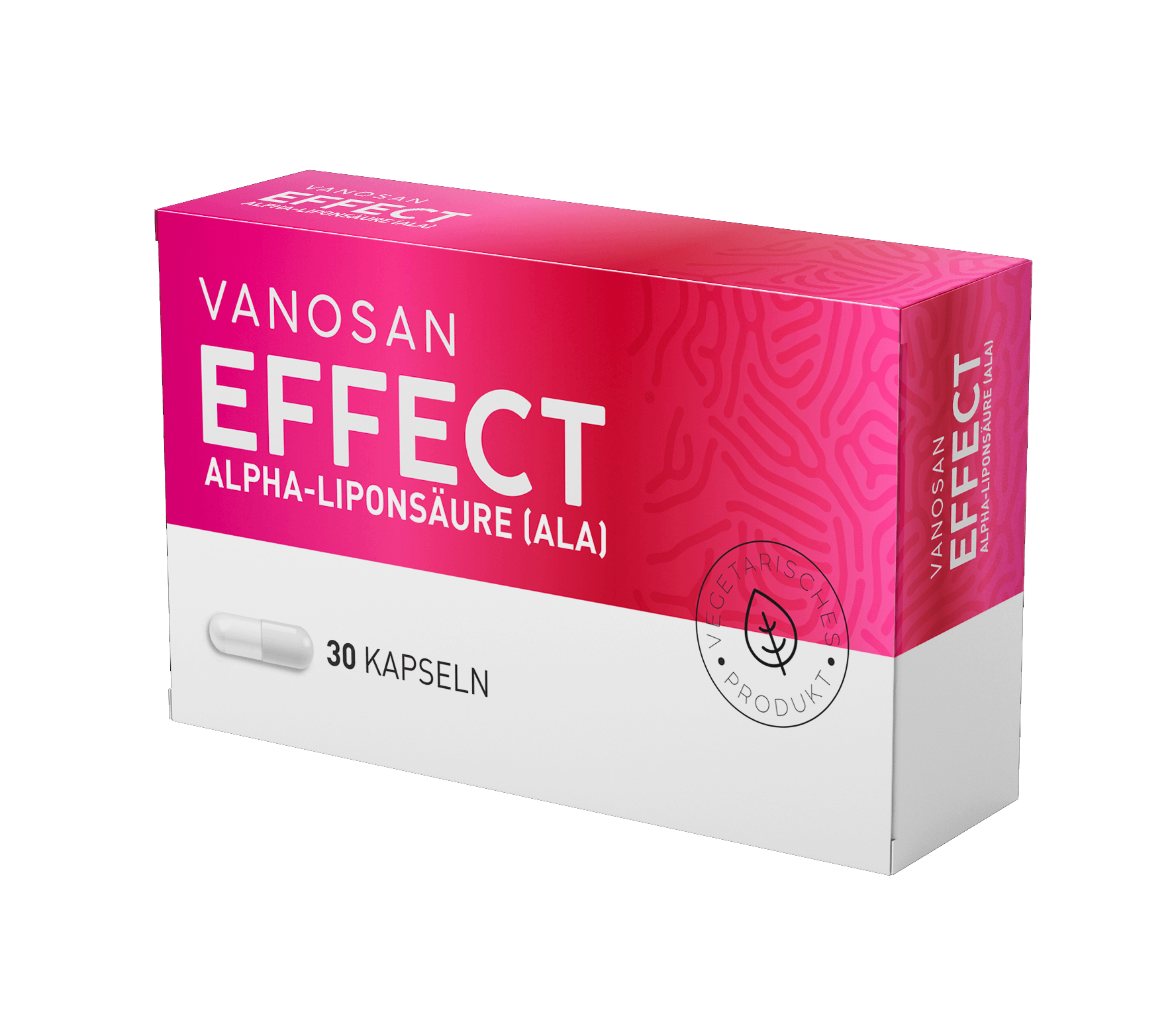
Vanosan Alpha-Lipoic Acid
by VANOSAN
Pros
- Uses R-ALA (not a racemic mixture)
- 100 mg R-ALA per capsule
- Vegan
- Gluten-free
- Made in Germany
- Laboratory-tested quality
- No preservatives
- Good value for money
Cons
- Unstabilised R-ALA
- Plastic packaging (no protection from light and heat)
- Only available online
- 3 capsules a day
Verdict
Vanosan Alpha-Lipoic Acid provides 100 mg per capsule. It uses the biologically active R-form, which points to significantly more of the active ingredient being available per capsule, but also makes it more sensitive to light and heat.
Manufacturing in Germany under controlled conditions and the laboratory-tested quality are clear plus points.
The crucial difference from our winner lies in the dosage form: without liposomal encapsulation, the ALA is exposed to digestion, during which a significant share of the active ingredient can be broken down before it reaches the bloodstream. The amount of ALA actually available is therefore lower than the stated dose suggests.
On top of that, 100 mg per capsule is on the low side for uses such as supporting people with neuropathy or marked insulin resistance.
For users who want basic antioxidant support and have no marked symptoms, Vanosan Alpha-Lipoic Acid is still a choice we can recommend, and it offers good value for money.
The recommended dose of Vanosan ALA is 3 capsules a day.
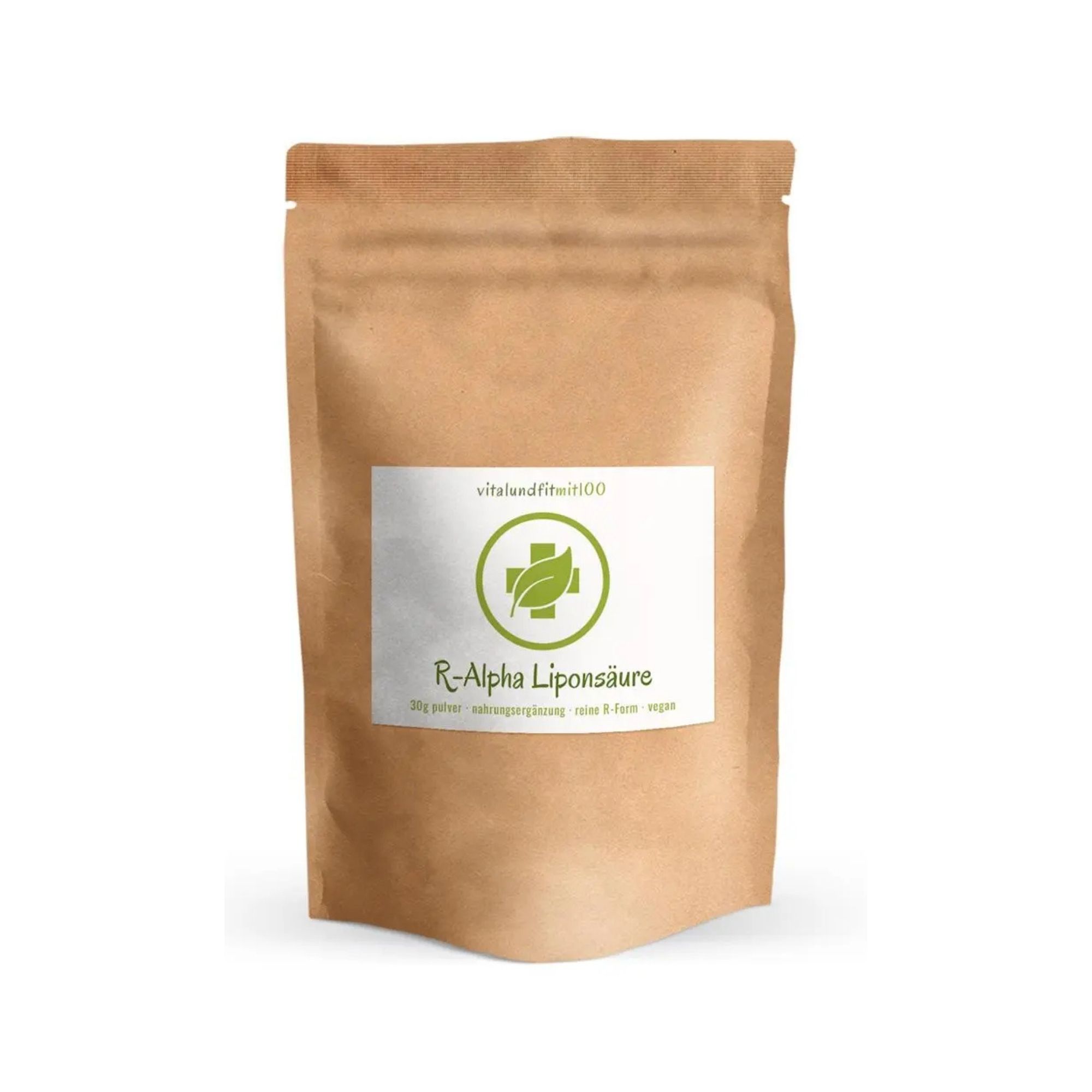
vitalundfitmit100 R-Alpha-Lipoic Acid
by VITALUNDFITMIT100
Pros
- 30 g: enough for one month
- No excipients or additives
- GMO-free
- Vegan
- Flexible dosing thanks to the powder form
- Made in Germany
Cons
- Low dose of 100 mg ALA a day
- Bitter taste
- No liposome technology
- Unstabilised R-ALA
Verdict
This pure R-alpha-lipoic acid powder is aimed at users who deliberately choose the biologically active R-form and want to avoid additives of any kind. The 30 g of powder is easy to use and lets you adjust the dose flexibly.
Many customers particularly praise the vegan formulation and the complete absence of additives and genetic modification.
In practice, however, it shows some weaknesses. Many users find the powder's pronounced bitter taste off-putting, which makes daily use harder. When the powder is dissolved in water, the taste is clearly noticeable, and mixing it with juice only partly masks it.
For users who want a basic intake of R-ALA and prefer powder to capsules, the product is a very good option.

Unlike most antioxidants, ALA works throughout the body. It offers seamless protection that no other single active ingredient can provide.
ALA as a universal antioxidant: protection for the whole body
Most antioxidants work either in the cell membrane or inside the cell. ALA can do both at once. In practice, that means less inflammation in the tissues, slower skin ageing and a more robust immune system.
On top of that, it has another ability: ALA regenerates depleted antioxidants such as vitamin C, vitamin E and glutathione and restores their protective effect.¹² Taking ALA therefore strengthens your body's entire antioxidant system.
Help with neuropathy and nerve health
The nervous system is particularly vulnerable to oxidative stress. Nerve cells have an unusually high energy requirement and, at the same time, are poorly protected against cell damage.
Alpha-lipoic acid works in several ways. It reduces oxidative damage in nerve fibres, improves mitochondrial function in neurons and promotes the regeneration of damaged nerve fibres.¹³ These properties make ALA the only natural active ingredient used as an approved medicine for the treatment of diabetic neuropathy.
Recent studies also show early, promising signs that it may help with cognitive decline and age-related nerve diseases such as Alzheimer's.¹⁴

Healthy nerves are the quiet foundation for everything. You often only notice how important they are when they start to decline.
Stronger mitochondria and more energy
As you get older, your mitochondria, the tiny powerhouses in every cell of your body, become weaker. They produce less energy and become more vulnerable to damage. Chronic tiredness, lack of drive and the feeling that you no longer have the energy you once had are often the result.
ALA works on two fronts here at once. It's directly involved in energy production in the mitochondria and also protects them against oxidative stress. Your cells work more efficiently and produce more energy.
In everyday life, this shows up as more stamina, a clearer head and less of a feeling that you're constantly running on empty. For people over 40, this makes ALA one of the best-documented options for support at a cellular level.
Our verdict: the universal antioxidant with an exceptionally broad reach
Alpha-lipoic acid is one of the most versatile and best-researched natural active ingredients there is. Flagging energy, blood sugar that no longer behaves, tingling in your feet, the feeling of ageing faster than you'd like. All of these are signs that your body needs support at a cellular level. That's exactly where ALA comes in.
Its approval as a medicine for the treatment of diabetic neuropathy underlines the quality of the scientific evidence. That's a status no other over-the-counter product in this area can claim.
The effect builds up gradually and often in several areas at once. If you want to use ALA for a specific purpose, plan to take it regularly for at least eight to twelve weeks.
When you choose a product, the dosage form is crucial. ALA can only work if enough of it actually reaches the bloodstream. So choose products that stand out for their traceable origin, high purity standards and a bioavailable formulation. The comparison above shows which products impressed us in our test.
A range of proven ALA products
* We may earn a commission from some of the companies featured. This is how we keep our comparisons free to read.
Some of these companies are our commercial partners.
Sources
1. Packer L, Witt EH, Tritschler HJ. Alpha-lipoic acid as a biological antioxidant. Free Radic Biol Med. 1995.
2. Packer L, Tritschler HJ, Wessel K. Neuroprotection by the metabolic antioxidant alpha-lipoic acid. Free Radic Biol Med. 1997.
3. https://www.jbc.org/article/S0021-9258(20)74076-7/fulltext
4. Packer L, Tritschler HJ, Wessel K. Neuroprotection by the metabolic antioxidant alpha-lipoic acid. Free Radic Biol Med. 1997.
5. https://pubmed.ncbi.nlm.nih.gov/16337874/
6. https://pubmed.ncbi.nlm.nih.gov/29990473/
7. https://pubmed.ncbi.nlm.nih.gov/10595592/
8. Carlson DA et al. The plasma pharmacokinetics of R-(+)-lipoic acid administered as sodium R-(+)-lipoate to healthy human subjects. Altern Med Rev. 2007
9. Ziegler D et al. Oral treatment with alpha-lipoic acid improves symptomatic diabetic polyneuropathy: the SYDNEY 2 trial. Diabetes Care. 2006.
10. Kucukgoncu S et al. Alpha-lipoic acid (ALA) as a supplementation for weight loss: results from a meta-analysis of randomized controlled trials. Obes Rev. 2017.
11. https://pubmed.ncbi.nlm.nih.gov/10100799/
12. Packer L, Tritschler HJ, Wessel K. Neuroprotection by the metabolic antioxidant alpha-lipoic acid. Free Radic Biol Med. 1997.
13. Ziegler D et al. Oral treatment with alpha-lipoic acid improves symptomatic diabetic polyneuropathy: the SYDNEY 2 trial. Diabetes Care. 2006.